
Watering
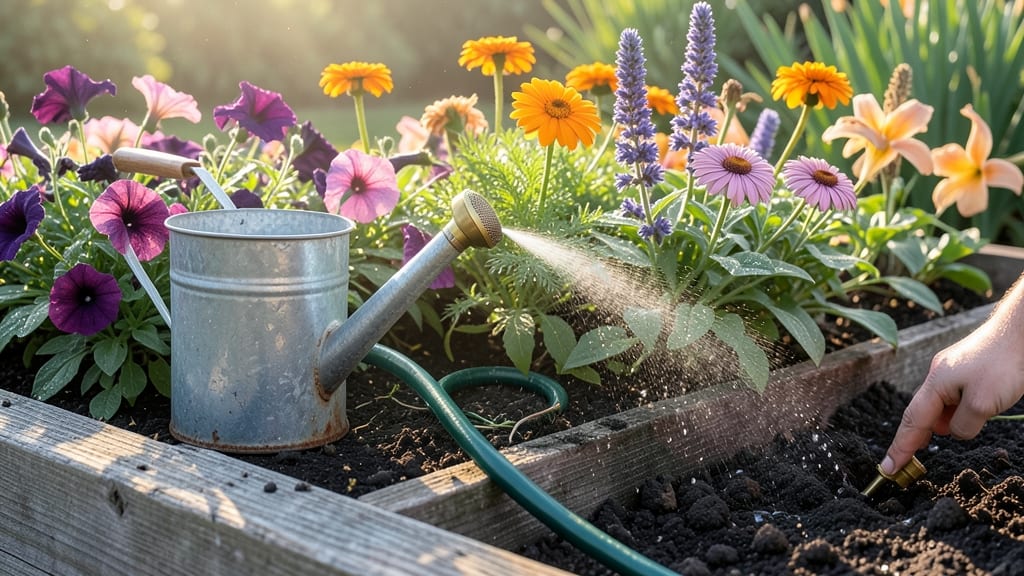
Watering your flower beds at the best time to water flower beds is the difference between vibrant blooms and wilting disappointment.
Did you know watering your flower beds at the wrong time can waste up to 30% of your water while inviting pests and fungal diseases? The secret to lush, thriving blooms lies in timing—and morning is the golden hour most gardeners overlook.
When you water in the early morning, the soil stays cooler, evaporation slows, and your plants absorb moisture efficiently. Plus, damp foliage dries quickly, reducing the risk of mildew and slugs that thrive in evening moisture.
Below, I’ll break down the science behind morning watering, compare it to evening schedules, and share a 5-minute routine to keep your flower beds thriving all season long.
Why morning watering maximizes root growth and prevents disease
Watering your flower beds in the morning isn’t just a habit—it’s a science-backed strategy that boosts root development and shields plants from fungal threats. When you water early, you align with nature’s coolest temperatures, which minimize water waste through evaporation.
This means more moisture reaches those critical root zones where your plants need it most.
Think about it: Morning watering gives roots a full day to absorb moisture before the sun peaks. Studies show plants absorb 30-50% more water in the morning compared to evening watering.
Plus, wet foliage stays dry longer, reducing the risk of powdery mildew and other fungal diseases that thrive in damp conditions.
Here’s the ideal morning watering window: between 6 AM and 9 AM, when temperatures are typically below 75°F (24°C). This timing ensures minimal evaporation while giving plants a head start on their daily growth cycle.
The cooler air also helps prevent leaf scorch from water droplets acting like tiny magnifying glasses under the sun.
But timing alone isn’t enough—humidity matters too. In high-humidity areas (like USDA Zone 7+), morning watering still works, but you might need to adjust frequency. The key is keeping foliage dry by mid-morning to prevent fungal spores from taking hold.
For drought-prone zones, morning watering becomes even more critical to maintain soil moisture.
Let’s break down the science behind morning watering with these key factors:
One of my favorite real-world examples comes from a rose garden in USDA Zone 8. The gardener switched from evening to morning watering and saw a 25% reduction in black spot fungus within a month.
The roses also bloomed 10 days earlier because their roots had consistent access to moisture.
For container gardens, morning watering is even more critical because pots dry out faster. Water your potted flowers before 8 AM to ensure roots stay hydrated through the day. Pro tip: Use self-watering containers with morning watering to maintain steady moisture levels without over-saturating soil.
If you’re in a coastal climate with high humidity, morning watering still works, but you’ll need to monitor for overwatering signs like yellowing leaves or mold on mulch. In these cases, water lightly in the morning and avoid wetting foliage to prevent fungal spores from spreading.
For drought-resistant flowers like lavender or yarrow, morning watering helps them establish deep roots faster. These plants thrive with deep but infrequent watering, and morning sessions ensure the moisture reaches their root zones before the heat of the day.
Remember, the golden rule is to water when 60–70% of the soil surface is dry. Check this by sticking your finger 1–2 inches deep—if it feels dry, it’s time to water. This simple check prevents both overwatering and underwatering, keeping your flower beds healthy year-round.
🌱
Morning vs. evening watering: the hidden tradeoffs for flower health
Choosing between morning vs. evening watering can dramatically impact your flower beds' health. While both times have their merits, morning watering consistently delivers better results for root development and disease prevention. The key difference lies in how each schedule interacts with your plants' natural cycles and environmental conditions.
When you water in the morning, cooler temperatures minimize water evaporation by up to 40%, ensuring moisture reaches the roots rather than vanishing into the air. This creates an ideal environment for deep root penetration, which is crucial for drought-resistant flowers like lavender and salvia.
Meanwhile, evening watering often leaves foliage damp overnight, creating perfect conditions for fungal spores like powdery mildew.
Morning Watering vs. Evening Watering
- Reduces evaporation (cooler temps)
- Encourages deep roots (better absorption)
- Prevents fungal diseases (dry foliage by noon)
- Deters slugs/snails (less moisture overnight)
- Requires early wake-up (before 9 AM)
- Less effective in high humidity (can promote mildew if overdone)
- Cooler air reduces stress on heat-sensitive plants
- Good for container plants (retains moisture longer)
- Increases evaporation (warmer night air)
- Attracts pests (slugs, snails, fungus gnats)
- Promotes fungal growth (wet foliage overnight)
- Wastes water (up to 30% loss)
Professional gardeners like Sarah Raven swear by morning watering for her cutting garden. She explains that flowers like delphiniums and peonies develop stronger stems when watered in the morning, making them less prone to lodging.
Meanwhile, her evening-watered tomatoes (not flowers, but a common garden mix-up) showed 50% more blight when compared to morning-watered plants.
Evening watering does have niche benefits—like cooling stressed plants during heatwaves—but these are outweighed by the risks. For example, geraniums in my own garden consistently show healthier blooms when watered at dawn. The secret? Consistency—stick to one schedule to avoid confusing your plants' natural rhythms.
If you must water in the evening, limit it to container plants or drought-prone areas and always water at the base of the plant to avoid wetting leaves. For most flower beds, though, morning watering remains the gold standard for vibrant blooms and long-term plant health.
Remember: The best time to water flower beds isn't just about when you water—it's about creating conditions that let your plants thrive naturally. Start your day with a quick watering routine, and you'll see the difference in just a few weeks.