
Flowers
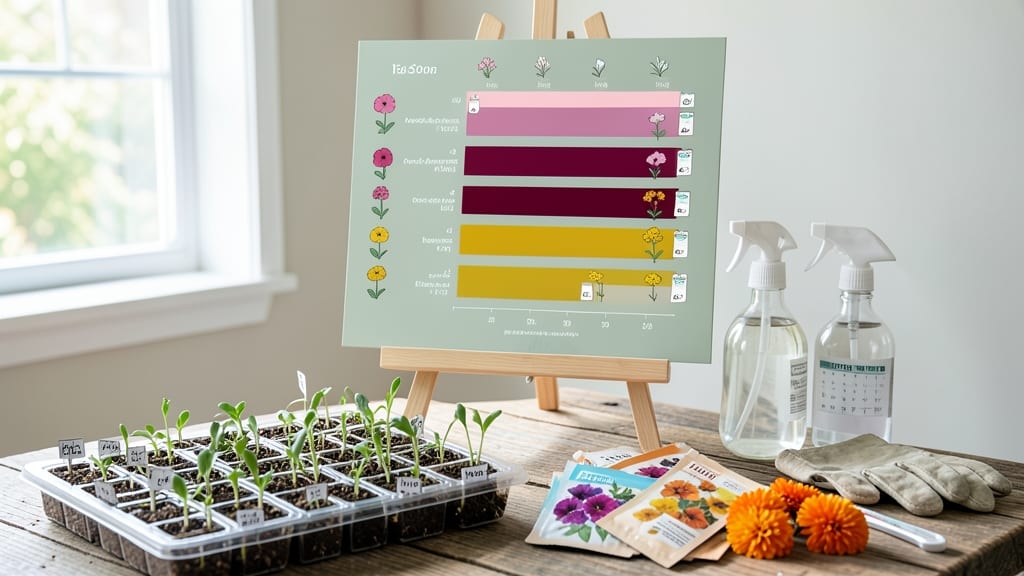
To start flower seeds indoors at the perfect time, use a chart that aligns with your last frost date and plant maturity—because timing is everything for those vibrant blooms you’re dreaming of.
Picture this: you’ve spent hours under grow lights, nurturing tiny sprouts, only to watch them bolt or fade before they ever reach their full glory. That’s what happens when you miss the window—whether you start too early (and end up with leggy, weak seedlings) or too late (and lose the race against frost).
This guide breaks down the exact indoor seed-starting schedule for popular flowers like marigolds, zinnias, and coneflowers, tailored to your USDA zone.
No more guesswork—just a clear, zone-specific chart that tells you when to plant 4-8 weeks before last frost, plus pro tips for adjusting dates if your season runs hot or cold.
You’ll also discover how to fine-tune your timeline for early blooms, succession planting, and even extending your harvest into fall. Ready to turn those seeds into a showstopping garden? Let’s get started.
Indoor seed starting timeline by flower variety & frost dates
Getting your flower seeds off to the right start indoors means timing them perfectly with your last frost date and each plant’s maturity timeline. Whether you’re growing annuals like marigolds or perennials like lavender, starting too early or late can lead to weak seedlings or missed bloom seasons.
The key is understanding how many weeks before transplanting each variety needs to thrive.
Your USDA zone plays a huge role—gardeners in Zone 3 might start seeds in February, while those in Zone 10 can wait until March or April.
Below, I’ve broken down popular flowers into categories with exact indoor starting windows and transplant timelines to ensure vibrant blooms all season long.
Pro Tip: Always check your average last frost date (find it via the USDA Plant Hardiness Zone Map) and adjust these timelines by ±1 week if your spring is unusually early or late. For example, if frost typically arrives April 15 but you’re expecting it May 1, delay starting seeds by 2 weeks.
| Flower Type | USDA Zones 3-6 | USDA Zones 7-10 | Days to Maturity | Notes |
|---|---|---|---|---|
| Annuals |
Marigolds: Start 6-8 weeks before last frost (Feb-March) Zinnias: Start 8-10 weeks before last frost (Jan-Feb) |
Marigolds: Start 4-6 weeks before last frost (March) Zinnias: Start 6-8 weeks before last frost (Feb) |
60-90 days | Love full sun; pinch back for bushier growth |
| Annuals |
Petunias: Start 10-12 weeks before last frost (Jan-Feb) Snapdragons: Start 8-10 weeks before last frost (Jan-Feb) |
Petunias: Start 8-10 weeks before last frost (Feb) Snapdragons: Start 6-8 weeks before last frost (Feb) |
70-100 days | Need cool nights for best blooms; harden off carefully |
| Perennials |
Coneflowers: Start 8-10 weeks before last frost (Jan-Feb) Lavender: Start 10-12 weeks before last frost (Jan-Feb) |
Coneflowers: Start 6-8 weeks before last frost (Feb) Lavender: Start 8-10 weeks before last frost (Feb) |
90-120 days | Drought-tolerant; avoid overwatering seedlings |
| Biennials |
Foxgloves: Start 10-12 weeks before last frost (Jan-Feb) Hollyhocks: Start 8-10 weeks before last frost (Jan-Feb) |
Foxgloves: Start 8-10 weeks before last frost (Feb) Hollyhocks: Start 6-8 weeks before last frost (Feb) |
100-130 days | Tall stems need staking; rotate pots for even growth |
For annuals like marigolds and zinnias, the 6-10 week indoor window ensures they’re ready to transplant right as soil warms up. These heat-loving flowers can’t handle cold soil, so don’t rush them—wait until your last frost date has passed and soil temps hit 60°F+.
If you’re growing perennials like coneflowers or lavender, give them extra time indoors (
How to adjust seed starting dates for early or late blooms
Want flowers blooming earlier than your neighbors? Or maybe you’re dreaming of fall color when others are packing up their gardens? Adjusting your seed-starting dates is the secret weapon for extending your bloom season.
The key lies in understanding your local frost dates and each flower’s maturity timeline—then tweaking those numbers to fit your goals.
For example, if you’re craving spring color by Mother’s Day, start cool-season flowers like pansies or snapdragons 6-8 weeks earlier than the standard chart. Conversely, if you’re aiming for fall displays, succession-plant heat-loving marigolds or zinnias every 3 weeks from early summer to push blooms into October.
Here’s how to calculate your custom schedule: subtract your last frost date from the days to maturity (found on seed packets), then add or subtract weeks based on your goals. Need a jumpstart?
Use this adjustment formula: (Last frost date – Maturity days) +/– X weeks. For early blooms, subtract 2-4 weeks; for late blooms, add 2-4 weeks.
Start Cool-Season Flowers Early
Add 6-8 weeks to standard dates for pansies, violas, or calendula to bloom by late winter or early spring.
Succession Plant for Fall Color
Sow marigolds, cosmos, or sunflowers every 3 weeks from June to August for continuous blooms.
Extend Heat-Loving Blooms
For zinnias or celosia, start seeds 4-6 weeks later than usual to avoid bolting in early heat.
Adjust for Early/Late Frosts
If your frost date shifts 2+ weeks earlier, start seeds 2 weeks sooner to compensate.
Use Grow Lights for Early Starts
Extend daylight to 14-16 hours for fast-growing annuals like petunias to bloom 2 weeks earlier.
Pro tip: Track your seedlings’ progress with a garden journal. Note when each batch reaches the 4-6 leaf stage—this helps you fine-tune future starts. For instance, if your zinnias took 12 days longer to germinate than expected, adjust next year’s start date accordingly.
Don’t forget to harden off seedlings properly when adjusting dates. If you’re pushing blooms into late fall, give them 7-10 extra days of hardening to toughen up for cooler temps.
And for early spring starts, consider a mini greenhouse or row covers to shield tender seedlings from unexpected cold snaps.
With these adjustments, you’ll turn your garden into a year-round blooming oasis—no more waiting for the "right season" to enjoy your favorite flowers. Happy planting! 🌸