
Fertilization
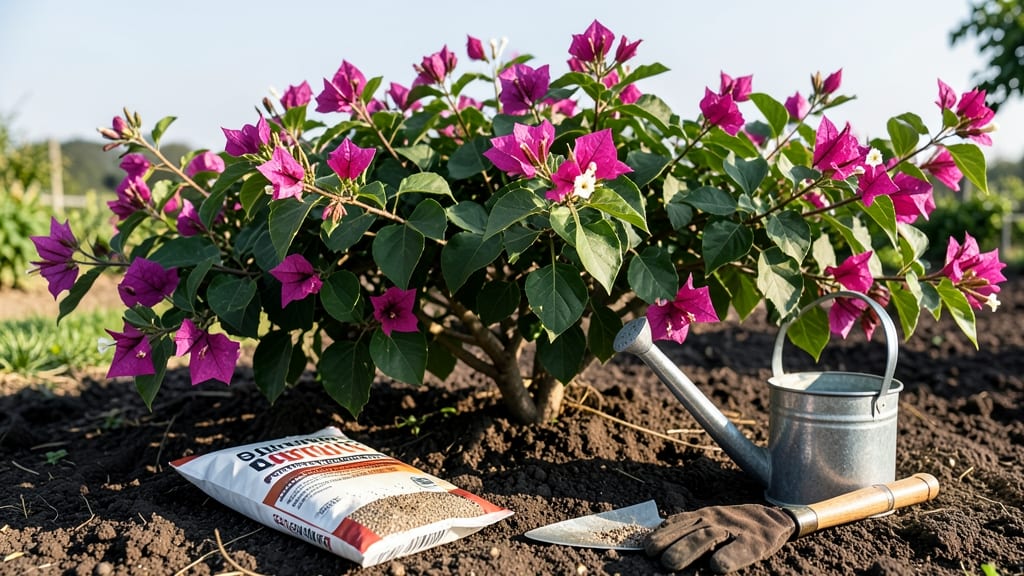
To get your bougainvillea 🌺 flowering nonstop, the right fertilizer mix is the game-changer—one that balances nutrients without smothering those vibrant blooms.
Picture this: you’ve pruned, watered, and even babied your plant, yet the flowers refuse to show up. The issue might not be sunlight or soil—it’s often the fertilizer.
Too much nitrogen? Your bougainvillea will grow leaves like crazy but skip the blooms. Too little phosphorus? The flowers stay MIA. Here’s how to fix that.
In this guide, I’ll break down the science-backed NPK ratios (like 7-7-7 or 10-10-10) that trigger flowering, when to feed (spring and fall are key), and how to avoid common mistakes like over-fertilizing or using the wrong pH. Whether you’re a seasoned gardener or a newbie, these tips will turn your bougainvillea into a blooming superstar.
Ready to unlock those show-stopping flowers? Let’s dive into the exact fertilizing schedule, organic alternatives, and fixes for yellowing leaves or sparse blooms—so you can enjoy a year-round display of color.
Optimal NPK ratios for bougainvillea flowering: science-backed formulas
Bougainvillea thrives on the right NPK balance—too much nitrogen and you’ll get lush leaves but no flowers. The key? A phosphorus-rich formula that triggers blooming while avoiding nitrogen overload.
Most gardeners swear by 7-7-7 or 10-10-10 ratios, but the science behind phosphorus’s role in flowering is what truly unlocks those vibrant bracts.
Phosphorus (the middle number in NPK) is the flowering catalyst for bougainvillea. It boosts root development and energy transfer for blooms, while potassium (the third number) strengthens drought resistance and disease defense.
Nitrogen (the first number) should stay low to moderate—too much sends your plant into leafy overdrive at the expense of flowers.
Pro Tip: For established plants, a low-nitrogen, high-phosphorus formula like 5-10-5 works wonders during bloom season. In cooler months, reduce phosphorus slightly to 3-6-3 to encourage dormancy prep (if applicable to your climate).
| Season | NPK Ratio | Key Focus | Application Notes |
|---|---|---|---|
| Spring (Active Growth) | 10-10-10 or 7-7-7 | Balanced growth + blooms | Every 4 weeks; water deeply after |
| Summer (Peak Bloom) | 5-10-5 or 3-6-3 | High phosphorus for flowers | Every 6 weeks; avoid midday heat |
| Fall (Pre-Dormancy) | 3-6-3 or 2-4-2 | Low nitrogen, moderate P | Light feeding; reduce frequency |
| Winter (Dormant Zones) | 0-0-0 (No Fertilizer) | Rest period | Resume spring feeding |
| Tropical Climates (Year-Round) | 7-7-7 (Maintenance) | Continuous blooms | Monthly light feedings |
In tropical climates, bougainvillea can bloom year-round, so a consistent 7-7-7 ratio keeps flowers coming. But in temperate zones, adjust phosphorus upward in summer (try 5-10-5) and taper off in fall. The goal? Mimic natural seasonal cues without shocking the plant.
Organic options like bone meal (3-15-0) or fish emulsion (5-1-1) work well for phosphorus, but synthetic bloom boosters (e.g., 10-30-20) deliver faster results. Just dilute liquids to half-strength to avoid root burn—a common mistake that kills blooms faster than nutrient deficiency.
Watch for yellowing leaves, a classic sign of nitrogen overload. If your bougainvillea’s foliage looks too lush but flowerless, flush the soil with water and switch to a low-nitrogen formula immediately. The fix often takes just 4-6 weeks to reset the plant’s energy focus.
For container-grown bougainvillea, use slow-release granules mixed into the soil at planting. These release nutrients gradually, reducing the risk of over-fertilization in small pots. Pro tip: Top-dress with compost in spring for a natural phosphorus boost.
Soil pH matters too! Bougainvillea prefers acidic to neutral soil (6.0-7.0). Test your soil—if it’s too alkaline, phosphorus becomes less available, even with the right fertilizer. A chelated iron supplement can help if leaves turn yellow between veins.
Remember: Less is more with bougainvillea. Over-fertilizing stresses the plant, leading to dropped buds or stunted growth. Stick to the 4-6 week schedule during active growth, and always water after fertilizing to distribute nutrients evenly.
Your bougainvillea’s flowering potential is directly tied to phosphorus levels. By mastering these NPK ratios and seasonal tweaks, you’ll unlock nonstop blooms that turn heads all year. Happy growing! 🌺
Step-by-step fertilizer application guide for maximum blooms
Timing and technique make all the difference when fertilizing your bougainvillea 🌺. The key is feeding during active growth phases—spring and fall—while avoiding overloading roots with nutrients.
I’ve learned the hard way that over-fertilizing in summer can burn roots, especially in hot climates, so I now follow a strict schedule. Start with a balanced fertilizer (7-7-7 NPK) every 4-6 weeks during growing months, then adjust based on your plant’s response.
Before applying any fertilizer, prune dead or overgrown branches to redirect energy toward new blooms. This is my secret to keeping bougainvillea flowering nonstop—pruning stimulates growth and makes the plant more receptive to nutrients.
Pair this with a deep watering session the day before fertilizing to help roots absorb nutrients efficiently. Think of it as prepping your plant for a nutrient feast!
🌿 Step-by-Step Fertilizer Application Guide 🌿
Opt for a balanced granular (7-7-7) or liquid bloom booster (10-10-10). Organic options like composted manure or fish emulsion work too, but dilute to half-strength to avoid root burn.
Bougainvillea thrives in slightly acidic to neutral soil (6.0-7.0 pH). Use a soil test kit to check—adjust with lime (to raise pH) or sulfur (to lower pH) if needed before fertilizing.
Sprinkle 1 tbsp per plant of granular fertilizer around the root zone (6 inches from stem). Gently scratch into the top 1-2 inches of soil to avoid surface burn. Water lightly to activate.
Mix liquid fertilizer at half-strength (follow label instructions). Apply to moist soil in the morning or evening to prevent evaporation. Avoid wetting leaves to reduce fungal risk.
Give your bougainvillea a deep watering (1-2 gallons) to help nutrients reach roots. This is critical—underwatering after fertilizing wastes nutrients, while overwatering can dilute them.
Watch for yellow leaves (nitrogen overload) or sparse blooms (phosphorus deficiency). If leaves turn brown, you’ve overdone it—flush soil with water and reduce future doses by half.
Skip fertilizer in winter (dormant season). In spring and fall, feed every 4-6 weeks. Summer? Lighten up—use half-strength liquid fertilizer every 8 weeks to avoid stress.
Pro tip: I’ve found that organic options like compost tea or worm castings work wonders for bougainvillea, especially in container gardens. They release nutrients slowly, mimicking natural conditions and reducing the risk of root burn.
Plus, they improve soil structure over time, which is a game-changer for heavy clay soils.
For potted bougainvillea, I switch to a slow-release fertilizer pellet placed in the soil during repotting. This ensures a steady nutrient supply without the hassle of monthly applications. Just remember: less is more—over-fertilizing potted plants is a common mistake that leads to salt buildup and root damage.
🌺 Your bougainvillea will reward you with bold, vibrant blooms in just a few months if you stick to this routine. The key is consistency—feed at the right time, use the right products, and always monitor your plant’s response. Happy gardening!