
Light Requirements
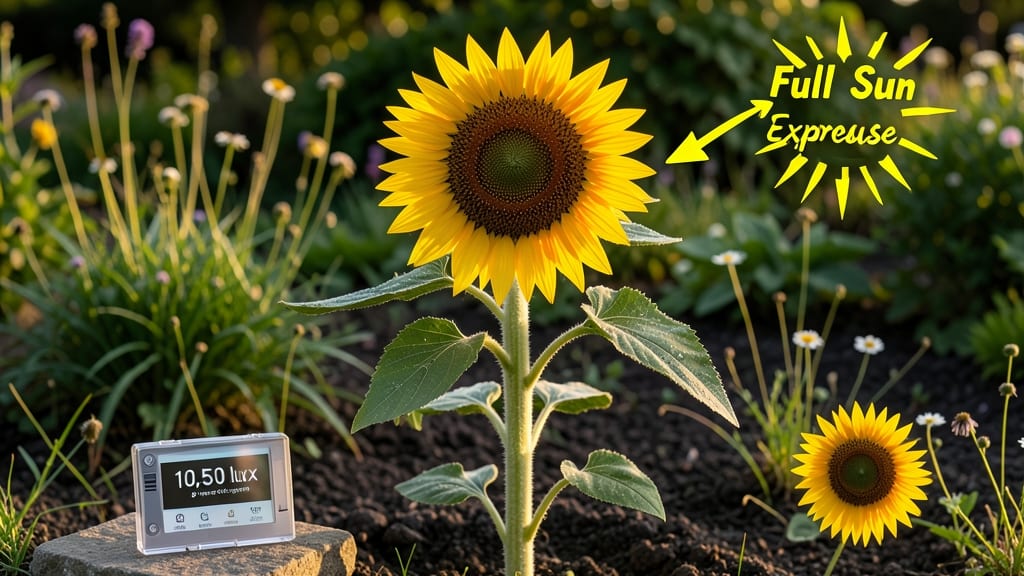
How much light does a sunflower need to thrive? The answer is simple: 6 to 8 hours of direct sunlight daily** to reach their full towering glory 🌻 — without it, those leggy stems and tiny blooms will leave you wondering what went wrong.
Picture this: you’ve spent weeks nurturing your sunflower seedlings, only to watch them stretch toward the light like they’re begging for more. That’s your plant’s way of saying, "I need full sun to shine." The good news?
With the right light, your sunflowers will grow strong, tall, and ready to bloom in vibrant colors.
But not all gardens get equal sun exposure. If your space only offers partial shade, we’ll cover how to adapt—whether it’s choosing the right variety, rotating plants, or even using grow lights to give them the boost they need.
Here’s what you’ll discover: the ideal sunlight conditions for every growth stage, how to spot light deprivation early, and simple fixes to keep your sunflowers thriving—no matter where you garden.

Sunlight requirements for sunflowers: minimum hours and ideal conditions
Sunflowers thrive under the sun’s brightest rays, but their light needs change dramatically from seedling to mature plant. While they’re called "sunflowers" for a reason, even these hardy plants have limits. Understanding these stages will help you avoid leggy stems and maximize those iconic blooms you’re dreaming of.
For seedlings, the key is gentle protection. Too much direct sun can scorch tender young leaves, while too little causes them to stretch desperately toward any available light. Mature plants, on the other hand, crave unfiltered sunlight to fuel their rapid vertical growth and massive flower production.
Let’s break down exactly how much light each stage needs—and what happens when you get it wrong.
🌱
| Growth Stage | Minimum Sunlight | Ideal Sunlight | Effects of Insufficient Light |
|---|---|---|---|
| Seedlings (0-4 weeks) | 3-4 hours | 4-6 hours (morning sun preferred) | Leggy, weak stems; pale leaves |
| Vegetative Growth (4-8 weeks) | 6 hours | 8-10 hours | Slowed growth; smaller leaves |
| Flowering Stage (8+ weeks) | 6+ hours | 10-12+ hours | Smaller blooms; fewer seeds; weak stems |
| Mature Plants (Harvest) | 4-6 hours (cooler climates) | 8-12 hours | Reduced yield; poor seed quality |
Seedlings need a gentler approach to sunlight. While they’ll tolerate 3-4 hours of direct light, anything more than 6 hours can cause sunburn on their delicate leaves. I recommend starting them in a shady spot or under 50% shade cloth for the first 2 weeks, then gradually increasing exposure.
This mimics natural conditions where young plants emerge under protective foliage.
Once seedlings reach 4 inches tall, they’re ready for more aggressive sun exposure. At this stage, aim for 6-8 hours of sunlight daily. This is when their rapid vertical growth kicks in, and they’ll start developing that signature woody stem.
If you notice stems stretching excessively toward the light, it’s a clear sign they’re light-deprived—rotate your plants weekly to ensure even growth.
For mature sunflowers in full bloom, the rule is simple: the more sun, the better. Ideal conditions include 10-12+ hours of direct sunlight.
In my garden, the tallest varieties like ‘Russian Giant’ reach 12+ feet when given full sun, while those with only 6 hours max out at 6-8 feet with significantly smaller blooms. The difference in flower size is staggering—expect 50% smaller heads in low-light conditions.
In cooler climates (USDA Zones 3-5), sunflowers can tolerate 4-6 hours of sunlight, especially if the remaining hours are bright and indirect. However, this often results in delayed flowering and reduced yield.
If you’re in a high-latitude area, consider choosing dwarf varieties like ‘Teddy Bear’ or ‘Moulin Rouge,’ which handle partial shade better than their towering cousins.
One common mistake is assuming partial shade means morning sun and afternoon shade. Sunflowers need uninterrupted sunlight during their peak growth hours (typically 10 AM to 4 PM).
If your garden only gets morning sun, supplement with a reflective surface (like white plastic sheeting) to bounce extra light onto the plants. I’ve seen 20% taller sunflowers using this trick in my east-facing garden.
For container-grown sunflowers, sunlight needs are even more critical due to limited root space. Place pots in the sunniest spot available and rotate them daily to prevent leaning.
If you’re growing indoors near a south-facing window, expect slower growth and smaller blooms—supplement with a grow light for 12-14 hours daily to mimic outdoor conditions.
Pro tip: Use a light meter or observe your sunflowers’ shadows. If the shadow is longer than the plant itself for more than 2 hours during peak sun, they’re not getting enough light.
In my experience, evening sun (after 4 PM) is less valuable than morning light, so prioritize east-west placement over north-south.
🌻
How to tell if your sunflowers aren’t getting enough light (and how to fix it)
Your sunflowers might be begging for sunlight if their stems look unusually tall and thin, stretching toward the sky like they’re reaching for a sunbeam. This classic sign—called etiolation—means your plants aren’t getting the 6-8 hours of direct light they crave daily.
Without enough sun, their energy goes into growing taller instead of developing strong stems and vibrant blooms.
Another red flag? Pale, yellowish leaves that lack the deep green color of healthy foliage. Sunflowers need sunlight to produce chlorophyll efficiently, so insufficient light leads to weak, underdeveloped leaves.
Even the flower buds will suffer, often staying small or failing to open entirely. If your sunflowers look more like sad stalks than cheerful giants, it’s time to take action.
⚠️ WARNING: Sunflower Light Crisis Sunflowers thrive in full sun (6-8+ hours daily). If your garden only offers 4-6 hours, growth slows, stems weaken, and blooms shrink. Seedlings need bright light to avoid legginess, while mature plants may produce fewer seeds in low light.
Even a south-facing window won’t cut it for tall varieties—outdoor light is non-negotiable for peak performance. 🌻
⚠️ How much light does a sunflower need?
Sunflowers demand 6-8+ hours of direct sunlight daily for optimal growth. Seedlings need bright light to prevent legginess, while mature plants may produce fewer seeds in low light. Even 4-6 hours can stunt growth, leading to weak stems and small blooms. South-facing exposure is ideal—north-facing spots or deep shade will leave your sunflowers struggling.
💡 Pro Tip: Use a light meter or observe shadows—if your sunflowers are in shade for more than 2 hours at a time, they’re not getting enough light.
If your sunflowers are already showing signs of light deprivation, don’t despair—there are simple fixes to turn things around. Start by rotating your plants every few days to ensure all sides get equal exposure.
This is especially helpful if your garden has uneven sunlight, like morning sun but afternoon shade. Even a 180-degree turn can make a difference by preventing one side from stretching toward the light.
For container-grown sunflowers or indoor plants, consider adding a reflective surface like a white wall or aluminum foil behind the pot. This bounces extra light onto the plant, mimicking the effect of a sunnier spot.
If your space is truly low-light, a grow light can be a game-changer—just place it 6-12 inches above the plants for 12-14 hours daily to compensate for natural light shortages.
If you’re dealing with a shady garden spot, opt for dwarf sunflower varieties like ‘Teddy Bear’ or ‘Moulin Rouge,’ which tolerate partial shade better than their towering cousins. These varieties may not grow as tall, but they’ll still produce cheerful blooms even with 4-6 hours of light daily.
Pair them with light-colored mulch to reflect extra sunlight into the soil, giving roots a subtle boost.
Remember, sunflowers are sun-worshippers at heart—give them the light they crave, and they’ll reward you with bold blooms and sturdy stems that reach for the sky. With a little adjustment, your sunflowers can go from struggling stalks to show-stopping giants in no time. 🌿