
Plants
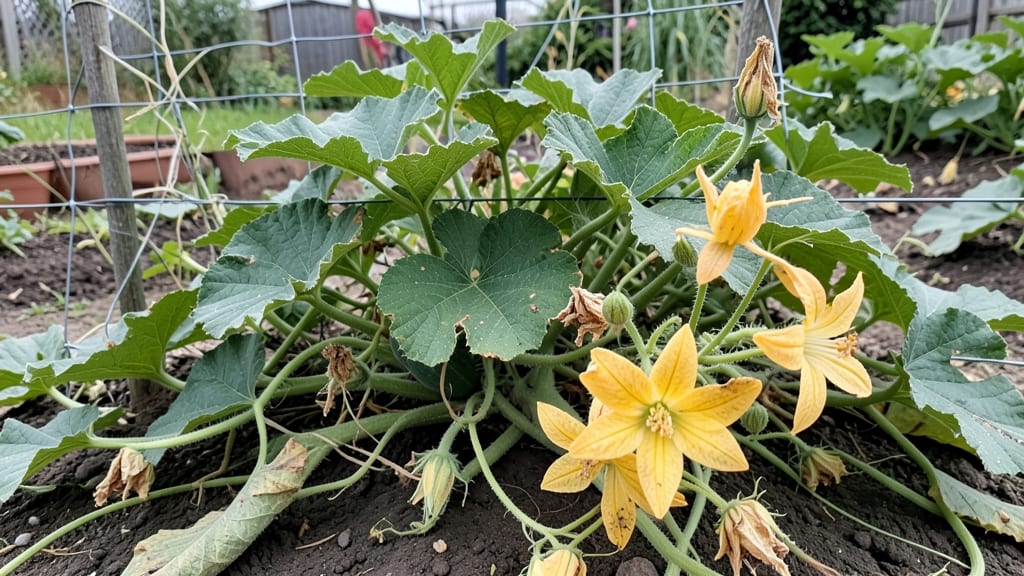
Those delicate cantaloupe plant flowers 🍈 are the gateway to your summer harvest—but one wrong move can leave you with vines full of blooms and no fruit.
Seeing them pop up is exciting, but knowing when and how to prune them makes all the difference. Too many gardeners miss the timing, ending up with wasted energy and empty vines.
In USDA Zone 6a, where planting happens between April 15 and May 15, the right pruning strategy can double your fruit set.
I’ll show you exactly which flowers to keep, which to cut, and how to encourage your cantaloupe to focus on producing sweet, ripe melons instead of just pretty blooms.
By the end, you’ll know the three key signs of healthy flowers, how to spot common mistakes, and the simple tricks—like hand-pollination—that turn blooms into a harvest-worthy bounty.

When to prune cantaloupe flowers for optimal fruit development
Pruning cantaloupe plant flowers at the right time can dramatically improve your harvest by directing the plant's energy toward fewer, healthier fruits. Unlike many garden plants, cantaloupes thrive when you remove some flowers—specifically the male flowers—before they open.
This ensures the plant focuses resources on developing female flowers, which produce fruit. The key is timing: prune too early, and you risk stunting growth; too late, and you waste energy on blooms that won't set fruit.
Understanding the flower development stages is critical. Cantaloupe flowers emerge in clusters, with male flowers appearing first and female flowers following 3-5 days later. The female flowers have a tiny fruit at their base, while males have no fruit.
Pruning male flowers during the pre-bloom stage (when buds are still closed) prevents unnecessary energy drain, allowing the plant to invest in female flowers that will bear fruit.
Environmental factors like temperature and sunlight also play a role. Cantaloupes need daytime temperatures between 70°F and 90°F (21°C-32°C) for optimal flowering and fruit set. If temperatures drop below 60°F (15°C), flowering slows, and pruning becomes less effective.
Similarly, insufficient sunlight (less than 6 hours daily) weakens the plant, reducing its ability to support fruit development after pruning.
Pruning at the wrong time can backfire. For example, removing too many flowers at once can shock the plant, leading to fewer female flowers later. Conversely, waiting until after female flowers appear means you’ve already wasted energy on male blooms.
The goal is to balance pruning with plant health, ensuring you remove enough male flowers to encourage fruit set without overstressing the vine.
Here’s a quick rule of thumb: start pruning when you see the first male flowers appear and continue for 2-3 weeks as long as new male flowers keep emerging. Stop once female flowers begin to dominate, as this signals the plant is ready to focus on fruit development.
This window typically aligns with the plant’s 4-6 week growth stage, depending on your climate.
Now, let’s break down the ideal pruning timeline with this summary table to visualize the best windows for action:
| Plant Stage | Action | Notes |
|---|---|---|
| Pre-Bloom (Bud Formation) | Remove all male buds | Encourages female flower development |
| Early Blooming (First Male Flowers) | Prune 70% of male flowers | Leave some for pollination cues |
| Peak Blooming (Female Flowers Appear) | Stop pruning males; focus on female flowers | Fruit set begins; conserve energy |
| Fruiting Stage (Post-Flowering) | Remove only diseased or excess flowers | Prioritize existing fruit growth |
The pre-bloom stage is your best opportunity to shape the plant’s energy output. By removing male buds before they open, you prevent the plant from expending resources on flowers that won’t contribute to fruit.
This strategy is especially effective in hot climates, where cantaloupes can become overwhelmed by excessive flowering. In cooler regions, however, pruning may need to be more conservative to avoid stunting growth entirely.
Temperature also dictates pruning intensity. In areas with high heat (above 90°F/32°C), cantaloupes may produce more male flowers to cool the plant. Here, aggressive pruning of males can improve fruit set by up to 30%.
In contrast, cooler climates (below 75°F/24°C) may require minimal pruning, as the plant naturally produces fewer male flowers. Always monitor your plant’s response: if leaves yellow or growth slows, you’ve pruned too much.
Sunlight is another critical factor. Cantaloupes need full sun exposure (6-8+ hours daily) to support fruit development after pruning. If your plants are shaded, pruning may not yield results because the plant lacks the energy to redirect resources.
In such cases, consider relocating plants to sunnier spots or using reflective surfaces (like white mulch) to maximize light absorption. Without adequate sunlight, even perfectly timed pruning won’t guarantee a bountiful harvest.
Finally, remember that pruning isn’t just about removing flowers—it’s about encouraging pollination. While you’re pruning males, leave a few behind to attract bees and other pollinators. These pollinators will then visit the female flowers, increasing the chances of successful fruit set.
A well-pruned cantaloupe plant with active pollinators can produce 2-3 times more fruit than an unpruned one, making this technique well worth the effort.
By mastering the timing and technique of pruning cantaloupe flowers, you’ll transform your garden from a sea of wasted blooms to a productive vine laden with sweet, ripe cantaloupes. Start with the pre-bloom stage, follow the environmental cues, and watch your harvest thrive! 🌱
Step-by-step guide to pruning cantaloupe flowers correctly
Pruning cantaloupe flowers might seem tricky, but it’s one of the best ways to ensure your plants focus energy on producing high-quality fruit instead of excess blooms.
The key is removing the right flowers at the right time. Male flowers (with long stems) don’t produce fruit, while female flowers (with tiny fruits at their base) are the ones to keep. Let’s break it down step by step.
Before you start, gather your tools: clean, sharp pruning shears or your fingers (for delicate work). Avoid dull tools, as they can damage the plant. Work on a mild morning when the plant is hydrated and flowers are fully open. This makes identification easier and reduces stress on the vine.
How to Prune Cantaloupe Flowers
- 1 Identify male vs. female flowers: Male flowers have long stems and no fruit base, while female flowers have a small fruit (like a mini cantaloupe) at the base. Remove male flowers first—they waste plant energy.
- 2 Pinch or snip: Use your fingers to gently pinch off male flowers at their base. For stubborn stems, use clean pruning shears and cut just above a leaf node to encourage new growth.
- 3 Leave 3-5 female flowers per vine: Once you spot a female flower with a fruit base, leave it and remove any others nearby. Overcrowding reduces fruit size and quality.
- 4 Dispose of pruned material: Toss removed flowers into the compost pile or trash. Avoid leaving them on the soil, as they can attract pests or diseases.
- 5 Monitor for new blooms: Check your plants every 3-4 days during peak flowering (late spring to early summer). New female flowers may appear—remove excess males to keep the plant’s energy focused.
One common mistake is pruning too aggressively, which can stress the plant. Never remove more than 30% of the flowers at once, or you’ll stunt fruit production. Also, avoid pruning during hot afternoons, as the plant is more vulnerable to shock and disease.
If you’re unsure whether a flower is male or female, play it safe: leave it. Female flowers are rarer, and removing one accidentally can reduce your harvest. With practice, you’ll get better at spotting them—just look for that tiny fruit base!
After pruning, give your cantaloupe plants a light fertilizer boost (like a balanced 10-10-10) to support new growth. Water at the base to avoid wetting the leaves, which can lead to fungal issues. With the right pruning, you’ll be on your way to a bountiful cantaloupe harvest! 🍈