
Trees
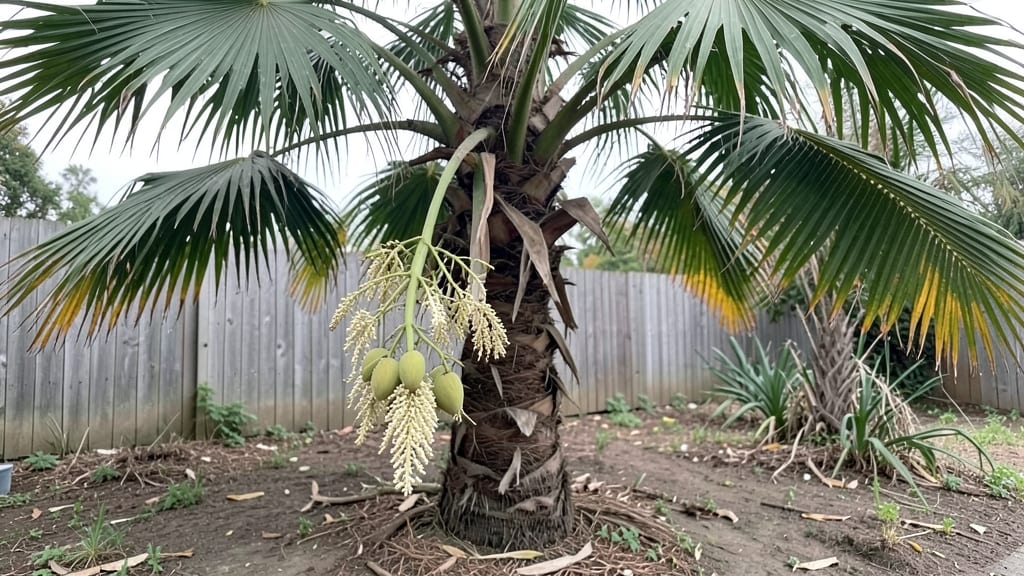
Your coconut tree flower production depends on one critical factor: timing pruning with its natural bloom cycle.
Did you know that pruning your coconut tree at the right time—especially around its flowering stage—can double your fruit yield? Understanding the delicate balance between flower development and pruning is the key to a thriving coconut palm 🌴.
Most gardeners in Tropical and Subtropical Regions (General) make the same mistake: they prune too aggressively when the flowers first appear, thinking it will boost growth. In reality, this can stunt the very fruit you’re hoping to harvest.
In this guide, I’ll show you the exact pruning window to maximize flowering, how to tell when your tree is ready, and the simple adjustments that make all the difference for year-round coconut production.
How coconut tree flowers develop: the critical pruning window
Coconut palms (Cocos nucifera) produce stunning inflorescences that develop into fruit, but their flowering cycle is tightly linked to pruning timing. Understanding this process helps you maximize fruit production while avoiding stress to the tree.
The key lies in recognizing when male and female flowers emerge and how pruning impacts their development.
Coconut trees are monoecious, meaning they produce both male and female flowers on the same plant. The female inflorescence appears first as a compact cluster, while male flowers develop later on separate branches.
Pruning too early can remove potential flower buds, while waiting too long may interfere with pollination success and fruit set.
In tropical climates, coconut trees typically flower year-round, though peaks occur during warmer months. In subtropical zones, flowering is more seasonal, often aligning with spring and summer.
The critical pruning window begins 3-6 months before flowering and ends once flowers appear. This timing ensures the tree retains energy for inflorescence development.
Aggressive pruning during flowering can reduce fruit yield by up to 50%. Heavy cuts remove nutrient-rich branches that support flower development, while selective pruning targets only dead or diseased fronds. The goal is to balance growth and flowering without stressing the tree.
Here’s how the flowering process unfolds and how pruning fits into it:
| Stage | Duration | Pruning Impact | Key Notes |
|---|---|---|---|
| Bud Formation | 3-6 months | Avoid pruning; critical for bud development | Prune only dead fronds; retain all healthy growth |
| Female Flower Emergence | 2-4 weeks | Minimal pruning; focus on lower fronds | Female flowers appear as compact clusters; protect them |
| Male Flower Development | 4-6 weeks | Light pruning; remove only diseased branches | Male flowers support pollination; avoid heavy cuts |
| Pollination & Fruit Set | 6-8 weeks | No pruning; tree focuses on fruit development | Pruning can disrupt pollinators like bats and beetles |
| Post-Flowering Growth | Ongoing | Moderate pruning; remove old fronds | Encourages new growth for next flowering cycle |
The ideal pruning window for coconut palms is 6-12 months before flowering. This timing allows the tree to recover and store nutrients for inflorescence development. In tropical regions, where flowering is less seasonal, prune during dry seasons to reduce stress.
In subtropical climates, align pruning with early spring to coincide with the tree’s natural growth cycle.
If you prune too late, you risk removing emerging flower buds, which can reduce fruit yield by up to 40%. Always inspect your tree for early signs of flowering, such as swollen axillary buds or new frond growth.
These signals indicate the tree is preparing to flower, and pruning should be minimal or avoided entirely.
For young coconut palms (under 5 years old), pruning is even more critical. These trees are still building their canopy and may not yet produce flowers.
Focus on removing only dead or damaged fronds to encourage healthy growth without disrupting future flowering potential. Over-pruning young trees can delay flowering by 2-3 years.
In subtropical climates, where temperatures drop below 60°F (15°C), flowering may slow or stop. If your tree shows delayed or no flowering, consider winter pruning in late fall to stimulate new growth. However, avoid heavy cuts—light pruning is safest during cooler months.
One common mistake is pruning for aesthetics rather than health. Coconut palms thrive with a natural, untrimmed look. Over-pruning for a "neat" appearance can severely limit flowering and fruit production. Instead, prioritize functional pruning: remove only dead fronds, diseased branches, or those blocking light.
To maximize fruit production, time your pruning to avoid the flowering window. If you must prune during this period, limit cuts to 10-15% of the canopy and focus on lower fronds to minimize impact on flower development.
Always use sterilized tools to prevent disease transmission, which can further stress the tree.
Step-by-step pruning guide for flowering coconut palms
Pruning your flowering coconut palm at the right time ensures healthier growth and maximum fruit production. The key is balancing selective pruning to remove dead fronds while preserving the crown structure that supports flower development.
Avoid aggressive cuts during the flowering season, as this can stress the tree and reduce fruit set.
Before you begin, gather the right pruning tools and safety gear. You’ll need a sharp pruning saw for thick fronds, gloves to protect your hands, goggles for debris, and a ladder if your tree is tall.
Always prune during the dry season to minimize disease risk and allow wounds to heal faster.
Step-by-Step Pruning Process
- Step 1: Identify dead or dying fronds by their brown color and brittle texture. These should be removed first to reduce disease risk.
- Step 2: Use a pruning saw to cut fronds at their base, making a clean 45-degree angle to prevent water pooling.
- Step 3: Remove only 1/3 of the fronds at a time to avoid over-stressing the tree. Focus on outer fronds first.
- Step 4: For crown reduction, trim only the topmost fronds sparingly to maintain the tree’s natural shape. Never remove more than 10% of the crown in one session.
- Step 5: Disinfect your tools with rubbing alcohol between cuts to prevent fungal spread. Seal larger wounds with pruning sealant if needed.
- Step 6: Apply a balanced fertilizer (6-6-6 NPK) after pruning to support recovery and flower development.
After pruning, monitor your coconut palm closely for signs of over-pruning, such as yellowing fronds or reduced flowering. If you notice these symptoms, avoid pruning for at least 6 months to allow the tree to recover.
Always prioritize selective pruning over aggressive cuts, especially during the flowering season.
Post-pruning care is just as important as the cuts themselves. Increase watering frequency slightly for the first 2 weeks to help the tree recover, but avoid overwatering, which can lead to root rot.
Mulch the base of the tree with organic matter like coconut coir to retain moisture and improve soil health.
Remember, patience is key when pruning coconut palms. A well-maintained tree can produce up to 100 coconuts per year if pruned correctly. By following these steps, you’ll encourage vibrant flowering and abundant fruit production for years to come. 🌴