
Vegetables
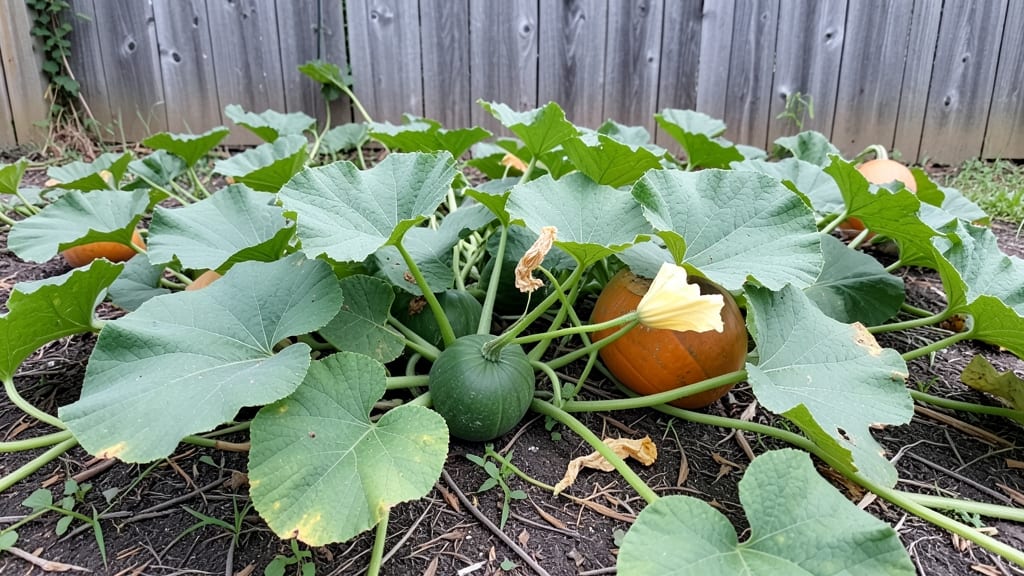
Pumpkin plants do have male and female flowers, and distinguishing them is key to maximizing fruit production. Male flowers grow on long stems and appear first, while female flowers sit near the vine base with tiny fruit behind the bloom.
Understanding the difference between these flowers directly impacts your harvest.
Male blooms open first and thrive on long, leafless stems, while female flowers develop a tiny pumpkin at their base before the blossom even unfolds. 🌱 This gender distinction isn't just botanical trivia—it's your garden's secret to success, as female flowers only produce fruit when properly pollinated by their male counterparts.
For gardeners, this means paying attention to flower development early in the season. Male flowers appear in clusters along the vine, while female flowers emerge closer to the main stem with that signature mini-pumpkin waiting in the wings.
The timing difference gives you a natural window to monitor pollination progress and intervene if needed.
💡 In This Article
- How to Identify Male vs Female Pumpkin Flowers
- Boosting Pumpkin Yield with Flower Pollination Tips
How to identify male vs female pumpkin flowers
Here's what's actually happening under those vibrant blooms: male and female pumpkin flowers have fundamentally different anatomy that serves distinct reproductive roles. Male flowers develop five elongated stamens (the pollen-producing structures) that extend well beyond the petals, creating a star-like appearance when fully open.
These stamens typically measure 1.5 to 2.5 inches long and produce copious yellow pollen that's easily carried by wind or pollinators.
The key visual difference lies in the flower's base: male blooms grow on long, leafless stems (12-24 inches) that emerge from leaf axils, while female flowers develop directly from the main vine or side branches with a tiny, marble-sized pumpkin already forming behind the blossom.
This miniature fruit, called the "ovary," is your first clue—it's visible even before the flower fully unfolds, typically measuring 0.5 to 1 inch in diameter when young.
Timing gives you another advantage for identification. Male flowers appear 1-2 weeks before female flowers during the plant's flowering stage, which typically begins 45-60 days after germination. This early emergence allows bees and other pollinators to establish themselves on the vine before the female flowers become receptive.
The female flowers' delayed appearance coincides with the plant's peak energy production, when it's ready to invest resources into fruit development.
What most people don't realize is how the flower's position affects pollination success. Female flowers positioned closer to the ground (12-18 inches above soil) receive more direct bee traffic because pollinators naturally forage at lower heights.
Meanwhile, male flowers' elevated stems help disperse pollen over wider areas. This spatial arrangement creates an efficient pollination network within the plant's structure.
For hands-on identification, focus on these three sensory cues: touch the flower's base—male stems feel smooth and hairless, while female stems often have fine hairs near the ovary.
Visually, male flowers have no swelling at the base, while female flowers show a distinct bulbous shape where the fruit will develop. Finally, examine the petal arrangement: male petals often curl slightly at the edges when mature, while female petals remain more flat and rigid.
Understanding these distinctions becomes particularly valuable when your pumpkin plants are in low-pollinator environments. In such cases, you can strategically move male flowers closer to female blooms or perform hand-pollination by transferring pollen using a small paintbrush.
The female flowers' receptive period lasts only 24-48 hours after opening, making timely identification critical for maximizing fruit set.