
Blooming
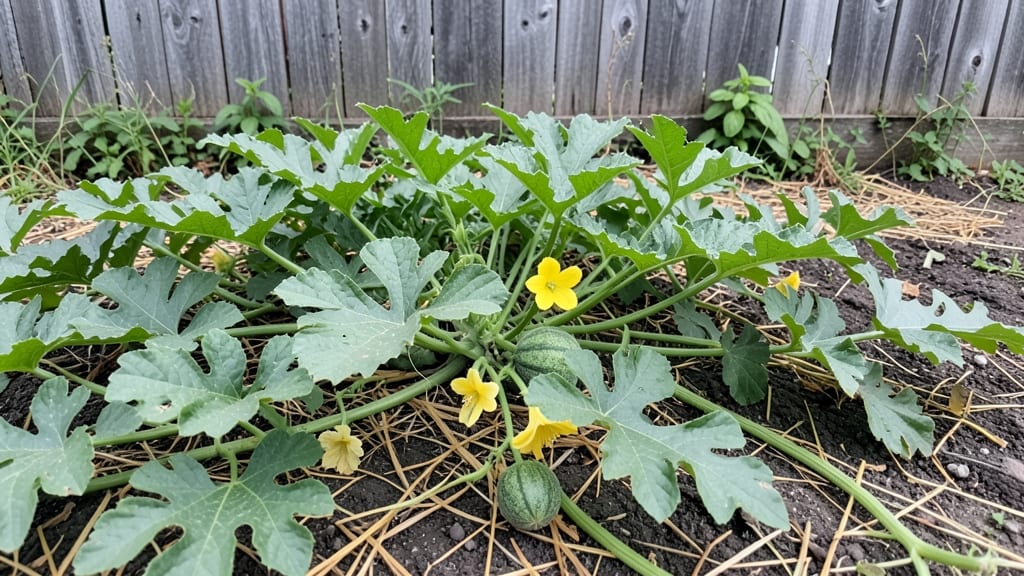
Watermelon plants do have flowers, and both male and female blooms grow on the same vine, though they differ in appearance and function. Female flowers develop into fruit, while male flowers help pollinate them.
You might be surprised to learn that those vibrant watermelon blossoms aren't just pretty—they're the secret to your harvest! 🌸 The male flowers, with their slender stems and no fruit at the base, focus solely on spreading pollen, while the female flowers (easier to spot with their tiny watermelon bumps) are the fruit factories.
Without both working together, you'd end up with either no fruit or just a few underdeveloped melons.
Here's a pro tip: If you notice your vines producing mostly one type, it's often a sign of environmental stress. Watermelons thrive in full sun, well-draining soil, and warm temperatures (75-90°F).
I've found that a gentle shake of the vines in the morning helps with natural pollination, especially on cloudy days when bees are less active.
💡 In This Article
- Watermelon Flower Types: Male vs Female Blooms
- Encouraging Healthy Watermelon Flowers for Better Yields
Watermelon flower types: male vs female blooms
The key difference between male and female watermelon flowers lies in their anatomy and purpose. Male flowers grow on long, slender stems and lack the swollen ovary at their base. Their primary role is to produce pollen, which they release through their five yellow petals arranged in a star shape.
Female flowers, on the other hand, have a small, rounded fruit bump at the base where the ovary sits—this will develop into your watermelon if pollinated successfully.
Here's what to look for when identifying them: male blooms typically measure about 1.5-2 inches across with a hollow stem, while female flowers are slightly larger (2-2.5 inches) and have that distinctive pea-sized bump at the flower's center.
The female flowers also tend to appear slightly earlier in the growing season, giving them a head start in fruit development. 🌸 What most gardeners don't realize is that a single watermelon vine can produce hundreds of flowers—but only about 10-20% of female flowers will actually develop into mature fruit due to natural pollination limitations.
The biological mechanism behind this is fascinating: watermelon flowers are monoecious, meaning both types grow on the same plant. The male flowers release pollen that must transfer to female flowers for fertilization to occur.
This process is typically handled by bees, but environmental factors like temperature fluctuations or pesticide use can disrupt this natural system. Without proper pollination, female flowers will simply wilt and drop off within 24-48 hours, leaving no fruit behind.
This is why gardeners often see more male flowers than female ones—especially in hot climates where the plant prioritizes pollen production to ensure cross-pollination. The ratio can vary dramatically: some varieties produce 3:1 or even 5:1 male-to-female flowers.
However, if you're growing watermelons in containers or greenhouses where bee activity is limited, you might need to hand-pollinate by transferring pollen from male to female flowers using a small brush.
What makes this even more interesting is the genetic influence: certain watermelon varieties have been selectively bred to produce more female flowers for commercial growing.
For example, hybrid varieties like 'Sugar Baby' are known to have a higher female flower ratio (1:1 or even 2:1 female-to-male), while traditional heirloom varieties may lean more toward male dominance.
This genetic variation is why some gardeners report better yields with certain varieties in their specific growing conditions.
The practical takeaway is simple: both flower types are essential for a successful harvest. Male flowers ensure pollen availability, while female flowers provide the potential for fruit development.
When growing watermelons, pay attention to this balance—if you notice an imbalance (like too many male flowers), it might indicate stress in the plant that needs addressing through proper care and pollination assistance. 🌱