
Flowers
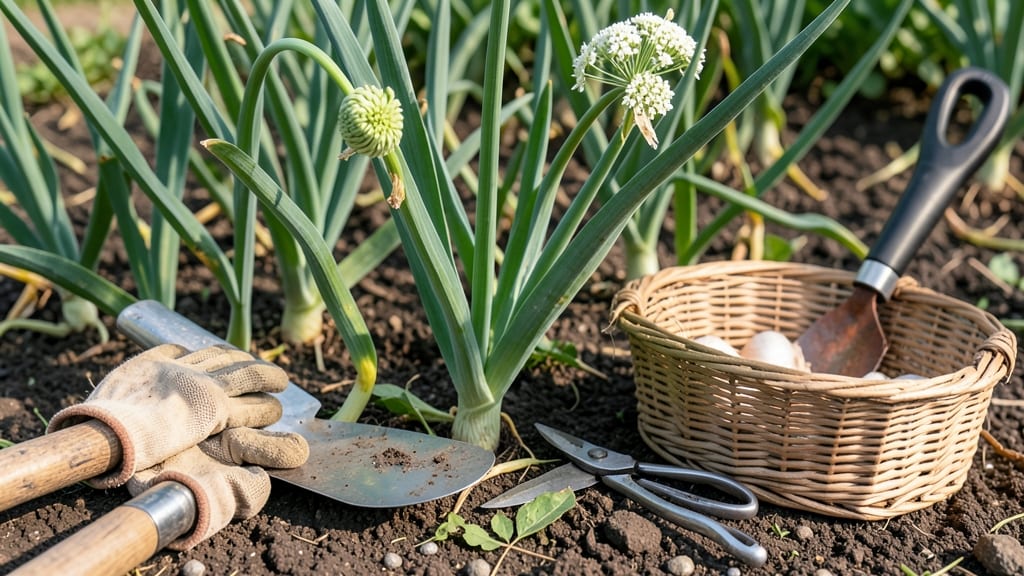
Harvesting garlic before or after it flowers determines whether you end up with plump bulbs or bitter, stunted cloves — and the right choice depends on what you’re growing it for.
Picture this: you’ve spent months nurturing your 🧄 plants, only to stare at those curly flower stalks (scapes) wondering, "Do I cut them now or wait?" The answer isn’t black and white, but getting it wrong can mean the difference between a harvest worth bragging about and one that barely fills a jar.
For most gardeners in USDA Zone 6, the sweet spot is 4-6 weeks before flowering, when about half the lower leaves turn brown but the tops stay green. That’s when bulbs are fully formed but haven’t yet diverted energy to seeds.
But if you’re growing softneck varieties for storage, you might leave them longer — and there’s a trick to salvaging late harvests without sacrificing flavor.
In this guide, I’ll break down the exact visual cues to watch for, the trade-offs of early vs. late harvests, and how to adjust your timing based on your garlic’s variety and your local climate. No more guessing — just clear, actionable steps to maximize your harvest.


When to harvest garlic for maximum bulb size: pre-flower vs post-flower timing
Timing your garlic harvest is one of the most critical decisions for growing large, flavorful bulbs. The general rule is to harvest before flowering, typically when 50-60% of the lower leaves have turned brown and crispy.
This usually occurs 4-6 weeks before flowering, when the bulb has reached near-maximum size but hasn't yet diverted energy into seed production.
For most gardeners, the ideal harvest window falls between late June and early July in USDA Zone 6, but this varies by climate zone and planting time. Hardneck varieties, known for their floral scapes, often signal readiness when the scape starts curling but hasn't fully bloomed.
Softneck varieties, which lack scapes, rely more on leaf color cues.
Harvesting too early—when leaves are still mostly green—results in small, underdeveloped bulbs that lack storage potential. Waiting too long, after flowering, leads to smaller bulbs with stronger flavor and reduced clove count, as the plant shifts energy to seed production. The key is balancing these tradeoffs for your specific goals.
Visual maturity indicators are your best guide. Gently dig up a test bulb when the lower leaves turn paper-dry and brown while the upper leaves remain green. The bulb should feel firm and fully rounded in the soil, with no green shoots emerging from the top.
| Harvest Timing | Leaf Condition | Bulb Development | Ideal For |
|---|---|---|---|
| 4-6 weeks before flowering | Lower 50-60% leaves brown/crispy | Firm, round bulbs (1-2 inches) | Maximum bulb size & storage |
| At flowering (scape appears) | Lower leaves fully brown | Smaller bulbs (0.75-1.5 inches) | Flavor intensity (hardnecks) |
| After flowering | All leaves brown/yellow | Very small bulbs (0.5-1 inch) | Seed production (not storage) |
Hardneck garlic varieties, like 'German White' or 'Music', often produce larger bulbs when harvested pre-flower. These types are prized for their bold flavor and multiple cloves, making precise timing essential.
Softneck varieties, such as 'Silverskin' or 'Artichoke', can tolerate slightly later harvests but still peak before flowering for optimal size.
Climate plays a major role in harvest timing. In warmer zones (7-10), garlic may flower earlier, requiring harvest as early as May or June. Conversely, in cooler zones (3-5), flowering is delayed until July or August, pushing harvest windows later.
Always account for your local last frost date and adjust accordingly.
To test bulb maturity, dig up a single plant and check the bulb size and papery skin. If the bulb is smaller than a golf ball or lacks firmness, wait another week.
If the skin is already thin and papery, it's ready. Remember, garlic bulbs won't grow larger after flowering—they'll only shrink as the plant diverts energy to seeds.
For gardeners in short-season climates, prioritize early-maturing varieties like 'Chet's Garlic' or 'Inchelium Red'. These types reach harvest readiness faster, often by late June, giving you a head start.
In longer growing seasons, you can afford to wait, but never beyond the point where leaves turn fully brown.
Pro tip: Mark your calendar 8-10 weeks after planting to begin monitoring leaf color. Use a leaf color chart (available from seed suppliers) to track progress visually. This simple tool helps avoid guesswork and ensures you harvest at the perfect moment for plump, storage-ready bulbs.
What happens if you harvest garlic after flowering: flavor vs size tradeoffs
Harvesting garlic after flowering is like trading a golden opportunity for a bittersweet compromise. When those curly flower scapes appear, your plant is shifting energy from bulb growth to seed production.
If you wait too long, you’ll end up with smaller bulbs but potentially stronger flavor—a tradeoff many gardeners accept for specific varieties or late-season harvests.
For most hardneck garlic varieties, bulbs stop growing once flowering begins. This means waiting past the ideal harvest window (when lower leaves brown but tops stay green) will shrink your bulb size by up to 30-40%.
However, the flavor often intensifies, making it worthwhile for gardeners who prioritize pungency over storage potential.
More pungent, ideal for cooking.
Up to 30-40% reduction in size.
Softneck garlic can handle delayed harvests.
Energy diverted to seeds reduces clove count.
Immediate cooking reduces storage concerns.
Smaller bulbs store less efficiently.
If you’re growing softneck garlic, you might get away with harvesting after flowering, especially if your goal is long-term storage. These varieties are more forgiving, but even then, bulbs will be smaller and less uniform.
For hardneck varieties, the tradeoff is steeper—bulbs shrink noticeably, and clove count drops, making them less ideal for braiding or storage.
There’s a silver lining: if you harvest immediately after flowering (within 1-2 weeks), you can still salvage decent-sized bulbs while capturing some of that intensified flavor. This is especially useful if you missed the ideal window or live in a warmer climate where garlic bolts early.
Just be prepared for fewer, smaller bulbs compared to pre-flower harvests.
For gardeners in USDA Zone 6, timing is critical. If your garlic flowers in late June, rushing to harvest by mid-July (even if leaves are still green) can yield better results than waiting.
Use this as your cutoff point: if flowering starts before your ideal harvest window, act fast to minimize losses.
Ultimately, the choice comes down to your priorities. Want storage-worthy bulbs? Harvest before flowering. Craving bold flavor for fresh cooking? Wait until just after. And if you’re unsure, test a few plants—you’ll quickly learn what works best for your 🧄 variety and climate.