
Flowers
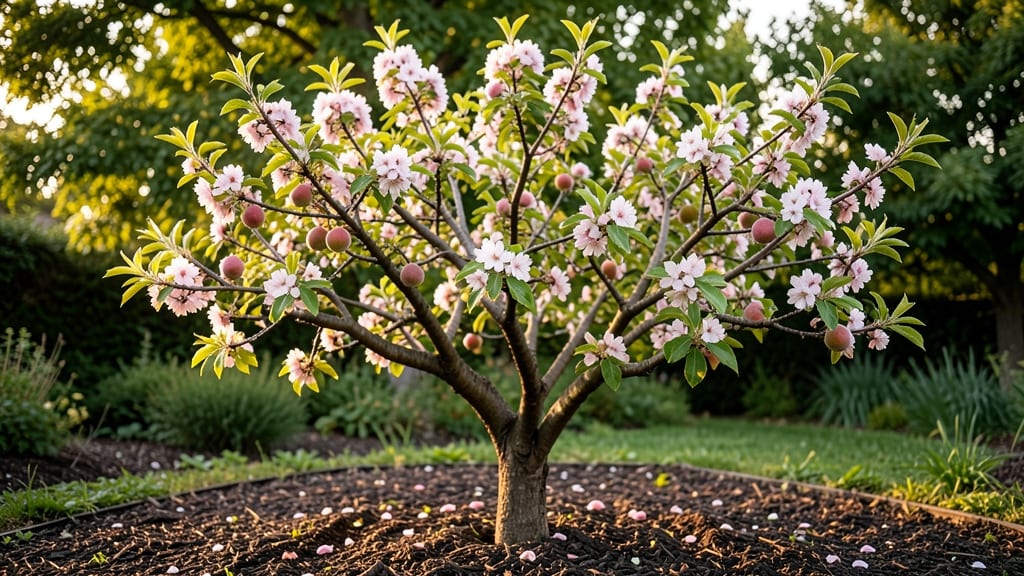
Transforming a nectarine flower 🍑 into sweet fruit is all about timing, pollination, and the right growing conditions — and it happens faster than you think.
Picture this: one morning, your tree is blanketed in delicate pink blossoms, and by summer, you’re picking ripe fruit straight from the branch. But here’s the catch — skip a step, and you’ll end up with dropped blossoms or underdeveloped nectarines.
The key is understanding the 60-day window between pollination and harvest, and how to keep your tree on track.
From the moment those first flowers open, your nectarine’s journey depends on temperature, water, and even a little help from bees. Too much heat or drought? The blossoms may fall before they set fruit. Too little sun?
The fruit won’t ripen properly. I’ll walk you through each stage — what to watch for, how to troubleshoot common issues, and the exact care your tree needs to turn those blooms into a bountiful harvest.
Ready to go from bloom to basket? Let’s break down the science — and the simple steps — to ensure your nectarine tree delivers the juicy payoff you’re dreaming of.
Nectarine flower development stages: what to expect from bloom to pollination
Nectarine trees burst into bloom with stunning pink or white flowers in early spring, signaling the start of fruit development. Each flower contains both male and female reproductive parts, making them self-pollinating but often more productive with cross-pollination.
Understanding these stages helps you optimize conditions for fruit set success.
The journey begins with bud swell in late winter, where flower buds expand as temperatures rise above 40°F (4°C). Within 2-3 weeks, buds open into 5-petaled blossoms with vibrant colors that attract pollinators. This phase lasts 7-14 days depending on variety and climate.
| Stage | Key Features | Duration | Optimal Conditions |
|---|---|---|---|
| Bud Swell | Swollen buds, green tips | 2-3 weeks | 40-50°F (4-10°C) |
| Full Bloom | Open flowers, vibrant colors | 7-14 days | 50-75°F (10-24°C), sunny |
| Pollination | Pollen transfer, stigma receptivity | 3-5 days | 60-85°F (16-29°C), bees active |
| Fruit Set | Petals fall, tiny fruits form | 10-14 days | Warm days, moderate humidity |
| Cell Division | Rapid fruit growth begins | 30-45 days | Consistent water, 70-85°F (21-29°C) |
For successful pollination, nectarine flowers require bees and gentle breezes to transfer pollen between flowers. While nectarines are self-fertile, cross-pollination between trees increases fruit set by 20-30%. Planting two varieties within 50 feet (15m) of each other maximizes pollinator activity.
Temperature plays a critical role: flowers open best between 50-75°F (10-24°C), while below 45°F (7°C) or above 90°F (32°C) can stunt pollination. Humidity above 80% may cause pollen clumping, while dry conditions below 30% reduce bee activity.
Wind speeds of 3-8 mph (5-13 km/h) help disperse pollen, but excessive wind can damage delicate blossoms. In low-wind areas, hand-pollinate by gently shaking branches during peak bloom hours (10 AM-2 PM). Avoid using water sprays during this time, as moisture can wash away pollen.
After pollination, the ovary swells and petals drop within 7-10 days, marking the start of fruit set. Healthy fruit will grow rapidly, while poor pollination leads to blossom drop or small, underdeveloped fruits. Thin fruits to 6-8 inches (15-20 cm) apart to ensure larger, higher-quality nectarines.
Common pollination challenges include late frosts, which kill blossoms, and pesticide use, which repels bees. If you notice fewer than 50% of flowers setting fruit, check for these issues and adjust care accordingly. A healthy nectarine tree can produce 100-200 fruits per season under optimal conditions.
Monitor your tree closely during bloom: green fruitlets indicate successful pollination, while brown or shriveled blossoms suggest problems. By understanding these stages, you'll maximize your tree's potential and enjoy a bounty of juicy nectarines in just 60 days!
Critical care steps to ensure fruit set and growth after flowering
Once your nectarine tree’s pink blossoms have opened, the real work begins. The 60-day window from pollination to harvest is when you’ll determine whether those flowers become fruit. During this phase, your tree needs precise care—especially in water, nutrients, and pruning—to prevent issues like blossom drop or stunted growth.
I’ve learned that skipping even one step can mean fewer fruits or poor-quality nectarines.
First, focus on watering consistency. After flowering, your tree needs deep, infrequent watering—about 1-2 inches per week—to encourage root growth without shocking the blossoms. Too much water can cause root rot, while too little leads to dropped fruit.
I water mine at the base of the tree in the early morning to reduce evaporation and fungal risks.
⚠️ WARNING: Common Pitfalls After Flowering ⚠️
- Cause: Extreme heat (90°F+), drought, or nutrient deficiency (especially potassium or phosphorus).
- Fix: Apply 1 tbsp Epsom salt (magnesium) per gallon of water + balanced fertilizer (10-10-10) at the base.
- Prevent: Mulch with 2-3 inches of compost to retain moisture and cool roots.
- Fruit falls off within 10 days of pollination.
- New growth is yellow or stunted.
- Leaves show brown edges (potassium deficiency).
- Test soil pH (6.0–7.0 ideal)—adjust with lime or sulfur.
- Hand-pollinate if bees are scarce (use a soft brush).
- Avoid heavy pruning—wait until after harvest.
Next, shift your focus to nutrient adjustments. After flowering, your tree needs more phosphorus (P) for root development and potassium (K) for fruit quality. I use a 10-10-10 fertilizer every 4-6 weeks during the growing season, but I’ve found that a 5-10-10 blend works even better for nectarines.
Apply it in a wide band around the drip line, not directly at the trunk, to avoid burning roots.
Pruning plays a critical role too—especially thinning young fruit. Overloaded branches can’t support all the fruit, leading to small, misshapen nectarines. I remove 50% of the smallest fruits when they’re the size of a marble, spacing them 6 inches apart on the branch.
This ensures the remaining fruit gets enough sunlight and nutrients to grow properly. Use clean, sharp pruners to avoid damaging the tree.
Finally, watch for pests and diseases like aphids or brown rot, which thrive during warm, humid weather. I spray my trees with neem oil preventatively and remove any mummified fruit (dried, shriveled nectarines) to stop fungal spread.
If you see yellow leaves with brown spots, it’s likely brown rot—prune infected branches immediately and apply a copper fungicide.
With these steps, you’ll give your nectarine tree the best chance to convert blossoms to fruit efficiently. The key is consistency—stay on top of watering, nutrients, and thinning, and you’ll be picking sweet nectarines in no time. 🍑