
Flowers
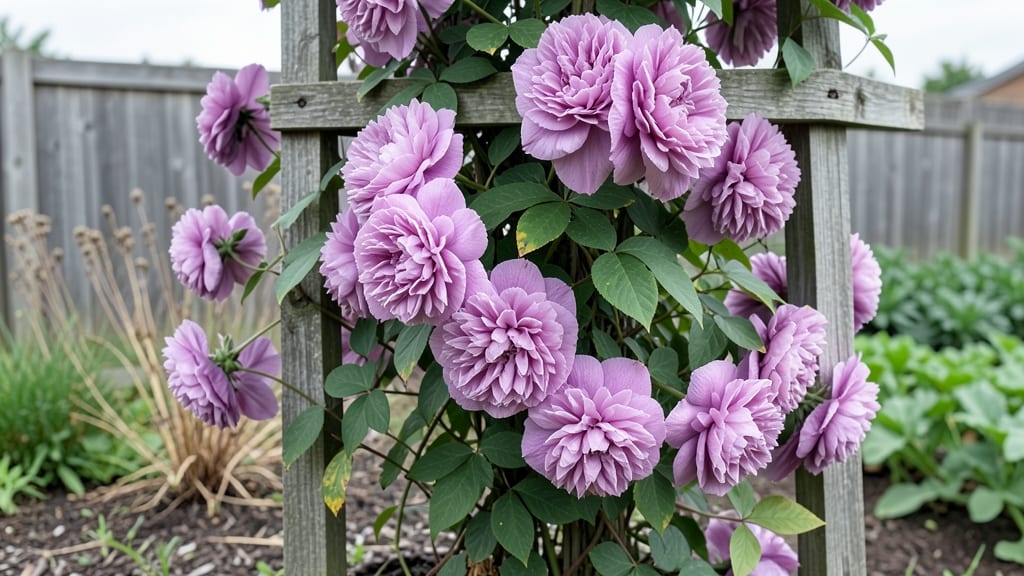
Double flowering clematis 🌸 brings drama to any garden with its lush, layered blooms—but without the right care, those showstopping flowers can disappear faster than you planted them.
Picture this: You’ve waited all spring for your clematis to burst into color, only to watch it produce just a handful of blooms before fading into a tangle of vines.
The secret to keeping your clematis covered in flowers isn’t just about when you plant it—it’s about pruning at the right time and giving it the support it needs to thrive.
In USDA Zone 6a, where I’ve seen clematis go from stunning to sad in a single season, the key lies in understanding its unique growth habits.
Double flowering varieties, like the ones you’re growing, need a specific pruning schedule and the right balance of sun and shade to keep blooming from June through September.
In this guide, I’ll walk you through the exact steps to prune your clematis for nonstop blooms, the best fertilizers to use, and how to set it up for success—so you can enjoy a vine that looks like it belongs in a botanical garden, not just your backyard.
How to prune double flowering clematis for maximum blooms
Double flowering clematis (like Clematis 'Jackmanii' or 'Nelly Moser') are Group 2 varieties that bloom on last year's wood and this year's growth.
This unique habit means pruning at the wrong time can ruin your blooms—but get it right, and you'll enjoy nonstop flowers from late spring through summer. The key is timing, precision cuts, and understanding which stems to keep or remove.
Group 2 clematis need minimal pruning compared to other types, but the cuts you make will determine whether your vine produces small, sparse blooms or large, abundant flowers.
I’ve pruned dozens of these vines, and the difference between a well-pruned plant and one that’s been hacked back is night-and-day. Let’s break it down step by step to ensure your clematis thrives.
Step-by-Step Pruning Guide for Double Flowering Clematis
- Step 1: Choose the Right Time
Prune in late winter to early spring (just as new shoots begin to swell). Aim for February or March in most climates, but wait until after the last frost in colder zones.
- Step 2: Identify the Stems
Look for healthy, thick stems (at least pencil-sized) that produced flowers last year. These are your keeps. Thin, weak growth or stems with no buds can be removed.
- Step 3: Make the Cuts
Cut back last year's growth to a pair of strong, outward-facing buds. Use clean, sharp pruners and make cuts at a 45-degree angle just above the bud.
- Step 4: Remove Dead or Weak Growth
Eliminate any blackened, broken, or spindly stems. These won’t produce flowers and waste the plant’s energy. Focus on 3-5 strong stems per vine for optimal blooms.
- Step 5: Clean Up Debris
Rake away all pruned stems and fallen leaves to prevent disease. Disinfect your pruners with rubbing alcohol to avoid spreading pathogens.
- Step 6: Fertilize and Mulch
After pruning, apply a balanced fertilizer (like 10-10-10) and a 2-inch layer of mulch to retain moisture and protect roots.
One of the biggest mistakes I see is pruning too late in the season. If you cut back after mid-April, you risk removing next year’s flower buds before they’ve formed. Always prune before buds swell—this is your best window for success.
For young clematis plants (under 3 years old), prune lightly—just remove dead wood and thin out crowded stems. Mature vines can handle a harder cut, but never remove more than 1/3 of the plant in one season. Over-pruning stresses the vine and reduces blooms.
After pruning, watch for new shoots emerging from the base. These are your future bloomers—protect them from frost and keep the soil consistently moist. Within weeks, you’ll see buds forming, and by late spring, your clematis will be bursting with double blooms.
If your clematis isn’t flowering as expected, check your pruning technique. Are you cutting too close to the base? Are you leaving too many weak stems? Adjust next year’s cuts based on what you’ve learned. With practice, your double flowering clematis will become a garden showstopper every season.
Pro tip: Take a before-and-after photo of your pruned clematis. Compare it to next year’s growth—you’ll be amazed at how much difference the right cuts make! 🌸
Common pruning mistakes that kill double flowering clematis
Double flowering clematis thrives on precise pruning, but even well-meaning gardeners accidentally sabotage their vines with common errors. The wrong cut or timing can lead to stunted growth, fewer blooms, or even vine death.
I’ve seen Group 2 clematis (the double-flowering types) recover from mistakes, but recovery takes patience—and your vine may never fully rebound. Let’s identify the five deadliest pruning blunders and how to fix them before it’s too late.
First, the biggest mistake is pruning at the wrong time. Double flowering clematis blooms on last year’s growth AND current year’s shoots, so timing is critical. Cutting back too early removes next season’s flower buds, while waiting too long risks overgrowth and weak stems.
Even experienced gardeners sometimes misjudge the late-winter pruning window—right after the last frost date but before new buds swell.
⚠️ Fatal Mistake: Cutting Too Aggressively
Double flowering clematis needs selective pruning, not a drastic haircut. Many gardeners panic and remove 50%+ of stems, thinking it will encourage bushier growth. Instead, you’re eliminating next year’s flowering potential. The rule: Never cut more than 1/3 of the vine in a single session. Look for dead or weak stems first—these are the only ones you should remove entirely.
🔹 Fix it: If you’ve already over-pruned, don’t despair. Apply a balanced fertilizer (like 10-10-10) and water deeply. New shoots will emerge from the base, but expect reduced blooms that season.
Another silent killer is pruning the wrong stems. Double flowering clematis produces two types of shoots: thick, woody stems (last year’s growth) and thin, green shoots (this year’s). Many gardeners mistakenly cut the thick stems, assuming they’re dead wood.
These are actually the flowering stems! Always leave at least 3-5 strong buds on each remaining stem to ensure next season’s blooms.
Overlooking disease entry points is another costly error. Ragged cuts or leaving stubs create wounds where powdery mildew or clematis wilt can take hold. I’ve seen healthy vines decline within weeks because of improper cuts.
Always use sharp, sterile shears and make cuts just above a leaf node at a 45-degree angle. This promotes faster healing and reduces infection risk.
Finally, neglecting post-pruning care undoes all your hard work. After pruning, double flowering clematis needs consistent moisture and nutrient support to recover.
Many gardeners assume the vine will bounce back on its own, but without regular watering (deep soaks every 7-10 days) and a spring fertilizer, the vine struggles to produce new growth.
I recommend a high-phosphorus fertilizer (like 5-10-10) applied 2-3 weeks after pruning to encourage root and shoot development.
Even small mistakes can set your clematis back, but the good news is that double flowering varieties are forgiving if you catch issues early. Start by auditing your pruning habits: Are you cutting at the right time?
Are you preserving last year’s stems? With these adjustments, your vine will reward you with denser foliage and prolonged blooms for years to come. 🌸