
Shrubs
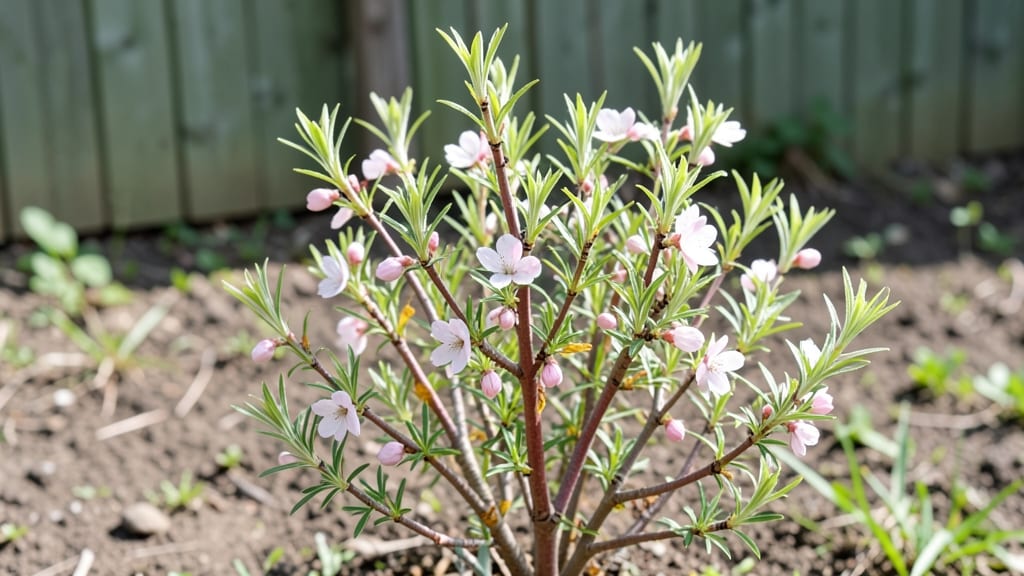
Growing a dwarf flowering almond 🌸 in your garden means waking up to clouds of fragrant blossoms every spring — and with the right pruning, you can coax a second bloom cycle in fall.
Imagine a dwarf flowering almond tree bursting with fragrant blooms twice a year—without sacrificing your garden space. These compact beauties are a gardener’s secret weapon, but their magic hinges on precise pruning techniques most growers miss.
The key to repeat flowering lies in understanding when to cut back: too late and you lose next year’s blooms; too early and you stunt growth.
In Zone 6, timing your pruning to late winter (February-March) sets the stage for vibrant spring flowers and, with a few extra tricks, a surprise fall display.
Here’s how to shape your dwarf flowering almond for year-round blooms, from the first snip to the last petal drop — plus the 3 pruning mistakes that kill your chances of a second flush.
How to prune dwarf flowering almond trees for maximum blooms
Pruning your dwarf flowering almond tree isn’t just about shaping its form—it’s the key to unlocking year-round blooms. Unlike their larger counterparts, these compact shrubs rely on strategic cuts to maintain their bloom-heavy growth while staying manageable in small spaces.
I’ve learned the hard way that skipping this step can mean fewer flowers and weaker branches, so let’s dive into the science-backed method that keeps my trees thriving.
Timing is everything with dwarf flowering almonds. Prune at the wrong time, and you risk cutting off next year’s flower buds or stressing the plant. The best approach? A two-season strategy that balances winter cleanup with spring growth stimulation.
This method has given me two bloom cycles per year—once in early spring and again in late summer—without overpowering my garden space.
Before you grab your shears, gather these essentials: sharp bypass pruners, sterilized alcohol wipes, and a clean bucket for clippings. I can’t stress enough how clean tools prevent disease spread. Now, let’s get to the step-by-step guide that’s transformed my pruning routine from guesswork to garden art.
Step-by-Step Pruning Guide for Dwarf Flowering Almonds
- 1 Late Winter Pruning (February): Remove dead or crossing branches to improve airflow. Cut just above a bud or outward-facing leaf to encourage new growth. This is your first bloom cycle prep.
- 2 Post-Bloom Thinning (May): After spring flowers fade, trim 1/3 of last year’s growth to stimulate secondary blooms. Focus on branches growing inward or downward—they’ll steal energy from your showstopper flowers.
- 3 Summer Light Pruning (July-August): Remove only suckers or overly vigorous shoots. Avoid heavy cuts—your tree is setting next year’s flower buds now. A quick trim keeps the shape clean without stressing the plant.
- 4 Fall Cleanup (October): Remove any diseased or damaged wood before winter. Disinfect tools between cuts to prevent bacterial canker, a common issue with almond trees. Stop pruning by mid-October to let the tree harden off.
- 5 Spring Growth Stimulation (March): Lightly shape the tree by cutting back overly long branches to maintain your desired compact form. This encourages balanced growth and prevents the tree from becoming top-heavy.
One of the biggest mistakes I see is over-pruning in spring, which can delay or even prevent flowering. Your dwarf flowering almond sets its flower buds in late summer, so heavy cuts after August can mean fewer blooms next year.
I now follow the 30% rule: never remove more than one-third of the plant’s foliage in a single season.
Another critical tip? Never top your tree—cutting the main stem encourages weak, leggy growth that’s prone to breakage. Instead, focus on selective branch removal to maintain that natural, bushy shape while keeping the center open for airflow.
My trees now have thicker canopies and more uniform blooms thanks to this approach.
If you’re growing your dwarf flowering almond in a container, pruning becomes even more important. Root-bound plants struggle to recover from heavy cuts, so I limit container pruning to light shaping and deadwood removal. Always water thoroughly 24 hours before pruning to reduce shock—hydrated plants handle cuts much better.
Watch for water sprouts (fast-growing, vertical shoots) that pop up after pruning. These are a sign your tree is trying to compensate for cuts. Snip them off at the base—they drain energy from your flower production.
I make it a habit to check for these every two weeks during growing season.
Finally, celebrate your progress! A well-pruned dwarf flowering almond should have a balanced silhouette with open centers and vigorous new growth. My trees now burst with pink and white blooms from spring to fall, all thanks to this precise pruning routine.
With practice, you’ll achieve the same stunning results in your garden.
Dwarf flowering almond tree care: fertilizer, watering, and light needs for year-round blooms
Your dwarf flowering almond (Prunus glandulosa) can reward you with two bloom cycles per year—but only if you nail the fertilizer balance, watering rhythm, and light exposure. Unlike its full-sized cousins, these compact shrubs thrive on precision, not excess.
The key lies in mimicking their natural Mediterranean climate with low-nitrogen fertilizers, deep but infrequent watering, and uninterrupted sunlight. Let’s break down the science-backed routine that keeps your tree flowering like clockwork.
Most gardeners over-fertilize, which triggers leafy growth at the expense of blooms. Your dwarf almond prefers a 10-10-10 NPK ratio—equal parts nitrogen, phosphorus, and potassium—to support root development and flower production without encouraging rampant foliage.
Pair this with well-draining soil (pH 6.0–7.0) to prevent root rot, a silent bloom-killer. Watering follows a seasonal schedule: deep soaks in spring/summer, then scaled back in fall/winter to simulate dormancy.
| Care Factor | Specification | Seasonal Notes |
|---|---|---|
| Fertilizer Type | 10-10-10 NPK | Spring: Feed monthly Summer: Light feed every 6 weeks Fall/Winter: None |
| Watering Depth | 12–18 inches | Spring/Summer: Weekly Fall: Bi-weekly Winter: Monthly |
| Sunlight Needs | 6+ hours direct | Adjust pruning to maintain canopy openness |
| Soil pH | 6.0–7.0 | Test annually; amend with lime or sulfur as needed |
| Mulch Layer | 2–3 inches | Organic mulch (e.g., bark) to retain moisture |
Light is non-negotiable for year-round blooms. Your dwarf almond demands full sun exposure (6+ hours daily) to trigger flowering hormones. If you’re growing in containers, place them on a south-facing patio or rotate pots weekly to ensure even light distribution.
In shadier climates, supplement with a grow light for 4–6 hours daily during winter—this mimics the longer daylight their native habitats provide. Skip the grow light in summer, though, or you’ll risk heat stress.
Watering follows a deep-soak method: saturate the soil until water drains 12–18 inches deep, then wait until the top 2 inches feel dry before repeating. Overhead watering encourages fungal diseases, so use a drip irrigation system or water at the base.
In summer heat, increase frequency to every 5–7 days, but never let the soil stay soggy. A moisture meter is your best friend here—aim for 60% soil moisture at all times.
To maximize blooms, time your fertilizer applications with the tree’s natural cycles. Feed lightly in early spring (when buds swell) to jumpstart growth, then switch to a phosphorus-heavy formula (like 5-10-10) in late summer to encourage next year’s flower buds.
Avoid fertilizing after mid-August, as new growth won’t harden off before winter. Pair this with a seasonal pruning schedule: prune immediately after blooming to remove dead wood and shape the tree, but never cut back flowering branches—they’re next year’s blooms in waiting!
Pro tip: Mulch heavily in fall with wood chips or straw to insulate roots and conserve moisture. This mimics the natural drought cycles of their Mediterranean origins. By winter, reduce watering to monthly and stop fertilizing entirely—your tree is dormant, not dead.
With this routine, you’ll coax two stunning bloom cycles from your dwarf almond, turning your garden into a fragrant paradise year after year. 🌸