
Shrubs
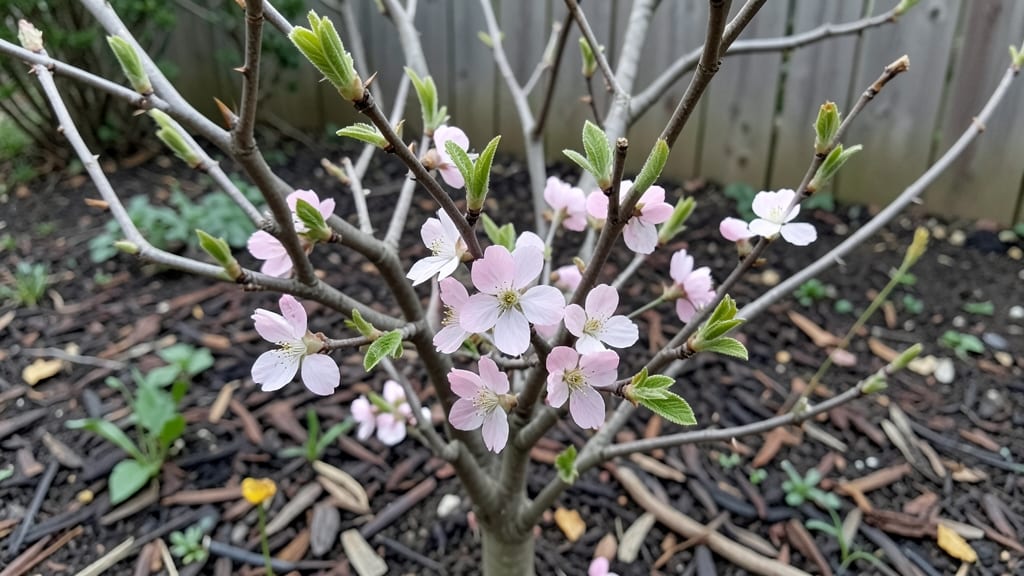
Flowering almond spreads aggressively as an invasive species, forming dense thickets that outcompete native plants. Its prolific seed production and underground runners allow rapid colonization, often doubling coverage annually if uncontrolled. Manual removal and herbicide application are the most effective control methods during early growth stages.
Once established, flowering almond doesn’t just spread—it dominates, thanks to its dual invasion strategy. 🌱 While its seeds hitchhike on wildlife and water, the real game-changer is its extensive root system, which can stretch up to 10 feet underground.
This lets it tap into deep moisture while choking out grasses and wildflowers by shading them out completely. In regions like the Southeast U.S., where it thrives in disturbed soils, it can transform open fields into impenetrable thickets within just 3-5 years.
What makes it even trickier is how adaptable it is—it flourishes in both dry and moist conditions, tolerates poor soil, and even resprouts from cut stems. 💥 Unlike slower invaders, flowering almond doesn’t wait for opportunities; it creates them by altering soil chemistry and outcompeting native species for sunlight and nutrients.
That’s why early intervention isn’t just recommended—it’s critical to prevent irreversible ecosystem damage.
💡 In This Article
- How Flowering Almond Invades Ecosystems
- Step-by-Step Flowering Almond Removal Techniques
How flowering almond invades ecosystems
Here's what's actually happening underground: flowering almond (Prunus integrifolia) spreads primarily through a network of aggressive rhizomes—horizontal, creeping roots that can extend up to 10 feet from the parent plant.
These rhizomes grow at a rate of 1-2 feet per year, allowing the shrub to form dense colonies that smother native vegetation.
Unlike many shrubs that rely solely on seeds, flowering almond combines this underground expansion with prolific seed production—each plant can release 500-1,000 seeds annually—giving it a two-pronged invasion strategy. 🌱
The real competitive edge comes from its ability to alter soil chemistry. Flowering almond releases allelopathic compounds that suppress the growth of competing plants, particularly grasses and wildflowers. Studies show these chemicals can reduce seed germination rates by up to 60% in surrounding flora.
This chemical warfare, combined with its rapid rhizome growth, creates a feedback loop where flowering almond not only spreads faster but also makes it harder for native species to recover once established.
In comparison, invasive shrubs like kudzu rely primarily on vine growth rather than rhizomes, making flowering almond's spread both wider and deeper.
Climate plays a critical role in its proliferation. Flowering almond thrives in disturbed soils with full sun exposure, common in areas with frequent human activity like roadsides or construction sites.
It's particularly aggressive in regions with mild winters and hot summers, such as the southeastern U.S., where it can complete its life cycle year-round.
The plant's drought tolerance—thanks to its deep root system—allows it to outcompete moisture-sensitive native species during dry spells. 💧 This adaptability explains why it often dominates ecosystems faster than similar invaders like privet or Chinese tallow.
What most people don't realize is how its seed dispersal works. While some seeds fall directly beneath the parent plant, others are carried by wildlife (especially birds and small mammals) or spread by water during floods.
The seeds remain viable in the soil for up to 5 years, creating a dormant seed bank that ensures new plants emerge even after the original thicket is removed.
This persistence makes eradication efforts particularly challenging, as any missed seeds can lead to regrowth within just 1-2 growing seasons.
Consider these key factors that accelerate its spread:
- Rhizome growth: Can create new plants 12-18 inches from the original stem within a single season
- Seed viability: Seeds germinate even in compacted or nutrient-poor soils
- Shade tolerance: Young seedlings can survive under 30-40% canopy cover, unlike many native species
- Regrowth ability: Cut stems often sprout new shoots within 2-3 weeks if not treated properly
The biological mechanism behind its success is its ability to monopolize resources before native species can establish. Flowering almond's rapid growth rate—often reaching 6-10 feet tall in just 3-5 years—allows it to quickly dominate sunlight, while its extensive root system captures water and nutrients that would otherwise support diverse ecosystems. This resource monopoly explains why flowering almond often transforms open fields into monoculture thickets within a decade, fundamentally altering the local habitat structure. 🌿