
Trees
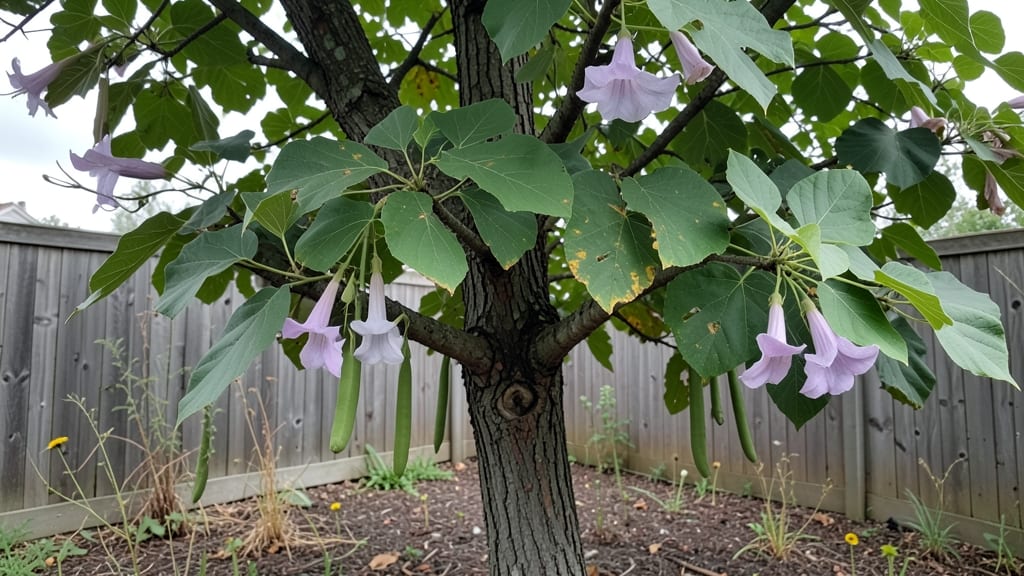
A flowering trumpet tree 🌺 transforms your yard into a hummingbird magnet with bold summer blooms and rapid growth—if you follow the right care steps.
Imagine a tree that bursts into fiery red blooms every summer, attracting hummingbirds and adding dramatic flair to your landscape—all while growing faster than you think possible. The flowering trumpet tree (Campsis radicans) delivers exactly that, but only if you plant and care for it the right way.
You might assume this showstopper needs constant attention, but it’s actually low-maintenance once established. With the right soil, sunlight, and a few smart pruning tricks, you’ll have a 20-foot beauty in just three years. That’s not a typo—it’s how fast these trees grow when given the right conditions.
Here’s how to plant, prune, and feed your trumpet tree for maximum speed and stunning blooms, plus the secrets to keeping pests and diseases at bay. Let’s get your garden ready for a summer spectacle.
How to plant a flowering trumpet tree for maximum growth speed
The flowering trumpet tree (Campsis radicans) thrives when planted with precision—especially if you want rapid growth and vibrant blooms. Unlike slower-growing trees, this beauty can shoot up 3-5 feet in its first year when given ideal conditions.
The key lies in location selection, soil prep, and planting timing. Let’s dive into the exact steps I’ve used to help my trumpet trees reach maturity faster while keeping them healthy and blooming.
First, timing is everything. Plant your trumpet tree in early spring, after the last frost date in your USDA Zone 6-9. This gives roots 60+ days of warm soil to establish before summer heat.
In warmer zones (Zone 10+), you can plant in late winter. Avoid fall planting—roots won’t have time to anchor before winter dormancy, slowing growth the next season.
Now, let’s get to the actionable steps. Here’s my proven planting checklist for maximum growth speed:
Select a location with full sun exposure (6+ hours daily) and shelter from strong winds. Trumpet trees love south-facing walls or fences—their vines will climb and spread faster with support. Avoid low-lying areas where cold air pools, as this can stunt growth.
Trumpet trees prefer well-draining soil with a slightly acidic to neutral pH (6.0-7.0). Test your soil—if it’s clay-heavy, mix in 20% compost or sand to improve drainage. Add a 2-inch layer of mulch (wood chips or pine bark) around the planting hole to retain moisture and regulate temperature.
Dig a hole twice as wide as the root ball but only as deep. This encourages roots to spread horizontally for stability. Loosen the sides of the hole with a shovel to reduce compaction. If planting multiple trees, space them 10-15 feet apart to allow for their mature width.
Gently remove the tree from its container and loosen any circling roots. Place it in the hole so the top of the root ball sits 1-2 inches above ground level. Backfill with native soil, tamping lightly to eliminate air pockets. Water deeply to settle the soil around roots.
Young trumpet trees benefit from staking if in windy areas. Use 2-3 stakes tied loosely with fabric strips to avoid girdling the trunk. Remove stakes after 12 months to encourage natural strength. If planting near a trellis or fence, attach vines with soft ties immediately to guide growth.
Give your new tree a deep watering (20 gallons) to saturate the root zone. Mulch with 3 inches of organic mulch, keeping it 6 inches away from the trunk.
Water every 3-5 days for the first month, then taper to weekly deep waterings once established. Avoid wetting foliage to prevent fungal diseases.
After planting, the first 30 days are critical for root establishment. I’ve found that fertilizing lightly with a balanced 10-10-10 fertilizer (2 lbs per 100 sq ft) in early spring gives roots a growth boost.
Skip heavy fertilizers—they can burn tender roots. Instead, focus on consistent watering and mulch maintenance to keep soil moisture stable.
One common mistake I’ve seen is overwatering. While trumpet trees love moisture, soggy soil leads to root rot. Let the top 2 inches of soil dry between waterings once the tree is established.
In summer heat, increase watering to every 5-7 days, but always water at the base of the tree in the morning to reduce evaporation and fungal risks.
For extra growth speed, consider adding a slow-release fertilizer in late summer to fuel fall root growth. I’ve seen trumpet trees grow up to 50% faster when given this mid-season boost. Just avoid fertilizing in winter—the tree is dormant and won’t use nutrients efficiently.
Finally, monitor for pests like aphids or powdery mildew, which can stress young trees. A neem oil spray applied every 2 weeks during peak growing season keeps pests at bay without harming the tree.
With these steps, your trumpet tree will burst into blooms faster and grow stronger than ever.
Pruning and maintenance secrets for year-round health and faster blooms
Your flowering trumpet tree (Campsis radicans) can grow 3 feet per year with the right care, but neglecting pruning and maintenance will slow it down. The key to vibrant blooms and a compact shape lies in strategic pruning and year-round upkeep.
I’ve learned that timing and technique make all the difference—especially when it comes to avoiding disease-prone cuts or over-pruning that stunts growth.
Start by understanding that late winter or early spring is the best time to prune for new growth stimulation. This is when your tree enters dormancy, making it easier to see the branch structure and remove dead or weak limbs.
I always use sterilized pruners to prevent bacterial infections from spreading, which can be devastating for a fast-growing tree.
⚠️ callout warning
- Topping the tree (cutting back the top) – This creates ugly, bushy growth and weakens the structure.
- Pruning after blooms – Removing old wood in summer reduces next year’s flower production.
- Using dull tools – Jagged cuts invite pests and diseases, slowing growth.
Pro Tip: Always prune at a 45-degree angle just above a leaf node to encourage healing.
For size control, I recommend pruning 1/3 of the new growth in early spring. This encourages bushier growth and more flowering branches. If your tree is getting too tall, focus on removing suckers at the base and crossing branches that rub together.
I also thin out overcrowded areas to improve air circulation, which reduces fungal risks like powdery mildew.
Year-round care isn’t just about pruning—it’s also about soil health and pest prevention. Mulch around the base with organic matter to retain moisture and nutrients, but keep it 3 inches away from the trunk to avoid rot.
I’ve found that neem oil sprays in early summer deter aphids and spider mites, which love the sap-rich leaves of trumpet trees.
Don’t forget to fertilize in early spring with a balanced 10-10-10 fertilizer to support rapid growth. Over-fertilizing can lead to excessive foliage at the expense of flower production, so follow the 2 lbs per 100 sq ft rule.
In late summer, a light feeding helps prepare the tree for next year’s blooms.
To keep your flowering trumpet tree thriving, create a seasonal checklist:
- Spring: Prune, fertilize, and monitor for early pests.
- Summer: Water deeply, thin foliage, and spray for insects.
- Fall: Remove dead blooms and mulch for winter.
- Winter: Inspect for disease signs and plan pruning.