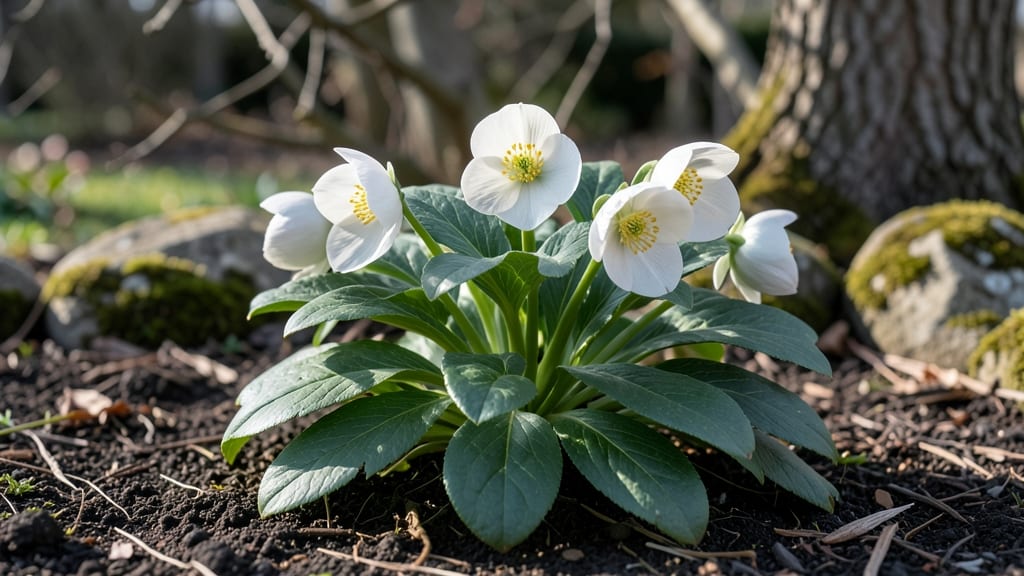
How to choose and plant winter-blooming flowers for maximum impact
Choosing flowers that bloom in winter outside starts with matching varieties to your sunlight conditions and USDA hardiness zone. For example, Winter Jasmine thrives in Zone 6a with full sun, while Hellebores prefer partial shade and Zone 5-9.
Always check labels for cold tolerance—some "winter" flowers are actually early spring bloomers that wilt in true winter frosts.
Your soil must be well-draining but moisture-retentive to prevent root rot during freeze-thaw cycles. Amend heavy clay with compost or sand and avoid fresh manure, which can burn tender roots.
Test your soil pH—most winter bloomers prefer 6.0-7.0, but Azaleas (Zone 5-8) need acidic soil (4.5-5.5) for vibrant blooms.
Step-by-Step Planting Guide for Winter Blooms
-
Step 1: Pick the Right Spot
- ✅ Full sun (6+ hours): Winter Jasmine, Pansies, Daffodils
- ✅ Partial shade (3-6 hours): Hellebores, Cyclamen, Lenten Rose
- ✅ Avoid windy areas—use windbreaks like evergreens
-
Step 2: Prep Soil for Cold Climates
- ✅ Loosen soil 12 inches deep with a fork
- ✅ Mix in 3 inches of compost or aged manure
- ✅ For clay soil, add sand or perlite (1 part sand to 3 parts soil)
-
Step 3: Plant at the Right Time
- ✅ Fall planting (October-November): Gives roots time to establish before frost
- ✅ Early spring (March-April): After last frost date in your zone
- ❌ Avoid late fall planting—roots may not harden before freeze
-
Step 4: Mulch for Frost Protection
- ✅ Use 3-4 inches of mulch (straw, shredded leaves, or pine needles)
- ✅ Apply after first frost to insulate roots
- ✅ Keep mulch 2 inches away from stems to prevent rot
-
Step 5: Water Strategically
- ✅ Water deeply but infrequently (1 inch per week)
- ✅ Morning watering only—avoid wet foliage at night
- ✅ Reduce watering in dormant months (December-February)
Pro Tip: Group plants by water needs to simplify care—place drought-tolerant Sedum near Pansies that need consistent moisture.
Timing is everything when planting winter-blooming flowers. For perennials like Hellebores, plant in fall (October) so roots establish before winter. Annuals like Pansies can go in late summer (August-September) for early winter color.
Always check your last frost date—planting too early can expose tender roots to freeze damage.
Mulching isn’t just for looks—it’s a lifeline for winter blooms. Apply organic mulch like straw or shredded leaves after the first frost to insulate roots. For extreme cold (below 10°F), add a thick layer (4+ inches) around tender perennials like Winter Aconite.
Just remember: never mulch too early—wait until soil temperatures drop to 40°F to avoid suffocating roots.
Deadheading spent blooms in late winter encourages new growth for a second flush of color. For shrubs like Winter Jasmine, prune right after flowering to shape the plant and promote next year’s blooms.
And if you notice yellowing leaves in winter, it’s often normal dormancy—don’t panic! Most winter bloomers shed old foliage to conserve energy for spring.
With the right sunlight, soil prep, and mulching strategy, your winter garden will be the envy of the neighborhood—vibrant, hardy, and full of life even when snowflakes dance outside. 🌿