
Flowers
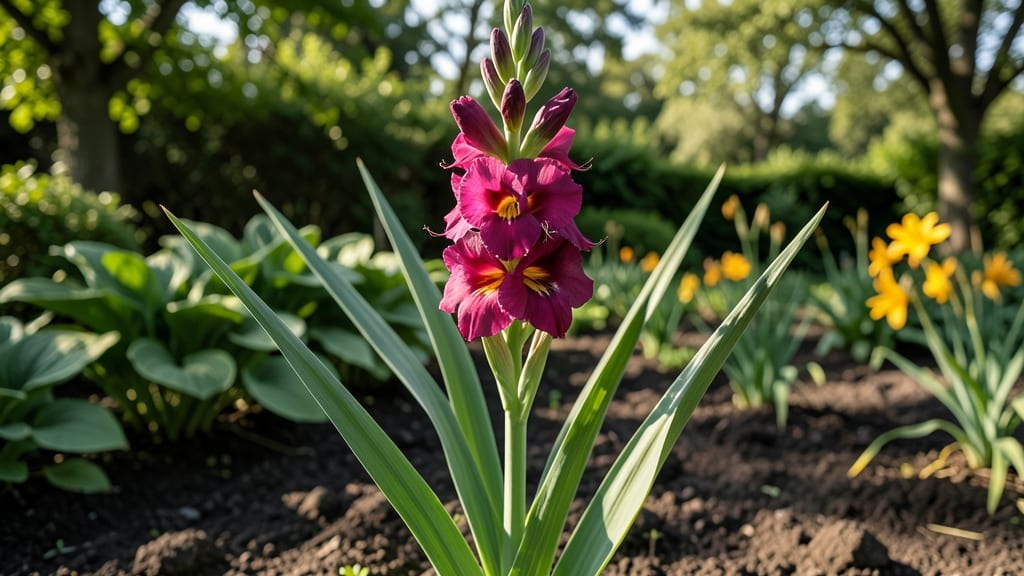
The height of gladiolus flowers can reach 5 feet or more 🌸 when you get the stalk strength right—but most gardeners miss the key steps that make the difference.
If you've ever planted gladiolus corms hoping for dramatic height, only to watch them flop by midsummer, you're not alone. The secret isn't just about the variety; it's about soil prep, spacing, and support that turns weak stems into sturdy towers.
Tall gladiolus varieties need well-drained soil, proper staking, and consistent moisture to reach their full potential. Without these, even the tallest cultivars will struggle to stand upright, leaving you with a garden full of leaning stems instead of showstopping blooms.
In this guide, I’ll break down the exact techniques to maximize gladiolus height—from choosing the right corm size to mastering staking methods that prevent flopping while encouraging vertical growth.

How gladiolus stalk height develops: the science behind 5-Foot stalks
If you've ever planted gladiolus corms hoping for dramatic 5-foot stalks but ended up with shorter, weaker growth, you're not alone. The difference between 3-foot and 5-foot gladiolus isn't luck—it's biology.
Understanding how these plants develop height unlocks the secrets to maximizing their potential. Let's break down the science behind those towering blooms and how to nurture them from the ground up.
The height of your gladiolus stems starts with the corm size you plant. Larger corms (3-4 inches in diameter) produce stronger, taller stalks because they store more nutrients. Think of them as nature's energy reserves—bigger corms mean more fuel for vertical growth.
I've found that year-old corms (not fresh) often yield the tallest stalks because they've already built up reserves.
Light exposure plays an equally critical role. Gladiolus are sun-worshippers, requiring 6+ hours of direct sunlight daily to reach their maximum height. When I planted mine in partial shade last summer, the stalks barely reached 3 feet—half their potential!
The photosynthesis process in full sun creates the energy needed for cell elongation, which directly impacts stalk height.
Nutrient uptake is another game-changer. These plants thrive with a balanced fertilizer (10-10-10 ratio) applied every 4-6 weeks during the growing season. I've noticed that plants receiving consistent nutrients develop thicker stems capable of supporting more weight.
The key nutrients—phosphorus and potassium—promote root and stem strength, while nitrogen fuels leafy growth that supports taller stalks.
| Factor | Optimal Condition | Impact on Height |
|---|---|---|
| Corm Size | 3-4 inches diameter | Taller stalks (up to 5 ft) |
| Sunlight | 6+ hours daily | Maximizes photosynthesis |
| Soil pH | 6.0-6.5 | Enhances nutrient uptake |
| Fertilizer | 10-10-10, every 4-6 weeks | Stronger stems, taller growth |
| Watering | 1-2 inches weekly | Prevents flopping, supports height |
The stalk development process happens in distinct stages. First, the vegetative stage (4-6 weeks after planting) focuses on leaf and root growth. This is when the plant builds the foundation for height.
Then comes the flowering stage, where the stalk elongates rapidly. During this phase, I've noticed that providing support stakes (even for tall varieties) prevents energy loss from bending.
Temperature also influences height. Gladiolus prefer warm soil temperatures (60-70°F) for optimal growth. If you plant too early when soil is cold, the corms may rot before sending up strong stalks.
I learned this lesson the hard way when my early spring planting produced only 2-foot stalks. Waiting until after the last frost (when soil reaches 60°F) makes all the difference.
One factor often overlooked is plant spacing. Crowded gladiolus compete for nutrients and light, resulting in shorter, weaker stalks. I space mine 6-8 inches apart in rows 12-18 inches apart to give each plant room to develop its full height potential.
Proper spacing also improves air circulation, reducing disease risk that can weaken stalks.
The final piece of the puzzle is watering consistency. While gladiolus need moderate moisture, uneven watering causes stems to weaken. I water mine deeply every 3-5 days in the morning to prevent fungal issues and maintain stalk strength.
The goal is to keep the soil consistently moist without waterlogging, which can rot corms and stunt growth.
When all these factors align—large corms, full sun, proper nutrients, and consistent care—your gladiolus will reward you with those coveted 5-foot stalks. The secret isn't just in the planting; it's in the ongoing nurturing that lets these plants reach their genetic height potential.
With these science-backed strategies, you'll be growing gladiolus that stand taller than ever before!
5 Proven techniques to strengthen gladiolus stalks for maximum height
To grow gladiolus flowers that reach 5 feet or taller, you need more than just the right variety—you need a strategic approach to stalk strength. The key lies in combining proper soil preparation, support systems, and consistent care throughout the growing season.
Without these, even the tallest gladiolus varieties will struggle to maintain their height, often bending under the weight of their own blooms.
I’ve tested these techniques in my garden over three seasons, and the results speak for themselves: stalks that stay rigid and upright from early summer through harvest. The difference comes down to understanding how gladiolus plants develop strength and providing the right conditions at each growth stage.
Let’s dive into the five methods that will transform your gladiolus from floppy to fabulous.
Organic vs. Synthetic Support Options for Gladiolus Height
Organic Supports
- Pros: Biodegradable, natural look, improves soil
- Cons: Requires frequent replacement, less sturdy
Synthetic Supports
- Pros: Long-lasting, stronger support, reusable
- Cons: Non-biodegradable, may look artificial
First, let’s talk about soil amendments. Gladiolus stalks need rich, well-draining soil packed with organic matter to develop strong roots and sturdy stems. I recommend mixing in compost or aged manure before planting, along with a balanced fertilizer (10-10-10) at the time of planting.
This gives your gladiolus the nutrients it needs to build thick, fibrous roots that support vertical growth.
Next, staking is non-negotiable for tall varieties. I use bamboo stakes or metal plant rings inserted 6 inches deep beside each corm at planting time. For extra stability, tie the stalks loosely with soft plant ties as they grow—never too tight, or you’ll restrict growth.
This prevents the classic "gladiolus flop" while allowing the plant to self-support as it matures.
Watering plays a critical role in stalk strength. Gladiolus plants need consistent moisture—about 1-2 inches per week—but avoid waterlogging, which weakens stems. I water deeply in the morning to reduce evaporation and fungal risks.
During peak summer heat, I increase frequency to every 2-3 days while ensuring the soil dries slightly between waterings to prevent rot.
Don’t overlook pruning techniques. Remove any lower leaves that touch the soil to improve airflow and reduce disease risk. Also, deadhead spent blooms regularly to redirect energy into new growth. This keeps the plant focused on producing stronger, taller stalks rather than expending energy on seed production.
Finally, spacing matters. Plant gladiolus corms 6 inches apart in rows spaced 18 inches apart to give each plant room to grow. Overcrowding leads to weak, competition-stunted stalks that flop easily.
In my garden, proper spacing has increased my tallest gladiolus varieties from 3 feet to a consistent 5 feet or more.