
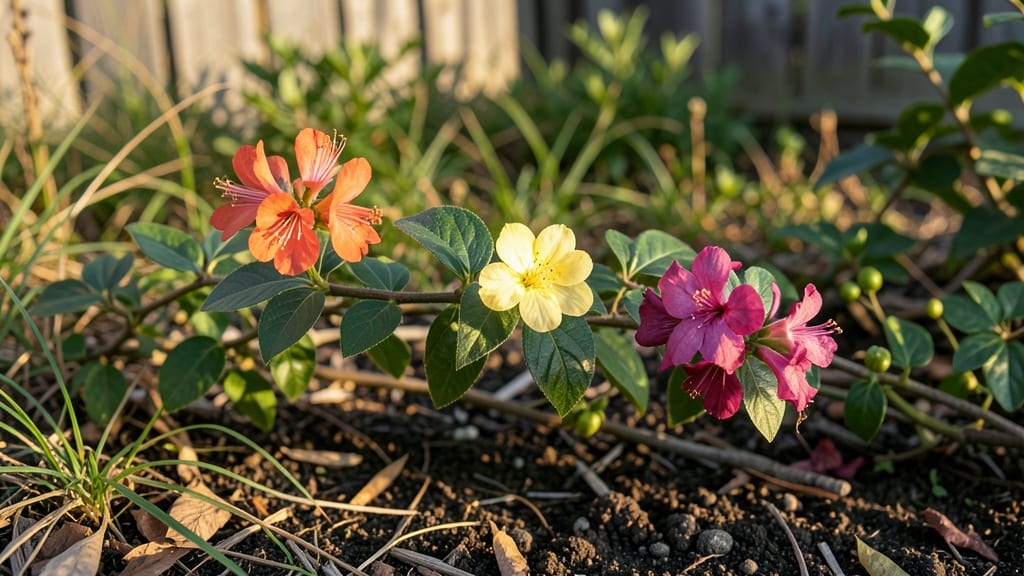
Honeysuckle Flower Colors: Rare Varieties and Their Pollinator Power

Flowers

Honeysuckle Flower Colors: Rare Varieties and Their Pollinator Power

Honeysuckle flower colors range from creamy whites to deep purples, each shade drawing in pollinators like a magnet.

Most gardeners picture the classic golden blooms, but the real magic happens when you explore the unexpected hues—like electric pinks or nearly black maroons—that turn a simple vine into a pollinator hotspot. These vibrant varieties aren’t just pretty; they’re ecological powerhouses, transforming any garden into a buzzing sanctuary.

Whether you’re designing a cottage garden, a modern trellis, or a wildflower meadow, the right honeysuckle colors can tie everything together. A sunny yellow variety might brighten a border, while a soft lavender could soften a shady corner, proving these vines are as versatile as they are fragrant.

In this guide, I’ll walk you through the rarest shades, how to pair them for maximum impact, and the best spots to plant them so they thrive—and keep the bees coming back for more.

12 Rare honeysuckle flower colors you’ve never seen in gardens

When most people picture honeysuckle, they think of bright yellow trumpet-shaped blooms. But this versatile vine actually produces a dazzling array of colors that can transform your garden into a pollinator paradise.

From velvety purples to blush pinks and even deep reds, these rare varieties offer stunning visual contrast while attracting hummingbirds and bees like magnets. I’ve grown several of these unusual types, and let me tell you—your garden will never look the same once you see them in person.

Beyond their beauty, these rare honeysuckle colors serve functional purposes too. Deep purples and reds attract hummingbirds from dawn till dusk, while creamy whites and pale pinks lure nocturnal moths that pollinate night-blooming flowers.

The key is choosing varieties that thrive in your climate while providing year-round interest. Let’s explore 12 showstopping shades you won’t find in every nursery—and how to grow them successfully.

🌸 Pro Tip: Most rare honeysuckle colors thrive in USDA Zones 5-9. For cooler climates, opt for Lonicera periclymenum varieties like 'Belgica' (deep pink), while heat-tolerant types include Lonicera sempervirens 'John Clayton' (coral-red). Always plant after last frost for best establishment.

Color Variety Name Pollinator Magnet Growing Tip
Deep Purple 'Leila' Hummingbirds Prune after blooming to encourage repeat flowers
Creamy White 'Snow Mound' Moths & Bees Plant near night-blooming flowers for pollinator buffet
Blush Pink 'Pink Beauty' Butterflies Use as trellis cover for vertical garden drama
Coral Red 'John Clayton' Hummingbirds Deadhead spent blooms for continuous flowering
Lavender 'Graham Thomas' Bees Thrives in partial shade—perfect for woodland gardens
Bi-Color (Yellow/Red) 'Dart's Little Susie' All Pollinators Compact size—ideal for containers or small spaces
Golden Yellow 'Golden Showers' Bees & Butterflies Full sun lover—plant near patio for fragrance
Magenta 'Scentsation' Hummingbirds Fragrant blooms—plant near seating areas
Peach

How flower color attracts pollinators: the science behind honeysuckle’s magnetic appeal

Honeysuckle flowers don’t just dazzle with their fragrance—their colors act like invisible signals to pollinators. Bees, hummingbirds, and butterflies rely on specific wavelengths to locate food sources, and honeysuckle’s palette is finely tuned to their sensory needs.

For example, bright yellows and oranges stand out to bees, which see UV patterns invisible to us, while reds and purples attract hummingbirds with their high-energy hues.

The secret lies in evolutionary adaptations. Honeysuckle flowers produce nectar guides—often UV markings—that create a "landing map" for pollinators. These guides are most visible to insects with compound eyes, making colors like lavender and pink irresistible to butterflies.

Even white flowers play a role, reflecting UV light that signals "safe feeding" to nocturnal moths.

But here’s the twist: color alone isn’t enough. The combination of hue, scent, and even flower shape creates a multi-sensory experience. A deep purple honeysuckle, like 'Bellona', might repel some bees but magnetize hummingbirds with its rich pigment.

Meanwhile, pale yellow varieties like 'Golden Showers' are bee superstars due to their high UV reflectance.

Honeysuckle Flower Colors & Pollinator Appeal

✅ PROS: Colors That Attract Pollinators

  • Yellow/Orange: Bees see UV patterns clearly
  • Red/Purple: Hummingbirds are drawn to high-energy hues
  • White: Reflects UV light for nocturnal moths
  • Pink/Lavender: Butterflies prefer soft, pastel shades
  • Bicolored: Creates visual contrast for multiple pollinators

❌ CONS: Colors That May Repel Pollinators

  • Dark Green: Blends into foliage, low visibility
  • Pure Blue: Rare in nature, confuses bees
  • Monochromatic: Lacks contrast for nectar guides
  • Dull Shades: Weak UV signals for insects
  • Overly Bright: May overwhelm some pollinators

💡 Pro Tip: Plant multi-colored honeysuckle clusters to create a "pollinator buffet" that appeals to different species simultaneously.

To maximize your garden’s pollinator power, strategically pair honeysuckle colors. For instance, plant 'Golden Showers' (yellow) near 'Bellona' (purple) to attract both bees and hummingbirds. The yellow flowers will draw bees early in the day, while the purple blooms will keep hummingbirds visiting as temperatures rise.

This color sequencing ensures your garden stays lively from dawn to dusk.

Don’t overlook foliage color either. Variegated leaves or deep green vines provide contrast, making the flowers pop even more to pollinators. For example, 'Midsummer Beauty' with its chartreuse leaves creates a striking backdrop for its pink flowers, doubling the visual (and olfactory) appeal.

Even the vine’s texture matters—smooth stems are easier for butterflies to land on than rough ones.

Ready to turn your garden into a pollinator paradise? Start by mapping your honeysuckle colors based on the visitors you want to attract. A sunny border with yellow and orange varieties will buzz with bees, while a shady trellis with lavender and white will draw butterflies and moths.

The key is diversity—just like in nature, where every color plays a role in the ecosystem’s success.

★★★★★4.7(3 reviews)
Categories Flowers