
Flowers
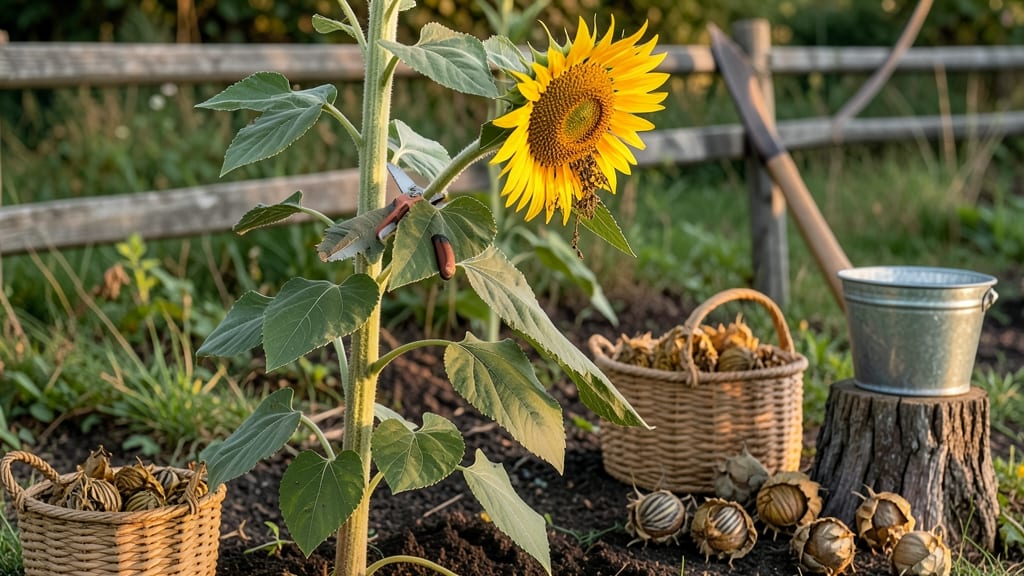
Harvesting sunflowers at the right time ensures you get the maximum seed yield and storage life, whether you’re saving seeds for next year or turning them into oil—but how are sunflowers harvested?
Picture this: you’ve spent months nurturing your 🌻 sunflowers, and now the moment of truth arrives—when to cut them for peak quality. Get it wrong, and you’re left with shriveled seeds or wasted effort. But timing it right?
That’s the difference between a bountiful harvest and a handful of disappointment.
Most gardeners wait until the back of the flower head turns brown and the petals droop, but there’s more to it than just watching for color changes. You’ll also need the right tools, drying techniques, and storage tips to keep those seeds viable for months.
Below, I’ll walk you through every step—from the best time to harvest to long-term storage tricks that work for both home gardens and larger-scale growers.
Ready to turn your sunflowers into a harvest that lasts? Let’s dive into the exact methods that’ll give you plump, high-quality seeds every time.
Optimal sunflower harvesting time: when and how to cut for peak seed yield
Harvesting sunflowers at the perfect moment ensures maximum seed yield and nutritional quality. The ideal harvest window occurs when seeds reach 30-35% moisture content, typically 70-120 days after planting, depending on variety.
Waiting too long risks seed loss from birds or mold development, while harvesting too early means underdeveloped seeds with poor storage potential.
Look for visual maturity cues like yellowing petals and brown backside of the flower head. The seeds should feel plump and firm when gently squeezed, with dark, uniform coloration inside the head. These signs indicate peak seed oil content and optimal storage viability.
Weather conditions also play a critical role in timing. Harvest on dry, sunny days with low humidity to prevent moisture-related spoilage. Avoid cutting after rain or dew, as excess moisture accelerates seed degradation during drying.
Sunflower varieties mature at different rates—dwarf varieties (3-6 ft) typically harvest 50-70 days after sprouting, while standard varieties (8-14 ft) take 70-120 days. Always check seed packets for specific maturity dates to align your harvest timing with variety expectations.
| Maturity Stage | Visual Cues | Seed Condition | Harvest Action |
|---|---|---|---|
| Early Bloom | Petals fully open, vibrant | Seeds green, soft | Wait 2-4 weeks |
| Peak Maturity | Petals droop, back browns | Seeds dark, firm | Harvest immediately |
| Overripe | Petals fallen, head dry | Seeds loose, cracked | Too late for harvest |
For oil production, harvest when seeds reach 30% moisture—this maximizes healthy fat content. If growing for birdseed, wait until seeds reach 10-15% moisture for better shelf life. Always cut 1-2 inches above the head using clean pruners or sickles to avoid stem damage.
Test seed readiness by squeezing a seed—it should squish slightly but not crush. If it feels dry and hard, harvest immediately. Overripe seeds lose germination viability and nutritional quality, making precise timing essential for both home and commercial growers.
Morning harvests yield the best results because seeds contain highest moisture levels after nighttime dew. Cutting in the morning sunlight ensures faster drying and reduced mold risk. Immediately lay heads on paper towels or mesh screens in a well-ventilated area.
Extreme temperatures affect harvest timing. In hot climates, seeds dry faster—monitor weekly and harvest earlier. In cooler regions, extend drying time by 1-2 weeks to reach safe moisture levels. Always prioritize dry, shaded storage post-harvest to preserve seed quality.
Pro tip: Hang harvested heads upside down in garages or barns for 2-3 weeks to complete drying. This method prevents seed loss from animals while ensuring even moisture reduction across the entire head.
Remember, seed yield drops by 10-15% for every week delayed past peak maturity. By mastering these visual and environmental cues, you’ll transform your sunflower harvest into a nutrient-rich, long-lasting resource for years to come. 🌾✂️🌻
Step-by-step sunflower harvesting process: tools, techniques, and post-harvest handling
Harvesting sunflowers at the perfect moment ensures you get the maximum seed yield and best storage quality. Miss the window, and you risk moldy seeds or empty seed heads. The key is knowing when the flower head signals readiness and how to handle it with care.
Before you begin, gather your harvesting tools. A sharp pair of pruning shears or sickles works best for cutting stems cleanly. Avoid dull tools, as they can crush stems and damage seed heads. For large-scale harvesting, a harvest knife or even a serrated knife can speed up the process.
- 1 Identify the Ready Heads: Look for drooping petals and a yellow-brown back of the flower head. The seeds inside should be dark and plump, not green or hollow.
- 2 Cut the Stem: Use clean tools to cut the stem 6-12 inches below the flower head. This prevents the head from touching the ground and reduces mold risk during drying.
- 3 Remove Leaves: Strip off lower leaves to expose the flower head fully. This speeds up drying and prevents leaf mold from spreading to the seeds.
- 4 Dry the Heads: Hang heads upside down in a well-ventilated area (like a barn or garage) for 2-3 weeks. Alternatively, lay them on a mesh screen in a single layer for 1-2 weeks.
- 5 Thresh the Seeds: Once the back of the head is completely dry and papery, rub the head against a fine mesh screen or clean cloth to release the seeds.
- 6 Store Properly: Keep seeds in a cool, dry place (like a glass jar or paper bag) with 5-8% moisture content to prevent spoilage. Label with the harvest date for tracking.
After harvesting, post-harvest handling is critical to prevent seed spoilage. Store seeds in a cool, dark place with low humidity (below 50% humidity) to maintain viability. For long-term storage, consider using food-grade buckets with oxygen absorbers to extend shelf life up to 12 months.
If you’re harvesting for cut flowers, trim stems at a 45-degree angle and place them in cool water immediately. Change the water daily to keep them fresh for up to 7-10 days. For seed production, prioritize drying and storage over freshness to ensure high germination rates.
Pro tip: Harvest on a dry, sunny day to minimize moisture exposure and speed up drying. Avoid harvesting after rain, as wet seed heads are prone to fungal infections like Aspergillus, which can ruin your entire batch.