
How To
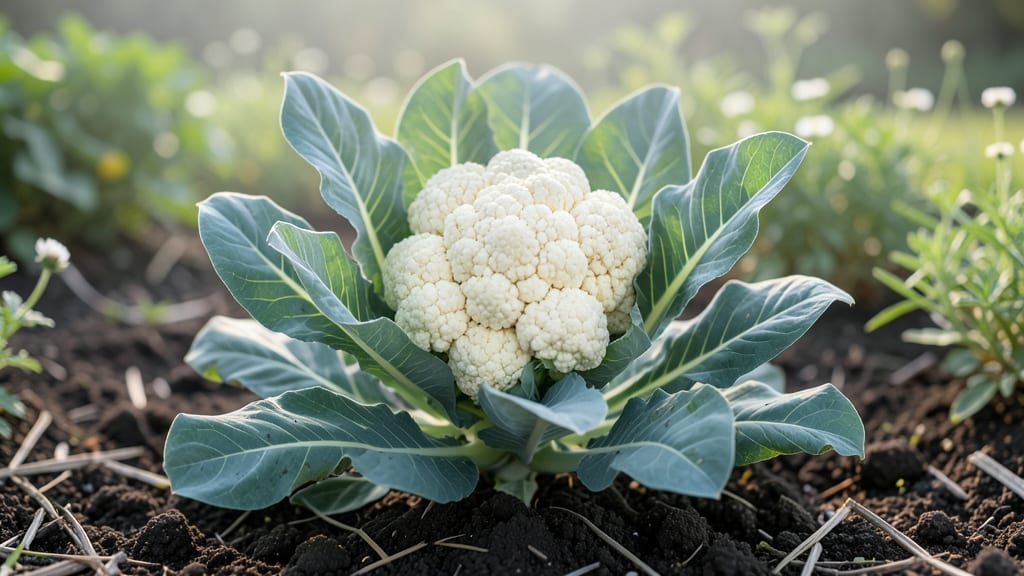
A cauliflower’s size can range from a golf-ball-sized mini head to a football-sized giant, depending entirely on the variety you grow.
Picture this: You’ve spent weeks nurturing your 🥬 plants, only to realize your garden layout won’t accommodate their full potential. The wrong spacing could mean crowded heads, poor air circulation, or even missed harvests.
Knowing the exact size of your cauliflower variety is the key to planning rows, containers, or companion plants for a thriving garden.
Dwarf varieties like ‘Purple of Sicily’ stay compact, perfect for small spaces or containers, while standard types such as ‘Snowball Y Improved’ can swell to 8-12 inches in diameter. Giant varieties like ‘Romanesco’ push the limits with heads reaching 14+ inches—but they also demand more room to grow.
The difference in spacing alone can mean the difference between a bountiful harvest and a struggle.
In this guide, you’ll discover how to match your garden space to your cauliflower’s growth habits, adjust row spacing for optimal airflow, and even choose varieties that fit your layout.
Whether you’re working with a windowsill garden or a full raised bed, these size insights will help you grow the best heads possible.
Cauliflower variety sizes compared: from compact to giant heads
Choosing the right cauliflower variety can transform your garden from a cramped salad patch to a high-yield harvest zone. The head size alone determines whether you'll harvest mini salad bowls or football-sized giants.
For example, 'Snowball Y Improved' stays compact at just 4-6 inches, while 'Cheddar' can swell to 12+ inches in diameter. Understanding these differences helps you plan spacing, companion plants, and even storage solutions.
Size isn't just about head diameter—it affects plant spread, harvest timing, and even disease resistance.
A dwarf variety like 'Purple of Sicily' (with 3-5 inch heads) matures faster and thrives in containers, while giant varieties like 'Romanesco' need more space and time to develop their intricate, 10-12 inch fractal heads. Let's break down the spectrum so you can pick the perfect fit for your garden.
🌱 Visual Tip: Use a measuring tape when planting to ensure proper spacing—compact varieties need 12-18 inches apart, while giant heads require 24-36 inches to prevent crowding and disease.
If you're working with limited garden space, dwarf varieties like 'Miniature White' or 'Purple of Sicily' are game-changers. Their compact heads and fast maturation (as early as 40 days) let you grow multiple harvests in a single season.
For example, you could fit 9 dwarf plants in the space needed for just 3 giant varieties like 'Romanesco'.
Size also impacts harvest timing. Smaller heads (4-6 inches) reach maturity in 50-60 days, while giant varieties like 'Cheddar' take 65-75 days to develop their full 8-10 inch diameter.
This means you can stagger plantings—starting with dwarf varieties for early salads and following with standard or giant heads for later-season meals.
Don't overlook the plant spread when planning your layout. A 'Romanesco' plant with a 36-inch spread needs significantly more room than a 'Snowball Y Improved' with just a 12-inch spread. In a 4x8 foot raised bed, you could fit 16 dwarf plants but only 4 giant varieties.
Use this space efficiently by pairing tall varieties (like 'Romanesco') with low-spreading companions like bush beans or
How cauliflower size affects your garden layout and harvest
Cauliflower size isn't just about how much you harvest—it directly impacts your garden layout, spacing needs, and even disease prevention. A 6-inch mini head from a dwarf variety like 'Purple of Sicily' needs completely different spacing than a 12-inch giant like 'Romanesco'.
Get this wrong, and you risk stunted growth, poor airflow, or heads that never fully form. The good news? Knowing your variety's mature size lets you plan rows, containers, or companion plants with precision.
For example, standard varieties like 'Snowball Y Improved' typically reach 8-10 inches in diameter and require 18-24 inches between plants for proper air circulation. But giant varieties can spread up to 36 inches apart—that's nearly a foot more space!
Meanwhile, dwarf varieties thrive in 12-inch containers or rows spaced just 12-16 inches apart. These differences aren't just about numbers; they affect how many plants you can fit in a raised bed or how often you'll need to thin seedlings.
| Variety Type | Head Size | Plant Spread | Spacing Needs | Disease Risk |
|---|---|---|---|---|
| Dwarf (e.g., 'Purple of Sicily') | 4-6 inches | 12-18 inches | 12-16 inches apart | Low (compact growth) |
| Standard (e.g., 'Snowball Y') | 8-10 inches | 18-24 inches | 18-24 inches apart | Moderate (needs airflow) |
| Giant (e.g., 'Romanesco') | 12-14+ inches | 24-36 inches | 24-36 inches apart | High (crowding risk) |
Larger heads also mean longer storage life—giant varieties like 'Romanesco' can last 2-3 weeks in the fridge if stored properly, while dwarf heads may only keep for 5-7 days. This matters if you're growing for a family or planning to preserve your harvest.
Plus, bigger heads take longer to mature, so your harvest window shifts based on variety. A dwarf variety might give you multiple harvests in a season, while giant types focus on fewer, larger yields.
Companion planting is another area where size matters. Dwarf cauliflowers pair well with bush beans or lettuce in small containers, while larger varieties benefit from tall companion plants like sunflowers that provide shade for their roots.
Just avoid planting near tomatoes or peppers, as they compete for nutrients and space. If you're working with limited space, consider interplanting dwarf cauliflower with fast-growing radishes or green onions—they won’t compete for sunlight or roots.
For small spaces, prioritize dwarf or mini varieties like 'Miniature White' or 'Graffiti' (a purple heirloom). These grow in 5-gallon containers and produce 3-4 inch heads perfect for salads. In larger gardens, mix varieties: plant dwarf types on edges and standard or giant varieties in the center of rows.
This creates a natural gradient of sizes that maximizes your harvest while keeping the garden organized. Pro tip: Use straw mulch around larger heads to prevent soil-borne diseases from splashing onto the curds.
Finally, remember that overcrowding increases disease risk. Compact heads in tight spaces trap moisture, leading to rot or fungal issues like downy mildew. If you're growing giant varieties, space them 3 feet apart and consider raised beds for better drainage.
For dwarf types, even 12-inch spacing works if you thin seedlings early. The right layout isn’t just about aesthetics—it’s about giving each plant the room it needs to thrive.