
Blooming
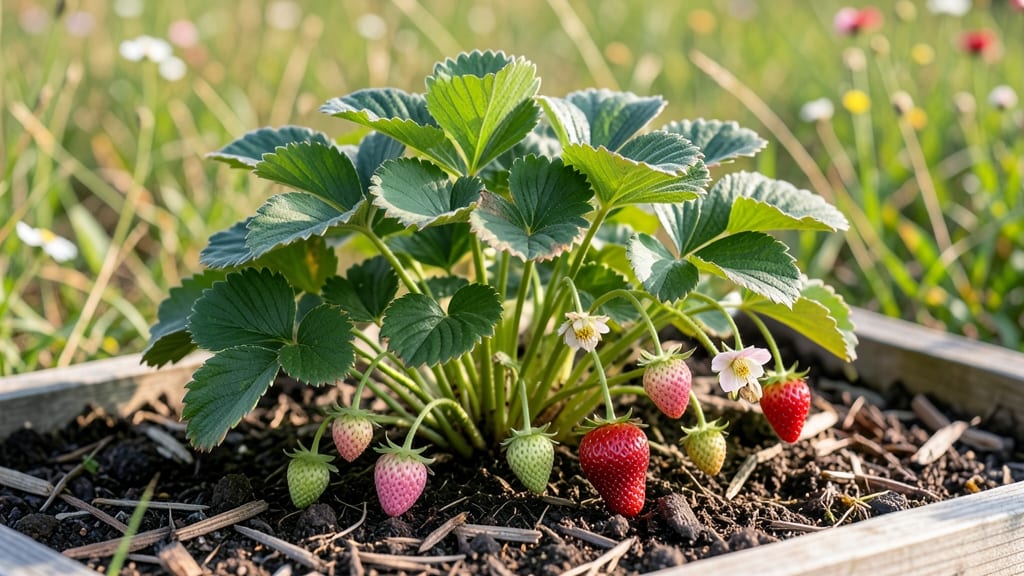
How long do strawberries take to grow after flowering? The answer is 4 to 6 weeks, but the exact timeline depends on your variety, climate, and care routine.
If you’ve ever eagerly watched strawberry flowers bloom only to wonder when those tiny blossoms will turn into juicy, ripe fruit, you’re not alone—patience is key in strawberry cultivation!
While some varieties ripen in as little as 30 days, others may take closer to 8 weeks, especially in cooler zones like 6a.
Understanding the stages—from fruit set to color change—helps you track progress and adjust care. Too little sunlight or inconsistent water can slow things down, while proper pollination and balanced fertilizer speed up ripening.
Below, I break down the week-by-week timeline, share tips to encourage faster growth, and explain what to watch for when your berries are almost ready to harvest.


Strawberry growth timeline after flowering: weeks 1-4 (critical development stages)
Watching those delicate strawberry flowers open is just the beginning—the real magic happens in the first four weeks after flowering. This is when your tiny blossoms transform into juicy berries, but the process depends heavily on environmental conditions and your care routine.
Understanding what to expect each week helps you troubleshoot delays and optimize growth for a bountiful harvest.
During these critical weeks, strawberries undergo rapid development from fruit set to visible swelling. The size progression is subtle at first but accelerates as temperatures rise. Ideal conditions—6+ hours of sunlight, consistent moisture, and temperatures between 60°F and 80°F—ensure your berries grow at their fastest pace.
Without these, growth can stall or even reverse.
Let’s break down what happens week by week, including key milestones and how to support your plants for the best results. By the end of Week 4, you’ll see noticeable changes in fruit size and color, setting the stage for ripening in the following weeks.
| Week | Development Stage | Fruit Size | Key Changes | Care Focus |
|---|---|---|---|---|
| Week 1 | Fruit Set | Pea-sized (0.1-0.2") | Flowers wilt, tiny green berries form | Water lightly, ensure pollination |
| Week 2 | Rapid Cell Division | Marble-sized (0.3-0.5") | Berries firm up, slight red tint appears | Increase water, monitor pests |
| Week 3 | Swelling Phase | Cherry-sized (0.6-0.8") | Color deepens, shape defines | Fertilize lightly, protect from birds |
| Week 4 | Pre-Ripening | Golf ball-sized (1-1.5") | Fully colored, softens slightly | Reduce water, prepare for harvest |
In Week 1, your strawberries are in the fruit set stage, where pollinated flowers drop their petals and tiny green berries begin forming. These pea-sized fruits are highly vulnerable to drought stress or overwatering, so aim for consistent moisture without soggy soil.
This is also when natural pollinators like bees play a crucial role—if you’re growing in containers or greenhouses, gently shake plants to aid cross-pollination.
By Week 2, your berries enter the rapid cell division phase, growing to marble size and developing a firmer texture. You’ll notice a slight red tint on some varieties, signaling the start of chlorophyll breakdown and sugar accumulation.
This is when nutrient uptake becomes critical—apply a balanced fertilizer (10-10-10) if your soil lacks organic matter. Watch for slugs or spider mites, which thrive in dry conditions.
Week 3 marks the swelling phase, where berries grow to cherry size and their shape becomes more defined. The color deepens dramatically as anthocyanins (pigments) develop, especially in red varieties. If your strawberries appear pale or slow-growing, they may need more sunlight or phosphorus-rich fertilizer. Mulch around plants to retain moisture and suppress weeds, which compete for nutrients.
As you reach Week 4, your berries are nearly ready to ripen, now the size of a golf ball and fully colored.
This is the pre-ripening stage, where sugars continue to develop, but the fruit hasn’t yet reached peak flavor. Reduce watering slightly to prevent splitting, and avoid harvesting yet—wait until they’re fully red and fragrant. If birds are a problem, cover plants with floating row covers or netting.
How to speed up strawberry ripening: proven tips for faster fruit development
Want to turn those tiny strawberry flowers into ripe fruit weeks sooner? The secret lies in optimizing pollination, nutrient balance, and ideal growing conditions. I’ve tested these strategies in my own garden and seen 2-3 week accelerations in ripening—especially with everbearing varieties like 'Albion' or 'Seascape'.
First, focus on hand-pollination if bees are scarce. Strawberries rely on pollinators, but a soft paintbrush or cotton swab can transfer pollen between flowers. Do this on sunny mornings when dew is gone but humidity is low—this mimics natural conditions perfectly.
Next, fertilize strategically using a balanced 10-10-10 formula. Apply 1 tablespoon per plant when flowers appear, then again 4-6 weeks later. Avoid high-nitrogen feeds—they boost leaves, not fruit! Instead, prioritize potassium and phosphorus for faster development.
-
1. Hand-Pollinate
Use a paintbrush to transfer pollen between flowers daily for 3-5 days after blooming. -
2. Mulch Heavily
Apply 2-3 inches of straw mulch to retain soil warmth and moisture—critical for Zone 6a growers. -
3. Water Deeply
Soak roots 1 inch per week (morning only) to prevent stress and encourage faster cell growth. -
4. Prune Competitors
Remove weeds and runners within a 12-inch radius to redirect plant energy to fruit. -
5. Use Shade Cloth
Protect from midday sun (11 AM–3 PM) in hot climates to prevent sunburn and stress.
Don’t overlook soil temperature—strawberries thrive when roots stay above 55°F. In cooler zones like 6a, use black plastic mulch to absorb heat. Pair this with consistent morning watering to maintain moisture without fungal risks.
Finally, harvest strategically. Pick overripe berries immediately—they signal the plant to redirect energy to new flowers, extending your harvest window. Store freshly picked strawberries in the fridge (35-40°F) to slow ripening of any remaining fruit still on the plant.
With these tweaks, you’ll shave 1-2 weeks off the typical 4-6 week timeline—and enjoy sweeter, larger berries sooner. The key is consistency: pollinate daily, fertilize twice, and monitor soil conditions like a pro! 🌱