
Flowers
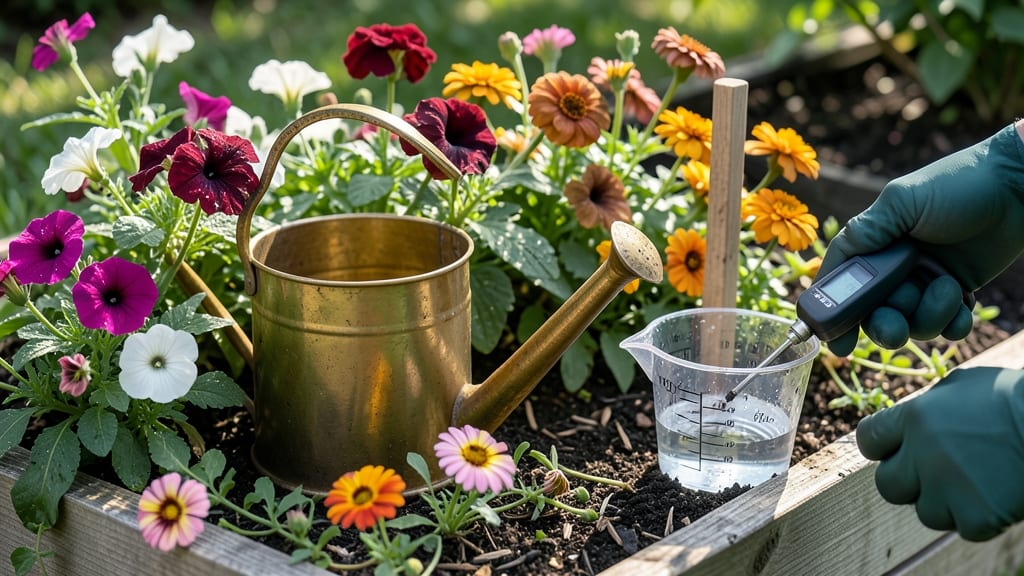
Flowers need 1 inch of water per week on average, but the real secret is understanding when, how, and why that number changes—because watering wrong can turn your garden into a sad, wilted mess.
Picture this: You’re watering your 🌸 blooms every morning like clockwork, but by afternoon, the leaves are curling, and the soil feels like a swamp. Or worse, you skip a week in the heat, and your prized petunias look like they’ve seen better decades.
The truth? Most gardeners overcomplicate it—when really, it’s about reading your soil, knowing your plant’s personality, and adjusting for the weather.
In this guide, I’ll break down the science-backed schedule for different flower types—annuals, perennials, and everything in between—plus how to tweak your routine for sandy soil, clay soil, or container gardens.
You’ll learn the 3 key signs your flowers are thirsty (or drowning) and how to fix common mistakes before they kill your blooms.
By the end, you’ll water with confidence, save time, and keep your flowers thriving without guessing. Let’s dive into the exact schedule that works for your garden—no more dead zones or soggy roots.
Science-backed watering requirements for different flower types
Watering your flowers isn't a one-size-fits-all task—each type has unique needs that determine their bloom health and root vitality. Annuals like petunias need consistent moisture, while drought-tolerant lavender thrives with minimal water. Understanding these differences prevents wilting or root rot, ensuring your garden stays vibrant all season.
Soil moisture is the key indicator of when to water. Stick your finger 1-2 inches deep—if it feels dry, it's time. For container-grown flowers, check daily, as pots dry out faster.
Seasonal shifts also matter: summer heat demands more frequent watering, while winter slows evaporation. Let’s break down the science-backed watering needs for your garden’s star players.
| Flower Type | Water Frequency | Depth per Watering | Soil Moisture Trigger | Seasonal Adjustments |
|---|---|---|---|---|
| Annuals (e.g., Marigolds, Zinnias) | Every 2-3 days | 1-1.5 inches | Top 1 inch dry | Increase in summer, reduce in fall |
| Perennials (e.g., Daylilies, Coneflowers) | Every 5-7 days | 1.5-2 inches | Top 2 inches dry | Reduce in winter, increase during drought |
| Tropicals (e.g., Orchids, Bird of Paradise) | Every 3-5 days | 1 inch (keep humid) | Surface dry | Increase humidity in dry climates |
| Drought-Tolerant (e.g., Lavender, Succulents) | Every 10-14 days | 0.5-1 inch | Top 3 inches dry | Skip winter watering in mild climates |
Annuals like petunias and geraniums need frequent watering to maintain their lush foliage and continuous blooms. Water them deeply every 2-3 days during the growing season, ensuring the top 1 inch of soil stays moist.
Overwatering can lead to fungal diseases, so always check soil moisture before watering again.
Perennials, such as black-eyed Susans and bee balm, are more resilient but still require attention. These plants thrive with 1.5-2 inches of water per week, especially during their active blooming phase.
Reduce watering in fall and winter to prepare them for dormancy, but avoid letting the soil dry out completely.
Tropical flowers like hibiscus and canna lilies love humidity and consistent moisture. Water them every 3-5 days, keeping the soil evenly moist but not soggy.
In dry climates, consider mulching to retain moisture and increase humidity around the plants. These flowers wilt quickly when thirsty, so monitor them closely during heatwaves.
For drought-tolerant varieties like lavender and yarrow, less is more. Water deeply every 10-14 days, allowing the top 3 inches of soil to dry out between waterings.
Overwatering these plants can suffocate their root systems and lead to rot. In winter months, reduce watering further unless temperatures drop below freezing.
Adjust your watering schedule based on weather conditions. During heatwaves, increase frequency, and in humid climates, reduce it to prevent fungal growth. Always water in the early morning to allow foliage to dry, minimizing disease risk.
Using a soaker hose or drip irrigation delivers water directly to the roots, improving efficiency and reducing waste.
Mulching is a game-changer for water conservation. Apply a 2-3 inch layer of organic mulch around your flowers to retain moisture, regulate soil temperature, and suppress weeds. This simple step reduces watering needs by up to 30%, making your garden more sustainable and low-maintenance.
Pay attention to visual cues from your plants. Drooping leaves or yellowing foliage often signal underwatering, while mushy stems or discolored leaves indicate overwatering. Adjust your schedule based on these signs, and don’t hesitate to repot or relocate
How to adjust watering based on climate and soil conditions
Your flowers’ water needs aren’t one-size-fits-all—they shift dramatically based on where you live and what your soil looks like. In hot, dry climates like Arizona, your petunias might need daily watering, while in humid coastal areas like Seattle, you could drown them with the same routine.
Even the soil type changes everything: sandy soil drains like a sieve, while clay holds moisture like a sponge. The key? Learning to read your garden’s unique signals.
I’ve spent years tweaking my watering schedule after watching roses wilt in my clay-heavy garden and succulents rot in my sandy containers. The difference between thriving blooms and sad, struggling plants often comes down to these three factors: climate, soil, and planting method.
Let’s break down how to adjust your routine for each scenario—so you’re watering smart, not guessing.
- 🌡️ Hot/Dry Climates: Water deeply 2-3x/week in early morning. Mulch to lock in moisture—1 inch per week is the goal, but check soil daily in 100°F+ heat.
- 🌧️ Humid Climates: Reduce to 2x/week or less. Clay soil? Water less frequently but deeper to prevent fungal growth from soggy roots.
- 🏺 Sandy Soil: Water lightly 3-4x/week—it drains fast! Use drip irrigation to target roots directly and avoid runoff.
- 🏡 Clay Soil: Water deeply 1x/week (or bi-weekly in rain). Test moisture 2 inches down—if dry, water; if damp, wait.
- 🪴 Containers: Water every 2-3 days (pots dry out 3x faster than ground). Use self-watering pots for vacations.
- 🌱 In-Ground: Water 1 inch per week, but skip weekends if rain falls. Use a rain gauge to track totals accurately.
Let’s start with climate, because your local weather dictates the baseline. In arid regions, like the Southwest, I water my zinnias and marigolds at dawn to reduce evaporation. The soil barely has time to dry out before the 110°F sun turns it into dust.
Meanwhile, in Pacific Northwest’s damp summers, I cut back to once a week—any more risks powdery mildew on my hydrangeas. The rule? Morning watering always wins—it gives foliage time to dry before evening humidity sets in.
Next, soil type changes everything. My sandy garden beds act like colanders—water disappears in minutes, so I use drip lines to deliver moisture slowly. For clay-heavy areas, I water deeply but infrequently, letting the soil absorb like a sponge.
A quick test: Grab a handful of damp soil. If it crumbles easily, it’s sandy (water more often). If it sticks together, it’s clay (water less but deeper).
Don’t forget containers vs. in-ground—they’re a whole different game. My potted geraniums dry out in 24 hours in summer, while my in-ground lavender thrives on bi-weekly watering. Pro move? Group containers together and water them all at once with a hose attachment.
For in-ground plants, focus on the root zone—aim water at the base, not the leaves, to prevent disease.
Finally, seasonal shifts matter. In spring, I water every 3-4 days as roots establish, but by fall, I taper off to once a week as temps drop. The goal? Keep your flowers consistently moist but never soggy.
Use these adjustments, and you’ll go from guessing to growing like a pro—no more wilted disappointments, just vibrant blooms all season long.