
Flowers
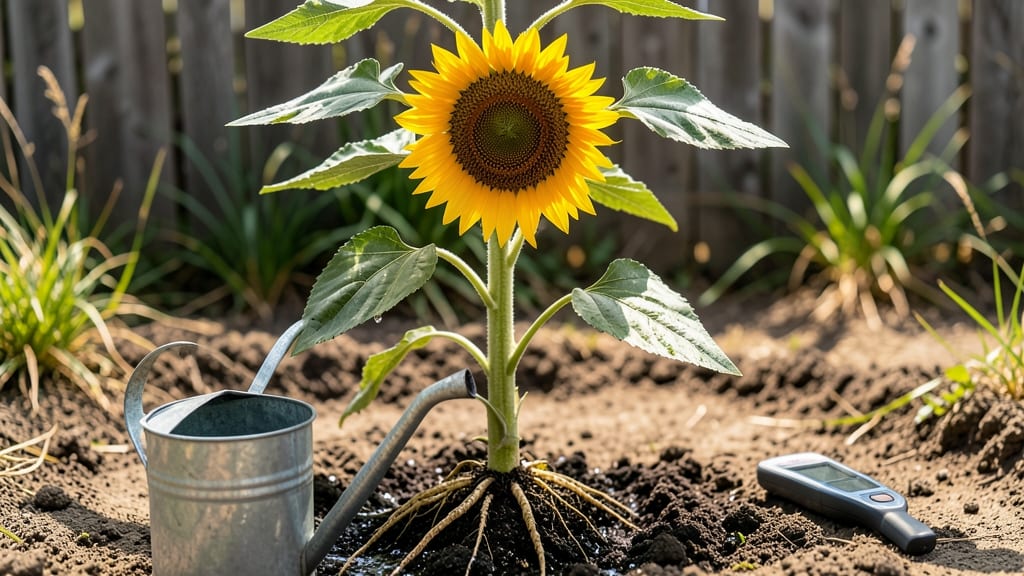
To keep your sunflowers 🌻 thriving, how often do sunflowers need to be watered deeply every 2-5 days—depending on soil and heat—so their roots grow strong instead of shallow.
Most gardeners overdo it, drowning tender stems or wasting water. I’ve seen sunflowers flop like overwatered weeds one week and shrivel the next—until I learned the soil-dry test that cuts guesswork.
This method works for all climates in Zone 6, from sandy deserts to clay-heavy gardens. You’ll check moisture at three depths, adjust for heatwaves, and spot signs of thirst before wilting starts.
By the end, you’ll water with confidence—no more soggy soil or parched petals. Let’s fix those common mistakes that kill sunflowers before they bloom.
The 3-Zone soil-dry test for sunflower watering frequency
Sunflowers need consistent moisture to thrive, but guessing your watering schedule can lead to weak stems or wasted water. The 3-Zone Soil-Dry Test gives you a foolproof way to check moisture levels at critical root depths.
This method aligns with sunflower growth stages—sprout, bud, and bloom
Start by testing three soil zones: the surface layer (0-2 inches), the middle layer (2-4 inches), and the deep layer (4-6 inches). Young sunflowers need frequent checks, while mature plants can go slightly longer between tests. Grab a handful of soil from each zone—if it crumbles easily, it’s dry; if it sticks together, it’s moist. For the sprout stage, focus on keeping the top 2 inches of soil consistently moist. Use your finger to check daily—if the soil feels dry at the surface, water immediately. Young sunflowers have shallow roots, so they can’t reach deeper moisture yet. Aim for 1 inch of water per week, but adjust based on rainfall. The bud stage is when sunflowers need deeper watering. Test the middle zone (2-4 inches) by gently pulling a stem—if it comes out easily, the soil is too dry. At this stage, water every 3-5 days, ensuring each session soaks the soil to at least 6 inches deep. This encourages strong root development and prevents stems from becoming weak. During the bloom stage, sunflowers are more drought-tolerant but still need regular checks. Focus on the deep zone (4-6 inches). If this layer feels dry, it’s time to water. Reduce frequency to every 5-7 days unless your area experiences extreme heat. Overwatering now can cause buds to rot before they open. Climate plays a huge role in adjusting your schedule. In hot/dry zones (USDA 7-10), increase watering frequency by 1-2 days. If you’re in a humid climate (USDA 5-6), reduce checks by the same amount. Always water in the early morning to minimize evaporation and fungal risks. Mulching is a game-changer for sunflower watering. Apply a 2-3 inch layer of straw or wood chips around plants to retain moisture and regulate soil temperature. This reduces how often you need to test soil zones, as mulch helps maintain even moisture levels. Replenish mulch every few weeks to keep it effective. Watch for visual cues alongside your soil tests. Drooping leaves or yellowing at the edges signal thirst, while moldy soil or wilting despite moist soil means overwatering. Adjust your 3-Zone Test frequency based on these signs—your sunflowers will thank you with taller stems and bigger blooms. Pro tip: Keep a watering journal to track what works in your garden. Note soil types, weather patterns, and sunflower responses. Over time, you’ll refine your schedule to match your unique growing conditions perfectly. Happy testing—and enjoy those sunflower giants!
How climate and soil type change sunflower watering needs
Your sunflower’s watering needs shift dramatically based on whether you’re in Zone 5’s cool summers or Zone 9’s scorching heat. I’ve grown sunflowers in both—here’s how I adjust: Clay soil holds moisture longer than sandy soil, while containers dry out faster than in-ground beds.
The key is matching your local climate and soil type to avoid either drowned roots or wilted stems.
In hot/dry climates (Zones 8-10), I water sunflowers every 2-3 days with deep soaks, while in humid regions (Zones 4-6), I space watering to every 5-7 days to prevent fungal diseases. Container-grown sunflowers need even more frequent checks—sometimes daily in summer heat. Let’s break down the exact adjustments you’ll need.
For sandy soil, I’ve found that mulching with straw keeps moisture near roots for up to 48 extra hours. In contrast, clay soil benefits from gypsum amendments to improve drainage—otherwise, roots suffocate. My container sunflowers always get a 50% larger pot than recommended to prevent rapid drying.
In humid climates, I’ve learned to water early in the morning to reduce fungal risks, while in arid regions, I water late afternoon to minimize evaporation. The biggest mistake? Ignoring the soil-dry test—always check moisture 2-3 inches down before watering again.
Pro tip: If your sunflowers are in Zone 9+ heat, add hydrogel crystals to containers. They hold 3x more water than soil alone, cutting your watering chores by half. For in-ground plants, focus on deep watering—aim for 6-8 inches deep to encourage strong root growth.
Remember, overwatering causes yellowing leaves just like underwatering. The soil-dry test works for all these conditions: Stick your finger in—if it feels dry past 2 inches, it’s time to water.
Adjust based on your local USDA zone and soil type, and your sunflowers will reward you with bold blooms all season. 🌻