
Watering
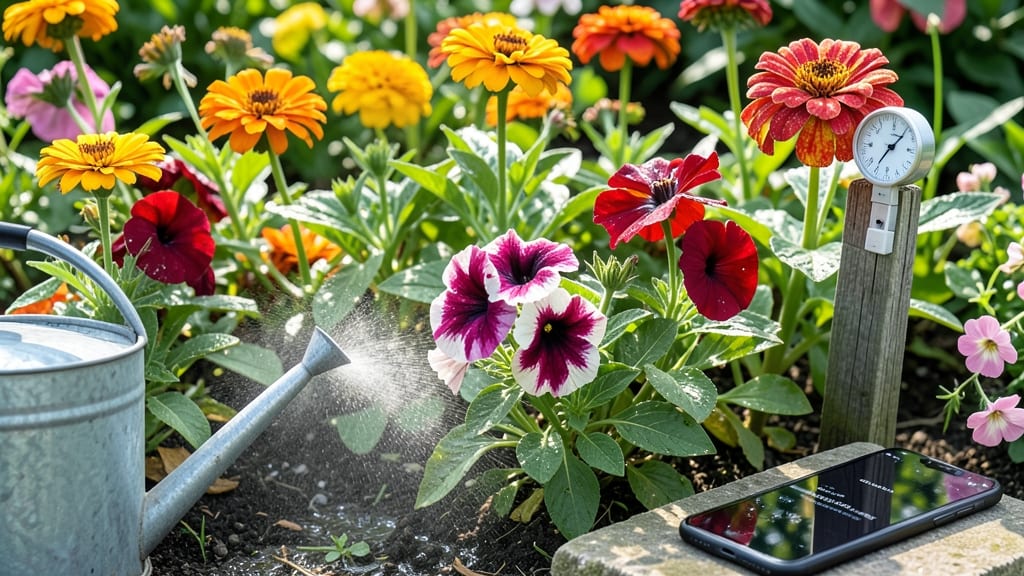
To water flowers outside at the perfect frequency, check soil moisture before you grab the hose—most need 1-2 inches of water per week, but that changes with heat, rain, and plant type.
Overwatering or underwatering your outdoor flowers can stifle growth—or even kill them—so knowing the exact watering schedule keeps your garden thriving without guesswork.
Some blooms like petunias demand daily drinks in summer, while drought-tolerant lavender barely needs a sip. The key? A simple soil test in the morning to avoid soggy roots or thirsty wilting.
Below, I break down how often to water by season, flower type, and climate—plus the one mistake that ruins even the best watering routine.
The 5-Step soil test method to determine your flowers' watering needs
Watering your outdoor flowers isn't about following a rigid schedule—it's about understanding your soil moisture levels. Too much water drowns roots, while too little stresses plants. The key? Testing your soil's moisture the right way so you can adjust watering based on real conditions, not guesswork.
This method works for annuals, perennials, and succulents, ensuring every plant gets just what it needs.
Start by choosing a representative spot in your garden—avoid areas near sprinklers or drainage issues. Pick a healthy flower (not wilting or diseased) and focus on the root zone, which is where moisture matters most.
You’ll need just your fingers, a small trowel, and a soil moisture meter (optional but helpful for precision). Grab these tools and let’s begin!
Step 1: The Finger Test (Best for Beginners) Stick your index finger about 1-2 inches deep into the soil near your flower’s base. If the soil feels dry and crumbly, it’s time to water.
If it’s cool and damp, hold off for another day. This simple test tells you exactly when your flowers need hydration without overcomplicating things.
Step 2: Check for Visual Cues Observe the soil surface and plant leaves. Dark, cracked soil or wilting foliage signals underwatering. Conversely, yellowing leaves or soggy soil (especially after rain) means you’re overwatering. Pair these clues with your finger test for accurate adjustments—no more guessing games!
Step 3: Use a Moisture Meter for Precision For succulents or drought-tolerant plants, a moisture meter removes the guesswork. Insert the probe 2-3 inches deep and read the moisture level.
Most meters use a color-coded scale: green (water now), yellow (wait 1-2 days), or blue (hold off). This tool is a game-changer for water-sensitive flowers like petunias or impatiens.
Step 4: Adjust for Plant Type and Season Not all flowers have the same needs. Annuals like marigolds need consistent moisture, while succulents like sedum thrive on neglect. In summer heat, water more frequently (every 2-3 days), but in winter dormancy, reduce to once every 10-14 days.
Your soil test results should guide these seasonal tweaks.
Step 5: Create a Watering Schedule Based on Results After testing for a week, note patterns. For example, if your perennials wilt by day 3 in summer, schedule watering every 48 hours.
If your succulents stay damp for 7+ days, cut back to once a week. Document these findings in a garden journal to refine your approach over time.
| Soil Moisture Level | Action for Flowers | Example Plants | Watering Frequency |
|---|---|---|---|
| Dry & Crumbly (0-25%) | Water deeply—soak until water runs out of drainage holes (potted) or 6 inches deep (in-ground). | Annuals (petunias, zinnias), Perennials (coneflowers, black-eyed Susans) | Every 2-3 days (summer), every 5-7 days (spring/fall) |
| Moist but Not Soggy (25-50%) | Hold off on watering. Check again in 24-48 hours. | Succulents (sedum, echeveria), Drought-Tolerant Perennials (lavender, salvia) | Every 7-10 days (summer), every 2-3 weeks (winter) |
| Damp (50-75%) | Skip watering unless leaves show early wilting signs. | Bulbs (tulips, daffodils), Shade-Loving Flowers (impatiens, ferns) | Every 5-7 days (consistent but light) |
| Soggy (75%+) | Stop watering immediately. Improve drainage or mulch to prevent root rot. | All flowers (overwatering risk) | None until soil dries |
Pro tip: Mulch around your flowers (2-3 inches of organic mulch like straw or wood chips) to retain moisture and reduce evaporation. This lets you water less frequently while keeping roots consistently hydrated. Mulch also suppresses weeds, which compete for water—win-win!
Remember, morning watering is ideal because it reduces evaporation and fungal risks. Avoid watering in the evening, as damp leaves overnight can lead to powdery mildew or other diseases. Pair your soil tests with this timing trick, and your flowers will thrive year-round.
By mastering these 5 steps, you’ll transform watering from a chore into a precision science. Your garden will reward you with healthier blooms, fewer wilting leaves, and a lush, vibrant display—all thanks to knowing exactly when (and how much) to water. Happy gardening! 🌸
Watering frequency chart: how often to water by flower type and climate
Your petunias might need daily watering in summer, while lavender thrives on weekly sips—climate and flower type dictate the perfect schedule. Sun-loving blooms like roses and marigolds dry out faster than shade-dwellers such as impatiens or coleus.
Below, I’ve mapped out watering frequencies for three climates—arid, temperate, and humid—plus seasonal tweaks to keep roots happy without drowning them.
Start with the morning finger test: Stick your index finger 1-2 inches into soil. If it feels dry, water deeply until moisture reaches 6 inches down.
Adjust based on rainfall—skip watering if ½ inch of rain fell in the past 24 hours. Mulch always helps retain moisture, cutting watering needs by 30-50%.
Sun-loving flowers (like geraniums or zinnias) need more frequent watering than shade lovers (begonias or fuchsias). In arid climates, water deeply 2-3 times per week in summer, while humid regions may only need every 4-5 days due to higher air moisture. Always water at the base of plants to avoid fungal diseases on leaves.
In summer heat, increase frequency by 50% and water early morning to reduce evaporation. Winter slowdowns mean cutting back to every 10-14 days unless you’re in a humid climate, where roots stay moister longer. Always check for yellowing leaves (overwatering) or wilting (underwatering)—these are your plant’s SOS signals.
Pro tip: Group flowers by water needs in your garden to streamline care. Place thirsty petunias near your hose and drought-proof lavender in the driest spot. Use a rain gauge to track precipitation and adjust your schedule accordingly—this saves 20 gallons of water per month for a 10-plant bed.
Remember, consistency is key. A sudden shift from daily to weekly watering can shock roots, so ease into changes over 7-10 days. With this chart, your flowers will bloom healthier and longer—no guesswork required. 🌸