
Watering
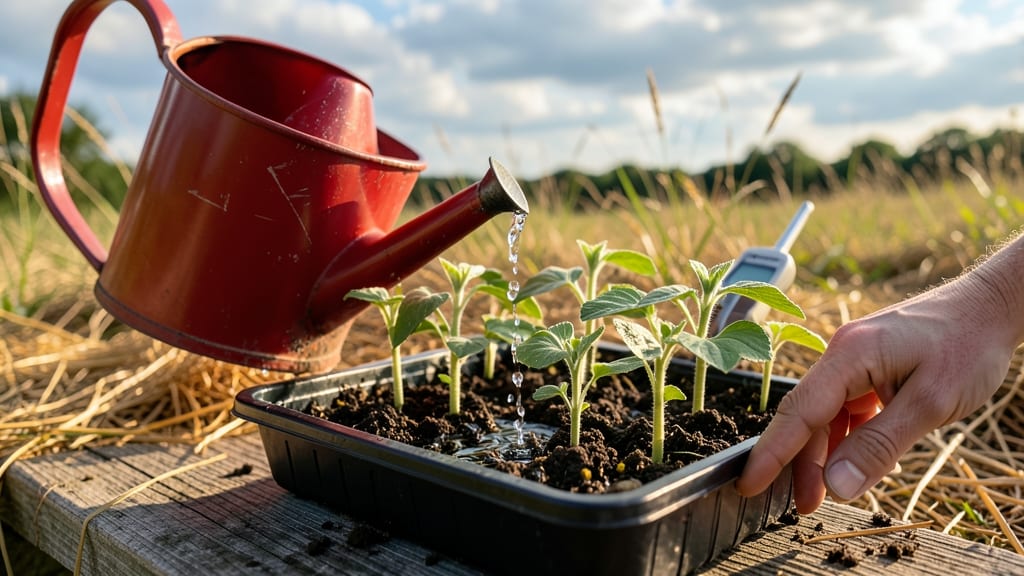
To water sunflower seedlings properly, keep the soil consistently moist but never soggy — a balance that fuels fast, stable growth without drowning delicate roots.
Picture this: your 🌻 seedlings stretch toward the sky, but their leaves wilt by noon because you either drowned them yesterday or forgot to water for a week. The right schedule is the difference between a thriving sunflower and a sad, stunted one.
Most gardeners water sunflower seedlings every 2-3 days in warm weather, but soil type and container size change the game. Sandy soil drains fast, while clay holds moisture longer — and a tiny seedling pot dries out quicker than a raised bed.
Below, I’ll break down the exact watering rhythm for each growth stage, plus the telltale signs your seedlings are thirsty (or drowning) and how to fix it without stressing the plants.
Sunflower seedling watering schedule by growth stage: when and how much
Sunflower seedlings demand precise watering to avoid common pitfalls like damping off or stunted growth. Unlike mature sunflowers, seedlings have delicate roots that need consistent moisture without becoming waterlogged. The key is adapting your watering routine as they transition through three critical stages: germination, early sprouts, and stem elongation.
During germination, seeds need constant moisture but not soggy soil. Once sprouts appear, you'll shift to a gentler watering schedule that prevents fungal diseases. Finally, as stems elongate, deeper watering encourages strong root development. Let's break down the exact watering frequency and techniques for each phase.
Climate and container size dramatically affect watering needs. Container-grown seedlings dry out faster than in-ground plants, while hot climates demand more frequent watering. Always check soil moisture 1 inch below the surface—this is the golden rule for sunflower seedlings.
For germination (days 1-7), focus on maintaining consistent moisture without letting the soil dry out completely. Use a spray bottle to mist the soil lightly, ensuring the seedling tray has drainage holes. Overwatering at this stage can cause seeds to rot before sprouting, so aim for damp—not soggy—soil.
When early sprouts appear (weeks 1-3), switch to a deep watering approach every 2-3 days. Insert your finger 2-3 inches deep into the soil—if it feels dry, it's time to water. Avoid wetting the leaves to prevent fungal diseases like powdery mildew, which thrives in humid conditions.
During stem elongation (weeks 4-6), sunflower seedlings develop deeper roots and need less frequent but deeper watering. Water every 3-5 days, ensuring moisture reaches 4-6 inches deep.
This encourages strong root growth and prevents leggy, weak stems. Use a watering can with a gentle flow or drip irrigation for even distribution.
Container-grown seedlings dry out faster than in-ground plants, so monitor them daily. Small pots may need watering every 1-2 days, while larger containers can go 3-4 days between waterings. Always check soil moisture before watering—never water on a schedule without verifying the soil's needs.
In hot climates (USDA zones 8-10), increase watering frequency to every 1-2 days during peak summer months. Use mulch around the base of seedlings to retain moisture and reduce evaporation. For cooler climates (zones 3-6), reduce watering to every 4-5 days, as soil stays moist longer.
One common mistake is watering at night, which increases humidity around seedlings and promotes fungal growth. Always water in the early morning so excess moisture evaporates by evening. If you notice <
Signs of overwatering vs underwatering sunflower seedlings (with fixes)
Your sunflower seedlings might look healthy at first glance, but subtle clues reveal whether they're thirsty or drowning. Overwatering and underwatering both cause stress, but the symptoms—and fixes—are completely different. Let’s decode the visual and tactile signs so you can rescue your seedlings before it’s too late.
First, check the soil moisture by sticking your finger 1 inch deep. If it feels dry, your seedlings need water. If it’s soggy, you’ve overdone it. The key is maintaining consistent moisture without waterlogging, which cuts off oxygen to delicate roots and invites fungal diseases like damping off.
Yellowing leaves are the most common red flag, but don’t assume it’s always underwatering. If the yellowing starts at the leaf tips and spreads upward, your seedlings are overwatered.
If the leaves yellow from the bottom up, they’re likely thirsty. Always check the soil first—it’s the only sure way to diagnose.
Overwatering vs Underwatering: Quick Fixes
- Yellowing leaf tips
- Mushy, black stem base
- White, fuzzy mold on soil
- Seedlings topple over
Fix: Let soil dry slightly between waterings. Repot if roots are rotting.
- Dry, crispy leaf edges
- Wilting even in morning light
- Soil pulls away from container edges
- Stunted, brittle growth
Fix: Water deeply until it drains from the bottom. Mulch to retain moisture.
💡 Pro Tip: Use a moisture meter or your finger to check soil daily during hot weather. Seedlings in containers dry out faster than in-ground plants.
If your seedlings show signs of overwatering, stop watering immediately and let the top inch of soil dry out. Gently remove any moldy soil and replace it with fresh, dry potting mix.
For underwatered seedlings, water slowly until it runs out the drainage holes, then let them recover in dappled shade for a day to reduce stress.
Another trick is to monitor the growth rate. Healthy sunflower seedlings should grow about 1 inch per week. If they’re growing slower or not at all, check both water and light levels.
Sometimes, seedlings slow down because they’re root-bound or need more nutrients, but moisture issues are the most common culprit.
Finally, watch for pests like aphids or spider mites, which thrive in stressed plants. Overwatered seedlings attract slugs and snails, while underwatered ones may attract fungus gnats. Keep your seedlings healthy with the right moisture balance, and you’ll avoid a host of secondary problems.