
Blooming
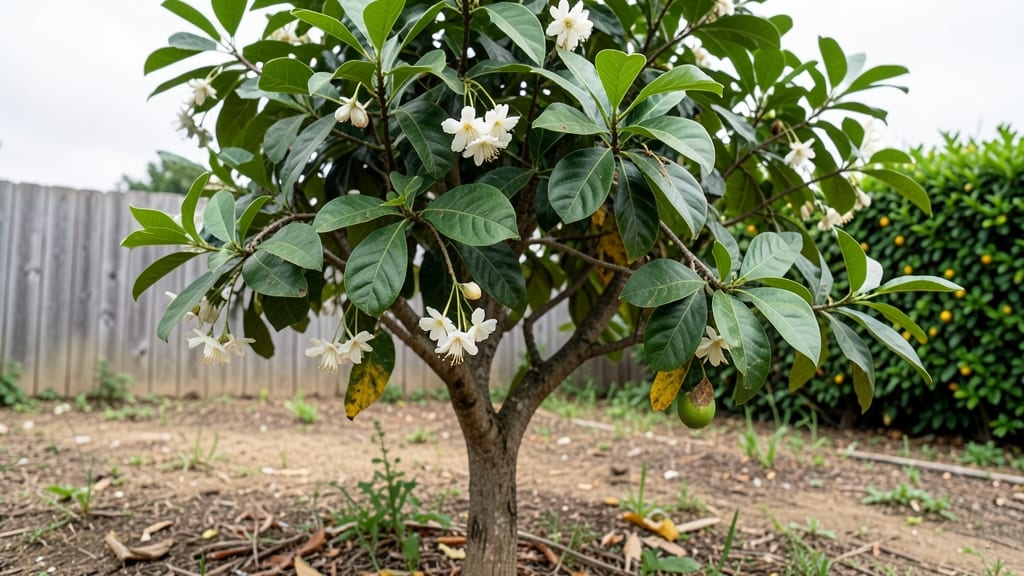
Lychee tree flowering occurs in late winter to early spring under ideal conditions: consistent temperatures between 60-85°F, 12-14 hours of sunlight, and proper watering. Young trees may take 3-5 years to flower, while mature trees produce blooms annually for optimal fruit production.
Timing is everything with lychees—these tropical trees rely on a precise seasonal shift to trigger blooms. 🌸 The transition from cool winter nights to warming days acts as a natural cue, but sudden temperature swings or frost can disrupt this process entirely.
In my experience, trees in warmer climates (like Florida or California) often bloom earlier than those in cooler regions, so local microclimates play a surprisingly big role in determining your tree's schedule.
What’s fascinating is how light exposure influences this cycle—lychee trees need 12-14 hours of sunlight daily to set flowers, but too much intense heat without proper hydration can actually stress the tree, reducing bloom quality.
I’ve seen growers use shade cloth during peak summer months to protect young trees, which paradoxically helps them store energy for their next flowering season.
💡 In This Article
- Climate and Seasonal Triggers for Lychee Flowering
- Pruning and Care Tips to Encourage Healthy Lychee Blooms
Climate and seasonal triggers for lychee flowering
Here's what's actually happening with those delicate lychee blossoms: the tree's flowering cycle is triggered by a combination of temperature shifts and daylight changes that mimic its natural tropical/subtropical habitat.
The key factor is what botanists call "thermoperiodism"—the tree responds to daily temperature fluctuations where nights stay cool (55-65°F) while days warm up to 75-85°F.
This pattern signals the tree to break dormancy and initiate flowering, similar to how daylength changes trigger blooms in other tropical plants like mangoes.
The science behind this involves a hormone called florigen, which is produced in response to these temperature cues.
When nights remain above 50°F consistently for several weeks, the tree's metabolic processes shift from vegetative growth to reproductive mode. 🌡️ What's interesting is that lychees are also sensitive to humidity levels—ideal conditions include 60-70% relative humidity during bloom time, as lower humidity can cause flower desiccation before pollination occurs.
In my experience working with commercial groves, trees in areas with sudden humidity drops often show reduced fruit set despite perfect temperature conditions.
Daylight hours play an equally crucial role through photoperiodism. Lychee trees require 12-14 hours of sunlight daily to maximize flowering potential, but the critical factor isn't just duration—it's the quality of light. These trees thrive under bright, diffuse sunlight rather than harsh midday glare.
This is why growers in hot climates often use 30-50% shade cloth during peak summer months to protect developing flower buds from sunburn while still maintaining sufficient light exposure.
What most people don't realize is how frost sensitivity affects flowering patterns. Even a single night below 32°F can damage flower buds, and temperatures below 40°F for more than 24 hours often completely halt flowering for that season.
This explains why lychee production in cooler subtropical regions often requires careful site selection and microclimate management—planting near bodies of water or in sheltered valleys can create the 5-10°F temperature buffer needed to protect blooms.
Consider these seasonal variations by region: In Florida's warmer climate, flowering typically begins in February-March when nights are still cool but days are warming, while in California's Central Valley, the process often starts 1-2 weeks later
The tree's internal clock also factors in—mature trees develop a predictable flowering rhythm that becomes more reliable after 5-7 years of consistent care, while younger trees may produce sporadic blooms as they establish their seasonal patterns.
The most critical insight is understanding how these factors interact: proper temperature fluctuations prime the tree, sufficient humidity preserves the blooms, and optimal daylight ensures energy production. When all three align—like a perfectly timed tropical symphony—you get that spectacular flowering display that leads to your sweet, aromatic lychee harvest. 🌿