
Vegetables
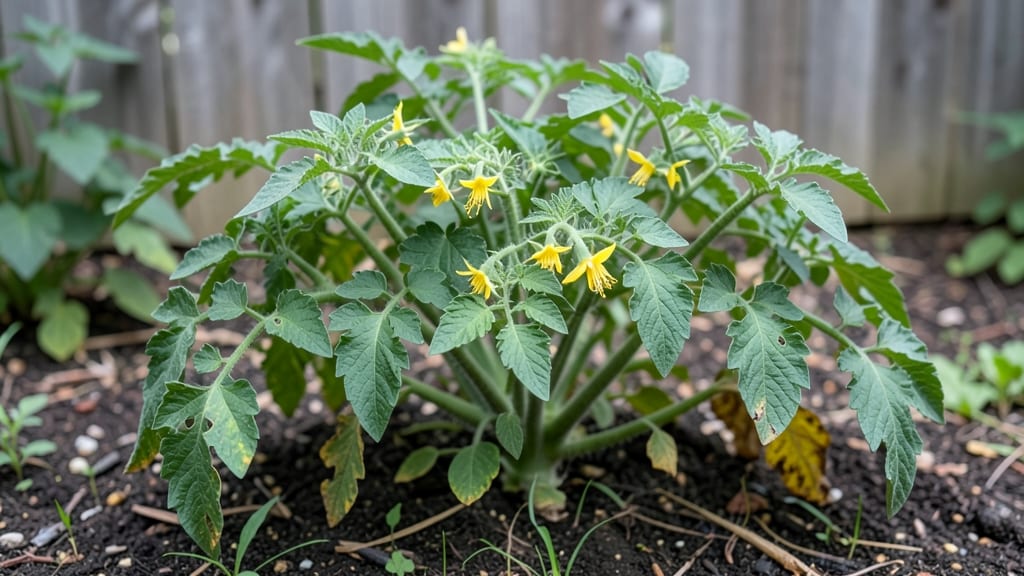
Male tomato flowers play a key role in fruit production by fertilizing female flowers, ensuring pollination and higher yields. They appear first in flowering cycles and require no intervention if bees or wind handle pollination naturally.
These early blooms act as nature’s pollinators, releasing pollen that fertilizes the later-emerging female flowers—the ones that develop into fruit. 🌱 Without them, your tomato plants might produce fewer or smaller tomatoes, especially in greenhouses where bees are scarce.
I’ve seen firsthand how a single male flower cluster can dramatically boost yields by ensuring every female flower gets the chance to set fruit.
What’s fascinating is how these flowers adapt to their environment—male flowers thrive in cooler temperatures and often appear in clusters at the plant’s base, while female flowers develop higher up as the plant matures.
This natural progression helps gardeners predict when to expect fruit set, giving you a heads-up for harvesting season.
💡 In This Article
- How Male and Female Tomato Flowers Differ
- Encouraging Male Tomato Flowers for Better Harvests
How male and female tomato flowers differ
At first glance, male and female tomato flowers might look nearly identical, but their internal structures reveal critical differences. Male flowers contain only stamens—the pollen-producing structures—while female flowers feature both stamens and a prominent stigma, the pollen-receptive surface.
This anatomical distinction explains why male flowers appear first in the plant's flowering cycle, typically emerging in clusters at the plant's base when temperatures hover around 60-70°F.
The timing of these blooms isn't random—it's a survival strategy. Male flowers mature faster because they require less energy to develop (they lack the stigma's nutrient demands). Their early emergence ensures pollen is available when female flowers later bloom higher up on the plant.
Visually, male flowers often have slightly longer, more slender petals and lack the small, bulbous ovary base that characterizes female flowers, which swells after pollination.
Here's what's actually happening botanically: The plant prioritizes reproductive efficiency by producing male flowers first, creating a "pollen bank" for when female flowers appear. This sequence is particularly crucial in greenhouse settings where pollinators are absent.
Without male flowers, female flowers would remain unpollinated, leading to blossom drop—a common issue where flowers fall off without developing fruit.
Female flowers develop later in the season, typically after 4-6 weeks of growth, when the plant has established more energy reserves. Their stigma appears as a small, green bump at the center, often surrounded by slightly shorter petals than male flowers.
The ovary at the base of female flowers is what eventually becomes the tomato fruit, containing the seeds. This delayed development allows the plant to allocate resources to both flower production and vegetative growth.
The size difference between these flowers provides another clue: male flowers often measure 1-1.5 inches across with delicate, papery petals, while female flowers may appear slightly larger (1.2-1.8 inches) due to the developing ovary.
The positioning matters too—male flowers typically grow in clusters at leaf axils near the plant's base, while female flowers appear more sporadically along the stem's upper sections.
What most gardeners don't realize is how temperature affects this balance. Cooler mornings (55°F) and warmer afternoons (75°F) create ideal conditions for male flower production, while consistent warmth above 80°F can shift the plant's energy toward female flowers.
This environmental sensitivity explains why greenhouse growers often see more male flowers in spring and more female flowers as summer progresses.
Understanding these differences helps explain why some tomato plants produce abundant flowers but few fruits—the plant might be prioritizing male flowers over female ones. 🌿 The key is maintaining this delicate balance through proper pruning, fertilization, and environmental control to ensure both flower types thrive at the right times.