
Planting
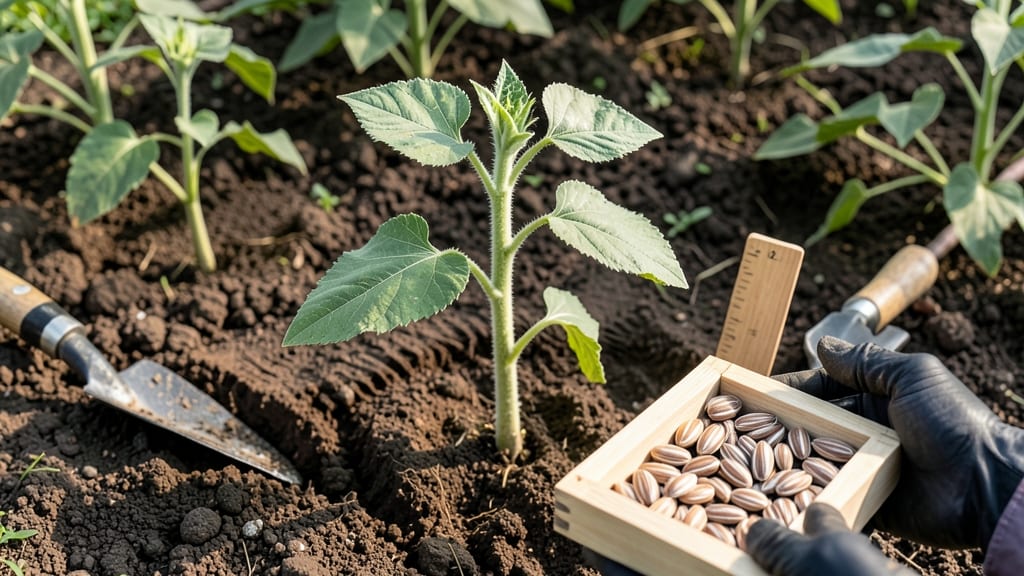
Sunflower seeds thrive when planted at the right depth—just 1 inch below soil level—so their delicate roots can stretch upward without fighting for space.
Picture this: you’ve waited all spring for 🌻 those towering blooms, only to watch your seeds rot in the ground or sprout crooked stems. The fix is simpler than you think, and it starts with a 1-inch rule that works for most varieties in USDA Zone 6a.
Too deep, and the seed struggles to break through the soil; too shallow, and it dries out before germinating. I’ll walk you through the exact technique—plus how to adjust for sandy or heavy soil—to give your sunflowers the strong start they deserve.
By the end, you’ll know not just how deep to plant, but also when to water, how to space them for maximum growth, and the 3 signs your seeds are in the perfect spot to sprout into 6-foot giants.

Optimal sunflower seed planting depth by seed type and soil conditions
Getting the planting depth right for sunflower seeds is one of the simplest yet most critical steps to ensure strong, healthy plants. Too shallow, and seeds dry out before sprouting; too deep, and they struggle to reach the surface.
The ideal depth varies by seed type and soil texture, so let's break it down to maximize your sunflower's potential.
Most sunflower seeds should be planted at a depth of 1 inch in well-drained soil, but this can change based on your variety. Giant sunflowers, for example, benefit from slightly deeper planting to support their massive root systems, while dwarf varieties thrive with shallower depths.
Understanding these nuances ensures your seeds have the best chance to germinate and grow into those towering, cheerful blooms we all love.
| Sunflower Type | Seed Size | Optimal Depth | Soil Adjustments | Visual Reference |
|---|---|---|---|---|
| Giant Varieties (e.g., 'Mammoth', 'Russian Giant') | Large (1/2 inch diameter) | 1.5 inches | Loosen clay soil; add compost to sandy soil | Twice seed diameter |
| Standard Varieties (e.g., 'Autumn Beauty', 'Teddy Bear') | Medium (1/4 inch diameter) | 1 inch | No adjustments needed for average soil | Seed diameter + 1/4 inch |
| Dwarf Varieties (e.g., 'Teddy Bear', 'Sunspot') | Small (1/8 inch diameter) | 3/4 inch | Mulch after planting to retain moisture | Twice seed diameter |
| Oil-Type Varieties (e.g., 'NuSun') | Medium (1/4 inch diameter) | 1 inch | Ensure well-drained soil | Seed diameter + 1/4 inch |
Soil texture plays a crucial role in determining the best planting depth for sunflower seeds. In sandy soil, which drains quickly, you can plant seeds slightly deeper—up to 1.25 inches—to help retain moisture around the seed.
Conversely, in clay soil, which holds moisture but can become compacted, stick to the recommended depth or slightly shallower (3/4 inch) to prevent suffocation.
For sandy soil, consider adding a layer of organic matter like compost or aged manure before planting. This improves moisture retention and gives your sunflower seeds a better chance to germinate.
In clay soil, focus on loosening the top 6 inches of soil before planting to create a more hospitable environment for root development.
If you're planting in container gardens, use a well-draining potting mix and plant seeds at the standard depth for their type. Containers dry out faster, so slightly deeper planting can help maintain consistent moisture around the seed.
Always ensure your container has adequate drainage holes to prevent waterlogging, which can lead to seed rot.
After planting, gently firm the soil around the seeds to ensure good seed-to-soil contact. This step is critical for germination success, as it helps the seed establish a strong root system early on.
Avoid compacting the soil too firmly, as this can restrict root growth and lead to stunted plants.
Once your sunflower seeds are in the ground at the right depth, maintain consistent moisture in the soil. Water gently but thoroughly after planting to settle the soil and encourage seed germination. Avoid overwatering, as this can lead to soil erosion and expose the seeds, stunting their growth.
Monitor your sunflower seedlings closely as they emerge. If planted too deep, they may struggle to push through the soil, resulting in weak, leggy stems. Conversely, seeds planted too shallowly may dry out before germinating.
Adjust your planting depth based on the soil conditions and seed type to ensure the best possible start for your sunflowers.
With the right planting depth and soil preparation, your sunflower seeds will germinate quickly and grow into robust plants. Keep an eye on the soil moisture and provide support as the plants grow taller. Soon, you'll be rewarded with those iconic, cheerful blooms that brighten up any garden.
Common mistakes that stunt sunflower growth (and how to avoid them)
Even with the right planting depth of 1 inch, sunflowers can still struggle if you overlook three critical mistakes: over-deep planting, crowded spacing, and compacted soil. I’ve seen firsthand how these issues can turn promising seedlings into weak, leggy plants—or worse, no plants at all.
One of my early gardening fails was burying sunflower seeds 2 inches deep to "protect" them from birds. The result? Only 10% germination and stunted growth. The seed’s energy reserves are meant to fuel upward growth, not dig through extra soil. Let’s fix this with science-backed solutions.
⚠️ Planting Too Deep: The Silent Growth Killer
Sunflower seeds need 1 inch of soil max—any deeper, and they’ll rot before sprouting. Here’s why: Their cotyledons (seed leaves) store just enough energy for a 1-inch climb. Bury them 1.5 inches or more, and they’ll exhaust their reserves trying to reach light, leaving them weak and prone to damping off.
🔹 Fix: Use a seed depth gauge (or a pencil) to mark 1 inch. For sandy soil, plant ½ inch deep—it dries faster, so seeds need less cover.
Another mistake? Skipping soil aeration before planting. Compacted soil acts like a concrete barrier for roots, forcing them to grow sideways instead of downward. My 6-foot sunflowers last year became 3-foot weaklings because I forgot to loosen the soil with a fork.
Proper spacing is just as critical. Planting seeds 6 inches apart might seem generous, but sunflowers need 18–24 inches of space to avoid competing for nutrients. I once crammed them 12 inches apart—the result? Twisted stalks and pale blooms from nutrient starvation.
Here’s how to fix it: Start with well-draining soil (amend clay with compost; avoid waterlogged areas). Use a soil aerator or garden fork to create 1-inch-deep holes before dropping seeds in. For heavy clay, mix in perlite to improve drainage.
Finally, pre-sprouting seeds can save the day if your soil is cold or compacted. Soak seeds in warm water for 12 hours, then plant them ½ inch deep in a seedling tray with moist peat moss.
Once sprouts appear, transplant them into the garden at 1 inch deep—they’ll establish faster and avoid the depth struggle.
With these fixes, your sunflowers will shoot up straight and strong, reaching their full 10–14-foot potential—no stunting in sight! 🌻