
Pruning
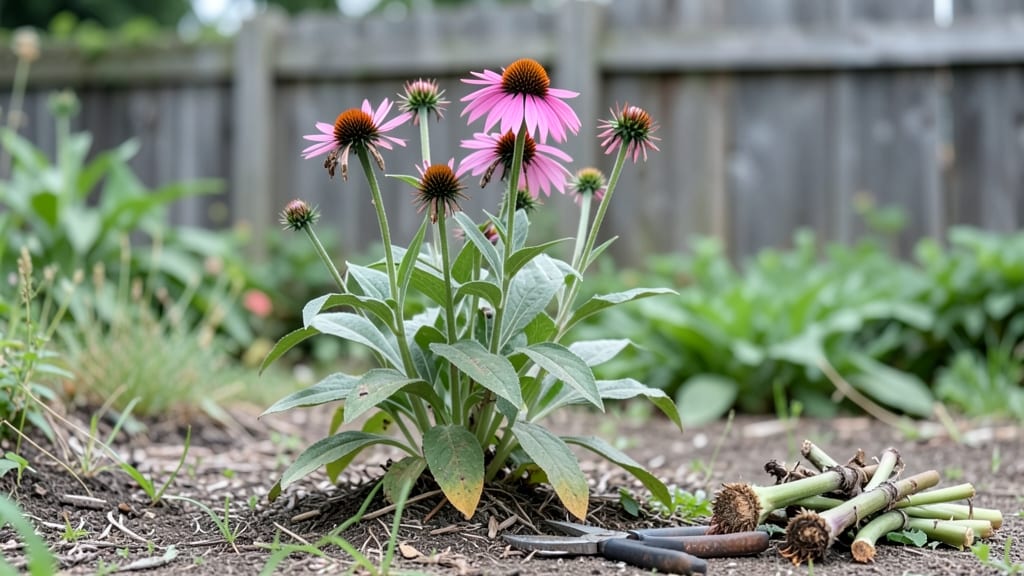
Pruning perennial flowers isn't just about cutting back—it's the secret to longer bloom seasons and plants that look like they're from a postcard. 🌸 I learned the hard way that skipping this step means fewer flowers and weaker stems, but once I got the timing right, my garden transformed.
The key is understanding each plant's rhythm: some need a haircut after blooming, while others wait until spring.
You only need three basic tools: sharp bypass pruners for clean cuts, loppers for thicker stems, and gloves to protect your hands from thorns or sap. Most pruning happens in late winter or early spring, but deadheading faded blooms all season keeps plants producing.
The goal is to remove spent growth while encouraging fresh, vibrant shoots—think of it like giving your plants a fresh start.
After a proper pruning, you'll see thicker stems, more buds, and blooms that last weeks longer than before. My coneflowers, for example, now put out second flushes of flowers in late summer, and the foliage stays lush all season.
The trick is cutting at the right angle and avoiding over-pruning—never take more than one-third of the plant at once.
This method works for every climate and garden size, from city balconies to rural plots. Whether you're dealing with peonies, daylilies, or black-eyed Susans, the principles stay the same. Let's get those shears ready and bring back the garden's glory!
📚 In This Guide
- What you need
- Instructions
- Tips and common mistakes
- Wrapping up and next steps
What you need
- ● Pruning shears (bypass or anvil type) – Sharp, clean, and sized for your hands (4-6 inches for most tasks).
- ● Garden loppers – For thicker stems (1.5-2.5 inches), extendable handles help with reach.
- ● Hand pruners (felco or similar) – For precision cuts on smaller stems (3-5 inches).
- ● Disinfectant (rubbing alcohol or bleach solution) – 1 part bleach to 9 parts water to sanitize tools between cuts.
- ● Garden gloves – Durable, cut-resistant gloves for protection (size medium or large).
- ● Sharpie or marker – For labeling cuttings if propagating.
- ● Buckets or bags – For collecting pruned debris (1-2 gallon capacity).
- ● Hedge shears – For shaping larger perennial shrubs like butterfly bush or hydrangeas.
- ● Long-handled pruners – For tall perennials like hollyhocks or delphiniums.
- ● Pruning saw – For thick, woody stems (rare for most perennials but useful for established plants).
- ● Rooting hormone – If propagating from cuttings (gel or powder form).
- ● Mulch or compost – To refresh the soil after pruning.
- ● Check the specific pruning needs of your perennials (some bloom on old wood, others on new growth).
- ● Pick the right time—early spring or after flowering for most perennials.
- ● Have a clear plan—sketch or note where cuts should be made for deadheading or shaping.
How to prune perennial flowers for lush, year-round growth
Reviving perennials starts with the right cuts at the right time—here’s how to do it like a pro.
✂️ Step 1: Time Your Cuts to the Plant’s Natural Rhythm
Most perennials bloom on new growth, so prune them back to 2–3 inches above the ground in early spring (just as new shoots emerge). This encourages vigorous regrowth and prevents disease by removing dead foliage. For late-season bloomers like coneflowers or black-eyed Susans, wait until after flowering—cutting too early removes next year’s buds.
Here’s the thing—if you prune too late in fall, you risk damaging tender new shoots that haven’t yet hardened off. Instead, clean up dead stems in late winter or early spring, leaving the basal leaves intact. They protect the crown from cold snaps and frost heave.
✂️ Step 2: Use the Right Tools for Clean, Disease-Free Cuts
Sharp, sterilized pruners make all the difference. I disinfect mine with rubbing alcohol between cuts to prevent spreading fungal spores. For thick stems (like peonies or daylilies), use bypass pruners—they leave cleaner cuts that heal faster. Avoid anvil pruners, which crush stems and invite rot.
Cut at a 45-degree angle just above a leaf node or outward-facing bud. This directs water runoff away from the stem and encourages new growth in the right direction. If a stem is diseased, prune 6 inches below the affected area to remove all traces of infection.
✂️ Step 3: Shape for Airflow and Sunlight Penetration
Thin out crowded centers to improve airflow—this reduces humidity buildup, which breeds mildew. Aim for an open, vase-like shape that lets light reach the base. For example, hydrangeas should be pruned to 3–5 strong stems per plant, cutting back to a bud or node just above outward-facing leaves.
Don’t overdo it—removing too much foliage stresses the plant. A good rule: Never cut more than ⅓ of the plant’s total volume in one season. If you’re unsure, err on the side of caution and leave a little extra growth. You can always prune more later.
⏰ Step 4: Seasonal Maintenance for Long-Term Health
After the first hard frost, cut back all dead foliage to 1–2 inches above the ground. This prevents pests from overwintering in debris and makes spring cleanup easier. In summer, deadhead spent blooms (remove faded flowers) to redirect energy into new growth and next year’s buds.
Real talk: Some perennials (like lavender or Russian sage) need minimal pruning—over-trimming weakens them. Others (like coral bells or astilbes) benefit from regular shaping to keep them compact. Always research your specific varieties before reaching for the shears.
Tips & tricks for perfect perennial pruning
A few strategic tricks will transform your pruning from routine maintenance to a game-changing gardening practice that keeps perennials thriving year after year.
Seasonal Timing Secret: In Step 1, when you're pruning early spring bloomers, look for those first tender green shoots emerging from the base—this is your cue to act. For late-season bloomers like coneflowers, wait until after the blooms fade completely and stems turn brown. I've learned this the hard way: cutting too early removes next year's flower buds, and you'll be left with bare stems. The key is patience—wait for the plant to signal it's ready.
Tool Technique That Changed Everything: Step 2 emphasizes sterilized tools, but here's what nobody tells you—your pruners should be sharp enough to cut through stems with one clean motion. Dull blades tear tissue, creating jagged edges that invite disease. I keep a small file in my gardening toolkit to maintain my bypass pruners between seasons. For thick stems like peonies, make the cut just above a bud that faces outward—this directs new growth away from the center, preventing that congested look.
Pruning Strategy for Crowded Centers: When shaping in Step 3, focus on creating that open vase shape by removing the oldest stems first—they're often hidden in the middle. I use the "thirds rule" as my guide: never remove more than one-third of the plant's volume in any single session. For hydrangeas specifically, I mark the 3-5 strongest stems with a ribbon before cutting to ensure I maintain that perfect structure while still allowing sunlight to reach the center.
Winter Prep That Prevents Problems: After the first hard frost in Step 4, don't just chop everything down—leave those basal leaves intact as natural insulation. I've seen firsthand how this simple step protects crowns from winter kill. For perennials that need minimal pruning like lavender, I simply remove dead stems in late winter, leaving the woody framework completely untouched. This preserves their natural shape and prevents dieback.
Pro Tips for Pruning Perennial Flowers
- A few strategic tricks will transform your pruning from routine maintenance to a game-changing gardening practice that keeps perennials thriving year after year.
- Seasonal Timing Secret: In Step 1, when you're pruning early spring bloomers, look for those first tender green shoots emerging from the base—this is your cue to act.
- Tool Technique That Changed Everything: Step 2 emphasizes sterilized tools, but here's what nobody tells you—your pruners should be sharp enough to cut through stems with one clean motion.
Frequently asked questions
Got questions about pruning perennial flowers? You’re not alone! Here’s a quick breakdown of common concerns to help you prune like a pro.
When is the best time to prune perennials?
The ideal time depends on the plant! For most perennials, late winter or early spring (before new growth starts) is best. However, some—like peonies—should wait until after they bloom. Always research your specific plant or check the tag for guidance. Pro tip: Avoid pruning in hot summer months unless it’s a heat-tolerant variety.
How do I know if a perennial needs pruning?
Look for these signs:
- Dead or woody stems (brown, brittle, or hollow)
- Overcrowding (plants growing too close together)
- Disease or pest damage (spots, holes, or wilting)
- Faded blooms (if your plant blooms annually)
Can I prune perennials in the fall?
What about winter?
Fall pruning is plant-dependent. Some perennials (like coneflowers) can handle a light trim after blooming, while others (like asters) should wait until spring. Winter pruning is risky—cold weather can stress plants, and some may not regrow. If you must prune in winter, avoid late fall (before frost sets in) and stick to deadheading only.
What if I prune too much?
How do I fix over-pruning?
Don’t panic! Over-pruned perennials can often recover, but here’s how to help:
- Stop pruning immediately and water deeply to encourage regrowth.
- Fertilize lightly with a balanced low-nitrogen option to avoid stress.
- Watch for new shoots—if none appear in 2–3 weeks, the plant may need replanting.
Are there tools I should avoid when pruning perennials?
Yes! Skip these common mistakes:
- Dull shears (they crush stems instead of clean cuts). Sharpen or replace blades!
- Pruning in wet conditions (spreads disease). Wait for a dry day.
- Using garden shears for thick stems (opt for loppers or pruning saws instead).
Wrapping up and next steps
Pruning perennial flowers doesn’t have to be intimidating—it’s your secret weapon for longer blooms, healthier plants, and a garden that thrives year after year! 🌸 By following seasonal best practices, sharpening your tools, and understanding your plants’ unique needs, you’ll transform pruning from a chore into a rewarding ritual.
Now that you’re armed with the when, how, and why, take that first confident snip and watch your garden flourish.
Ready to dive deeper? Start with one plant this season—pick a perennial you love, grab your shears, and give it the care it deserves. Your future self (and your garden!) will thank you. 🌿