
Blooming
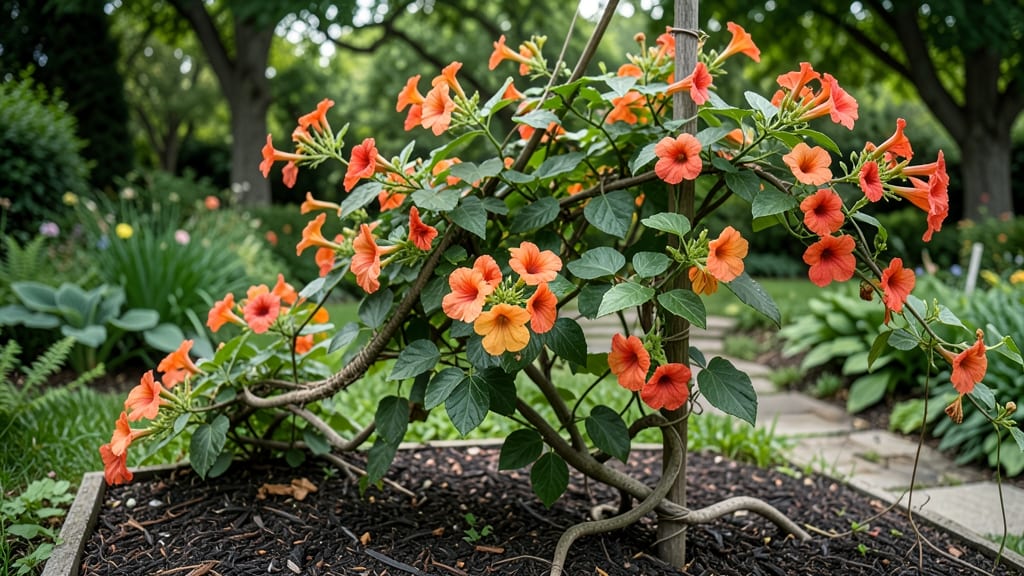
The trumpet vine flowering season brings vibrant orange-red blooms that turn your garden into a hummingbird magnet — but timing is everything to get the show you’re hoping for.
If you’ve ever dreamed of a garden bursting with these showstopping flowers, climate zone is the key. In Zone 6a, blooms typically kick off in late June, while southern gardeners see them as early as May.
Miss the window, and you might be left with lush vines but no flowers.
Sunlight, pruning, and soil all play a role in when — and how long — your trumpet vine 🌺 puts on its best display. With the right care, you can stretch that flowering season from summer straight into early fall, giving you months of color.
Below, I’ll break down the month-by-month timeline by zone, plus pro tips to ensure your vine blooms like crazy. Ready to transform your garden into a floral spectacle?
When does trumpet vine bloom? Month-by-month flowering timeline by USDA Zone
Timing your trumpet vine blooms starts with knowing your USDA hardiness zone. In warmer climates like Zones 8-11, these vines burst into orange-red trumpet-shaped flowers as early as March or April, while gardeners in Zones 3-7 may wait until late May or June.
The key difference? Southern vines bloom earlier and often rebloom later in the season, while Northern vines focus on a single summer peak before frost.
Understanding your zone helps you plan pruning, fertilizing, and even hummingbird-friendly planting. For example, in Zone 9, you might see flowers from April through October, while Zone 5 gardeners enjoy just July to early September.
Let’s break down the exact month-by-month timeline so you can anticipate—and extend—your trumpet vine’s show-stopping display.
In Zones 3-5, where winters are harsh, trumpet vines wait until late May or June to bloom, giving you a shorter but intense summer display. The peak bloom occurs in July and August, making it a star attraction for hummingbirds and late-summer color.
If you’re in Zone 4, mark your calendar for July 4th weekend—this is when your vine will likely hit its most vibrant phase.
Gardeners in Zones 6-7 enjoy a slightly extended season, with blooms starting as early as mid-May and lasting through September. The key here is light pruning in late summer to encourage a second flush of flowers before frost.
I’ve seen vines in Zone 7 produce late-summer blooms in October if the weather stays mild—just don’t prune too aggressively, or you’ll cut off potential buds.
For those in warmer zones (8-11), the real magic happens earlier and longer. In Zone 9, you can expect March blooms, while Zones 10-11 may see flowers as early as February.
The longest bloom windows occur here, with some vines flowering continuously from spring to fall. In Zone 10, I’ve watched trumpet vines rebloom after pruning in June, creating a near-year-round display.
Regional variations matter too. In the Deep South (Zones 8-9), trumpet vines often bloom twice a year—once in spring and again in fall—thanks to mild winters.
Meanwhile, in the Northeast (Zones 3-5), the vine’s single summer bloom is a high-stakes event that demands full-sun placement and regular watering to maximize impact.
If you’re in a transitional zone (Zone 7-8), pay attention to microclimates. A south-facing wall can push blooms 2-3 weeks earlier than a north-facing trellis. I once grew trumpet vine against a brick wall in Zone 7 and saw April blooms—something I’d never experienced before.
The extra warmth from the wall created a mini climate zone all its own.
Pro tip: Use this month-by-month timeline to plan companion plants. Pair trumpet vine with salvias or bee balm to extend your hummingbird season
How to extend trumpet vine blooms: pruning, fertilizing, and sunlight tips
To turn your trumpet vine 🌺 into a nonstop flowering powerhouse, you need to master three key elements: pruning timing, fertilizer strategies, and sunlight optimization. These three factors directly control how long your vine produces those dramatic orange-red blooms.
Get them right, and you’ll enjoy flowers from late June through September—or even longer in warmer climates.
Most gardeners make the mistake of pruning at the wrong time or using the wrong fertilizer blend, which can shorten the flowering season or even prevent blooms entirely. The good news? With a few simple adjustments, you can double your vine’s bloom duration while keeping it healthy.
Let’s break down the exact steps I use in my own garden to maximize those showstopping flowers.
🌺 5 Key Tips to Extend Trumpet Vine Blooms
- Prune in late winter (before buds swell) to remove dead wood and encourage new growth.
- Use a high-phosphorus fertilizer (like 10-20-10) every 4-6 weeks during bloom season.
- Ensure 6+ hours of direct sunlight—partial shade reduces flower production by up to 40%.
- Water deeply but infrequently (once a week) to prevent root stress that triggers early dormancy.
- Deadhead spent blooms in late summer to redirect energy into new flowers.
Let’s start with pruning, which is the foundation of a long flowering season. Many gardeners prune trumpet vines in fall or early spring, but this can remove next year’s flower buds that form on old wood.
Instead, I prune mine in late winter (February), just as new growth begins. This removes dead or weak stems while preserving the flowering wood from the previous season.
For fertilizing, timing and type matter more than most gardeners realize. A high-phosphorus blend (like 10-20-10) is ideal because phosphorus directly supports flower production. I apply it every 4-6 weeks from April through July, then switch to a balanced 10-10-10 in August to maintain foliage health.
Avoid fertilizing in fall or winter, as this can stimulate late-season growth that won’t harden off before frost.
Sunlight is non-negotiable—trumpet vines require full sun (6+ hours daily) to produce their best blooms. In partial shade, you’ll see fewer flowers and weaker stems. If your vine isn’t getting enough light, consider relocating it or pruning nearby trees.
I’ve seen vines in south-facing gardens bloom 30% longer than those in east or west exposures due to the intensity of morning and afternoon sun.
Finally, watering techniques play a surprising role in extending blooms. Trumpet vines are drought-tolerant once established, but deep, infrequent watering (1-2 inches per week) prevents root stress that can trigger early dormancy.
I water mine early in the morning to reduce evaporation and fungal risks. During peak bloom season (July-August), I increase watering slightly to support the vine’s energy demands.
By combining these strategies—pruning at the right time, fertilizing strategically, and maximizing sunlight—you’ll transform your trumpet vine into a year-round blooming star. The key is consistency: stick to this routine, and you’ll enjoy those vibrant trumpets well into early fall. 🌿