
Flowers
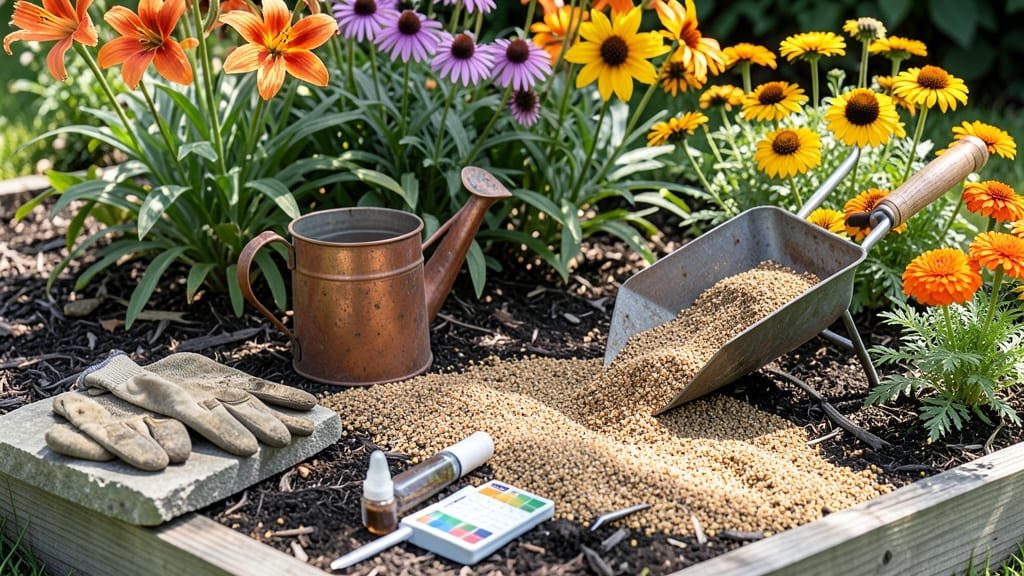
To fertilize flower beds at the right time means the difference between showstopping blooms and plants that just barely survive.
Timing your flower bed fertilization can mean the difference between vibrant blooms and lackluster growth—so when exactly should you feed your plants for maximum impact?
In Zone 6a, the ideal window starts in early spring, just as new growth emerges, and repeats in late summer to keep annuals thriving. Perennials, though, play by their own rules—think 6 weeks before blooming and a light fall feeding to prep for winter.
Below, I break down the exact timing for your region, the signs your 🌸 flower beds are hungry, and how to adjust for heatwaves or early frosts.
Optimal fertilization schedule for flower beds by season
Getting your flower bed fertilization timing right is the secret to show-stopping blooms all season long. Unlike vegetables, flowers don't need heavy feeding, but they do thrive on consistent, strategic nutrition tied to their natural growth cycles. The key difference between annuals and perennials?
Annuals need frequent feeding to fuel rapid bloom cycles, while perennials benefit from root-strengthening in early spring and fall. Let's break down the perfect schedule by season to keep your garden looking its best from spring through fall.
Most gardeners make one critical mistake: they fertilize too late in the season or skip the early spring feeding entirely. I learned this the hard way with my daylilies—they produced half as many blooms when I waited until June to feed them.
The truth is, timing matters more than quantity. A light application at the right moment can outperform heavy feeding at the wrong time. For example, applying high-phosphorus fertilizer 6-8 weeks before blooming triggers those vibrant flowers you're dreaming of.
Here's the game-changing schedule I follow that's transformed my flower beds from "meh" to "wow" in just one season:
| Season | Plant Type | Best Fertilizer Type | Timing | Key Goal |
|---|---|---|---|---|
| Early Spring (March-April) | Perennials | Balanced (10-10-10) or compost | After last frost, when new growth appears | Root development |
| Early Spring (March-April) | Annuals | High-phosphorus (5-10-5) | At planting or 2 weeks later | Bloom initiation |
| Late Spring (May) | All flowers | Balanced liquid feed | Every 4-6 weeks | Maintain growth |
| Summer (June-August) | Annuals | Low-nitrogen (3-6-6) | Every 3-4 weeks after blooming | Extend blooming |
| Fall (September-October) | Perennials | Slow-release organic | 6-8 weeks before first frost | Root strengthening |
| Fall (September-October) | Annuals | None (clean up instead) | Remove spent plants | Prevent disease |
For my perennial roses, I've found that the early spring feeding is non-negotiable. I apply a slow-release fertilizer like Osmocote around the drip line in early April, right when the buds begin to swell. This gives them a steady nutrient supply as they push new growth.
The key is to avoid high-nitrogen fertilizers in summer—this causes leafy growth at the expense of blooms. Instead, I switch to a low-nitrogen, high-phosphorus formula to encourage more flowers.
With annual flowers like zinnias and marigolds, my strategy changes completely. I start with a quick-release fertilizer at planting time to jumpstart their growth. Then, every 3-4 weeks during the growing season, I apply a balanced liquid fertilizer to maintain their vigor.
The secret here is to feed after heavy rain or watering to prevent root burn. I've noticed that annuals respond dramatically to this frequent, light
Signs your flower beds need fertilizer (and when to act)
Your flower beds silently scream for nutrients long before the blooms fade. Watch for yellowing leaves—especially on older foliage—which often signals a nitrogen deficiency. This nutrient is crucial for leafy growth, and without it, your plants struggle to produce the vibrant greenery that supports strong blooms.
Another red flag is stunted growth or small, sparse flowers. If your plants look leggy with few blooms, they’re likely craving phosphorus, which fuels root development and flower production.
Even healthy-looking plants may need a boost if you notice purplish stems, a classic sign of potassium deficiency.
🌱
⚠️ When to Fertilize Flower Beds
Spring: Apply balanced fertilizer (10-10-10) as soon as soil warms (after last frost). Look for new growth—this is your cue!
Summer: Feed every 4-6 weeks during blooming season. Yellow leaves or fewer blooms mean it’s time to act.
Fall: Use a light fertilizer 6 weeks before first frost to strengthen roots for winter. Avoid overfeeding—plants need to harden off.
Winter: Skip fertilization entirely. Dormant plants don’t need nutrients, and overfeeding can harm roots.
Don’t wait until your 🌸 flowers look half-dead to act. If you spot brown leaf edges, it could mean over-fertilization or chlorosis (iron deficiency), often caused by alkaline soil. Test your soil pH—aim for 6.0–7.0 for most flowers—and adjust with chelated iron if needed.
For annuals, like marigolds or zinnias, fertilize every 3–4 weeks during their growing season. Perennials, such as daylilies or coneflowers, only need feeding in early spring and mid-summer. Overfeeding perennials can lead to excess foliage at the expense of blooms.
Pro tip: Water your flower beds deeply before fertilizing to help nutrients reach the roots. Apply fertilizer in the early morning to prevent leaf burn from heat or evaporation. If you’re unsure, start with a half-dose and monitor your plants’ response.
🌿