
Vegetables
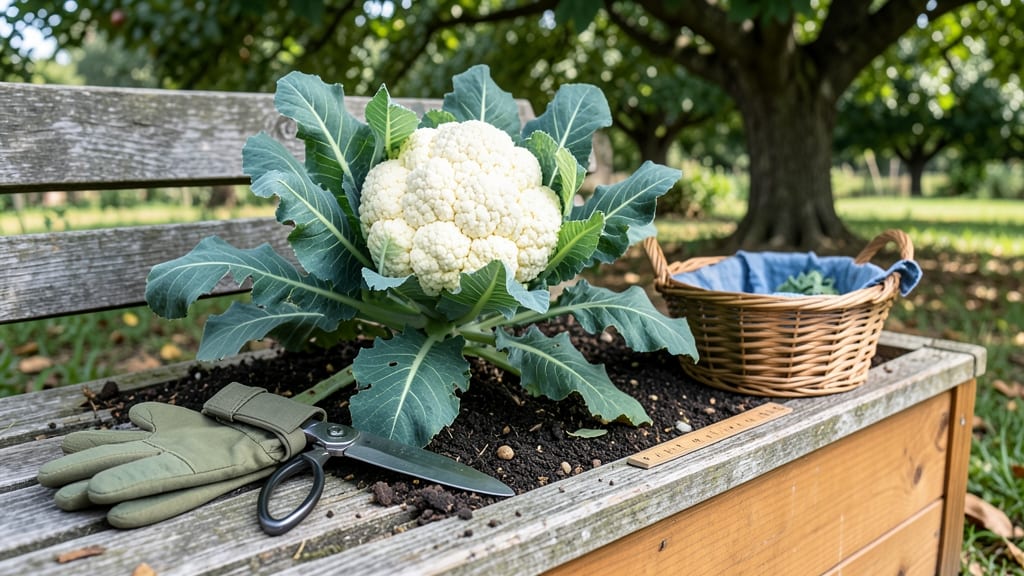
To pick cauliflower at its peak—when the curds are crisp, compact, and packed with nutrients—you need to watch for three key signals that most gardeners miss.
Picture this: you’ve nurtured your 🥬 cauliflower for months, and now the head is the size of a softball. But if you harvest too early, it’s still tough and underdeveloped. Wait too long, and those tight curds loosen, turning bitter and stringy.
The difference between a perfect harvest and a wasted effort comes down to timing—and I’ll show you exactly how to nail it.
For Zone 6a gardeners like me, the window runs from late June through August, but heat and humidity can speed up maturity.
Below, I’ll break down the visual cues you should check daily, how to test firmness without damaging the plant, and why color consistency is your best friend in the garden.
You’ll also learn how to cut it cleanly for maximum shelf life, plus a pro trick to coax a second harvest from the same plant—because nobody wants to leave good curds in the soil. Let’s get started.


Signs your cauliflower is ready for harvest (with perfect timing)
Knowing exactly when to pick your cauliflower ensures you get the crispest, most flavorful heads. The difference between a perfect harvest and a bitter, overgrown mess often comes down to timing.
Most varieties reach maturity between 70-100 days after planting, but visual cues are your best guide. Watch for these key indicators to avoid missing the window.
First, check the head size—ideal maturity ranges from 4-8 inches in diameter, depending on the variety. Dwarf types like 'Snowball Y Improved' stay smaller (4-6 inches), while larger varieties can reach 8 inches.
If the head feels loose or small, it’s not ready yet. Overgrowth happens when you wait too long, leading to tough, woody texture and open florets that turn yellow or bitter.
Next, examine the outer leaves. When they start to yellow and die back, it’s a clear sign the head is maturing. Healthy green leaves mean your cauliflower still needs time.
The leaves should also begin to loosen slightly around the base of the head, making it easier to spot the fully formed curd underneath. This is your plant’s way of saying, "Time to pick me!"
Don’t overlook the color—it’s your final checkpoint. A perfectly mature head should be uniform in color, whether white, purple, or green. If you see discoloration or brown spots, the head has likely been exposed to too much heat or is overripe.
For purple varieties, the color should be deep and consistent, not fading or streaked.
Here’s where many gardeners go wrong: they rely solely on days-to-harvest timelines without checking physical signs. A 70-day-old plant might still need 10 more days if conditions were cooler, while a 90-day plant in hot weather could be overripe.
Always test for firmness—a ready head feels dense and solid when gently squeezed, not soft or spongy.
| Variety | Days to Harvest | Head Size | Key Maturity Signs |
|---|---|---|---|
| Snowball Y Improved | 70-80 days | 4-6 inches | Firm, white head; outer leaves yellowing |
| Purple of Sicily | 80-90 days | 6-8 inches | Deep purple; dense texture; slight leaf browning |
| Romanesco | td style="padding: 10px; border-bottom: 1px solid #74d4a3;">90-100 days5-7 inches | Fractal pattern fully formed; firm to touch | |
| Green Goddess | 60-70 days | 3-5 inches | Bright green; compact; leaves curling |
Seasonal timing also plays a crucial role. In cool climates (Zones 6a and below), aim to harvest cauliflower in late spring to early summer (May-June). If you plant too late, summer heat can cause the heads to bolt or become bitter.
For warmer zones (7a and above), focus on fall planting (August-September) to harvest in late fall or early winter before frost.
One pro tip I swear by is checking your cauliflower daily in the last week before its estimated harvest time. Heat waves or sudden temperature drops can accelerate maturity, so stay vigilant.
If you notice the head starting to split or open, it’s past its prime—harvest immediately, even if it’s not fully sized. A slightly smaller, perfect head beats a large, woody one any day.
Finally, avoid the temptation to harvest based on calendar dates alone. Even within the same variety, growing conditions vary. A shady spot might delay maturity by a week, while full sun and warm soil can speed it up.
Always prioritize the visual and tactile cues over the clock. Your cauliflower will thank you with a head that’s crisp, tender, and packed with flavor.
Once you’ve confirmed all the signs, grab your sharp knife or pruners and cut the stem about 1-2 inches below the head. This leaves room for a second harvest if you’re growing a regrowing variety.
Store your freshly picked cauliflower in the fridge for up to a week, or blanch and freeze it to preserve that just-harvested taste for months.
With these signs in mind, you’ll never miss the perfect moment to harvest your cauliflower again. Happy gardening—and enjoy those homegrown curds! 🥬
How to test cauliflower ripeness before picking (avoid these common mistakes)
Testing cauliflower ripeness isn’t just about guessing—it’s about using your senses to catch that perfect window when the curds are at their peak. I’ve learned the hard way that waiting even 24 hours past maturity can turn a crisp, sweet harvest into a tough, bitter disappointment.
The key is checking three critical signals every other day once your plant reaches 60 days of growth.
Start by examining the outer leaves. When they begin to yellow and brown at the edges, it’s your first clue that the head is maturing. But don’t harvest yet—this is just the beginning.
Next, look at the curd itself: it should be fully formed, with no visible gaps between the florets. If you see tiny buds starting to open, you’ve missed the boat.
The most reliable test? Gentle finger pressure. Press your thumb and forefinger into the firmest part of the curd. If it feels dense and slightly springy, like a well-inflated balloon, it’s ready.
But if it gives under pressure or feels spongy or hollow, hold off for another day or two.
⚠️ WARNING: Overripe Cauliflower = Bitter, Stringy Disaster
⚠️ Common Mistake: Waiting until the head turns yellow or brown—this means it’s overripe and the curds will have turned woody or bitter. By then, the nutrient density drops, and the texture becomes unpleasant to eat. Even worse, the florets may start to loosen and separate, making storage difficult.
✅ Pro Tip: Harvest when the head is firm, compact, and fully colored (white, purple, or green, depending on variety). For 'Snowball Y Improved', aim for a 6-inch diameter—any larger and the center may start to yellow or hollow out.
🌡️ Heat Warning: In Zone 6a+, temperatures above 85°F accelerate ripening. Check plants daily in summer to avoid missing the window.
Don’t forget to inspect the stem where the head meets the plant. If it’s thick and woody, the curd is likely past its prime. But if it’s still smooth and green, you’ve got a few more days.
For purple varieties like 'Purple of Sicily,' the color should deepen to a rich lavender hue—never let it fade to brown.
One trick I swear by? Morning harvests. The cool night air firms up the curds, making them easier to test. Avoid picking after a hot afternoon, as the heat can make the head feel softer than it really is.
And always use a sharp knife or pruners—a jagged cut invites pests and disease.
Finally, remember that size matters but isn’t everything. A 4-inch head can be perfect if it’s firm and fully colored, while an 8-inch monster might be hollow inside.
When in doubt, cut one head to check the inside—if the florets are tight and creamy-white, you’re golden. If not, let the others mature another day.