
Flowers
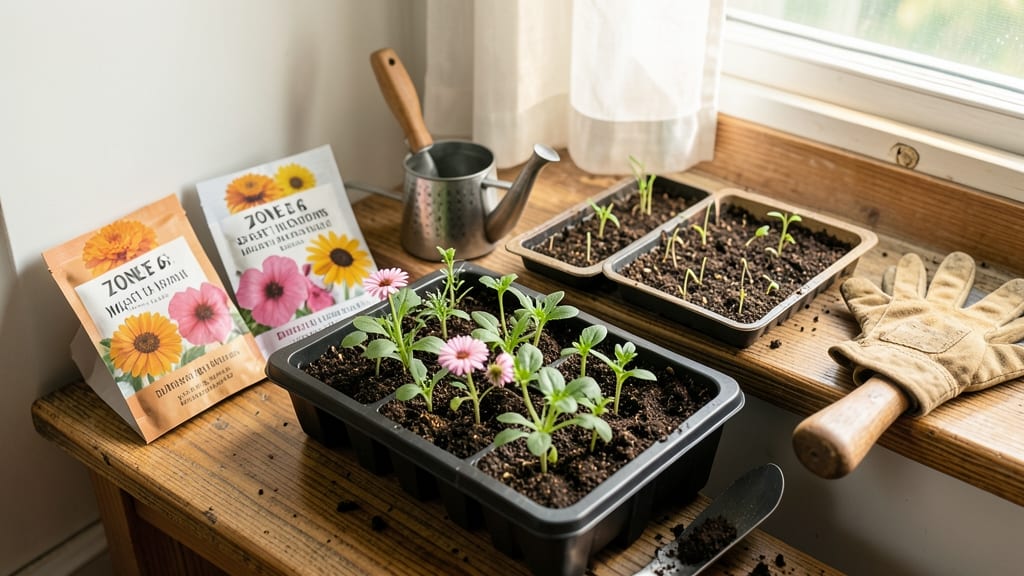
Planting flower seeds in Zone 6 at the right time means the difference between a garden bursting with color and a season of disappointment.
Zone 6 gardeners know timing is everything—plant flower seeds too early, and frost will kill them; too late, and you’ll miss peak blooms. But with precise frost-date math, you can guarantee vibrant flowers all season long.
Most annuals, like marigolds and zinnias, need to go in the ground 2-4 weeks after your last frost, while perennials like coneflowers can handle cooler soil. Bulbs? They’re a whole different story—plant them in fall for spring surprises.
Below, I’ll break down the exact weeks to plant for your region, how to adjust for microclimates, and the three biggest mistakes that ruin timing—so you can finally get the blooms you’ve been dreaming of.
Zone 6 frost dates and ideal planting windows for flower seeds
Understanding Zone 6 frost dates is the secret to planting flower seeds with confidence. In this zone, the last spring frost typically arrives between mid-April and early May, while the first fall frost hits around mid-October to early November.
These dates create a 150-180 day frost-free window—your golden opportunity to grow vibrant annuals and perennials. But timing isn't one-size-fits-all; regional microclimates within Zone 6 can shift these windows by 2-4 weeks, especially at higher elevations.
For example, western Zone 6 (like Colorado) often sees later last frosts (May 10-20) compared to eastern Zone 6 (like Ohio), where frost typically exits by April 20-30. Similarly, mountainous areas may experience earlier fall frosts (late September) than valley regions.
These variations mean your planting windows should be adjusted based on your specific location—not just the zone average.
Flower seeds fall into two main categories: cool-season and warm-season varieties. Cool-season flowers like pansies, snapdragons, and sweet alyssum thrive when planted 4-6 weeks before your last frost, often in March.
Meanwhile, warm-season flowers such as marigolds, zinnias, and cosmos need to wait until 2-3 weeks after your last frost, usually late April to early May. Perennials like coneflowers and black-eyed Susans can handle a wider window but still benefit from early starts.
Here’s the non-negotiable rule: Always check your seed packet for days-to-germination and maturity times. For instance, if your marigold seeds need 70 days to bloom and your frost-free window ends in October 15, you must plant by August 15 to enjoy flowers before winter.
This math ensures you avoid wasted seeds and disappointing blooms.
Soil temperature plays a hidden role in seed success. Most flower seeds germinate best when soil reaches 50-70°F. In Zone 6, this often aligns with late April to early May, but cooler microclimates (like shaded areas) may require soil warming mats or row covers to speed up germination.
For early spring sowing, consider starting seeds indoors 6-8 weeks before your last frost to give them a head start.
Regional adjustments are key to Zone 6 success. For instance, Ohio gardeners might plant snapdragons in early April (soil temp ~50°F), while Colorado gardeners should wait until mid-May (soil temp ~60°F) due to later frosts.
Similarly, coastal areas (like Maryland) have milder winters, allowing extended fall planting until late October, whereas inland areas may need to stop by September 15.
One common mistake is planting too early and risking frost damage. For example, cosmos seeds sown in March will rot in cold, wet soil. Instead, wait until after your last frost (typically May 1 in most of Zone 6) to ensure strong, healthy seedlings.
Another pitfall is ignoring seed packet instructions—some varieties (like <
How to calculate your exact planting timeline using frost dates
Calculating your exact planting timeline starts with understanding your local frost dates. In Zone 6, the average last frost falls between mid-April and early May, while the first frost typically arrives mid-October to early November.
However, these dates can shift by 1-2 weeks depending on your elevation or nearby water bodies.
To pinpoint your exact dates, check your local cooperative extension service or use a frost date calculator (like the Old Farmer’s Almanac). For example, if your last frost is May 10, warm-season flowers like zinnias should go in May 15-20, while cool-season pansies can handle April 1-15.
Here’s the key: Soil temperature matters more than air temperature. Use a soil thermometer—most flower seeds need soil to stay above 50°F (10°C) for 2-3 weeks before planting. If your soil is still chilly, wait a few more days, even if the air feels warm.
- Step 1
- Step 2
- Step 3
- Step 4
- Step 5
One of the biggest mistakes I see is ignoring seed packet instructions. For instance, cosmos seeds can self-sow if planted too early, while snapdragons bolt in heat. Always cross-reference your frost date with the packet’s days to germination and mature size—overcrowding stunts growth.
Pro tip: If you’re starting seeds indoors, begin 6-8 weeks before your last frost. Use grow lights to simulate sunlight—without them, seedlings stretchweakly and fall over. For example, in Zone 6, start basil or petunias indoors in March for a May transplant.
Finally, account for unpredictable weather. Keep a planting journal for 2-3 years to track your local frost patterns. You might notice your garden warms up 2 weeks earlier than the average—adjust your timeline accordingly. With this method, you’ll avoid the heartbreak of frost-nipped seedlings or missed blooms.