
Plants
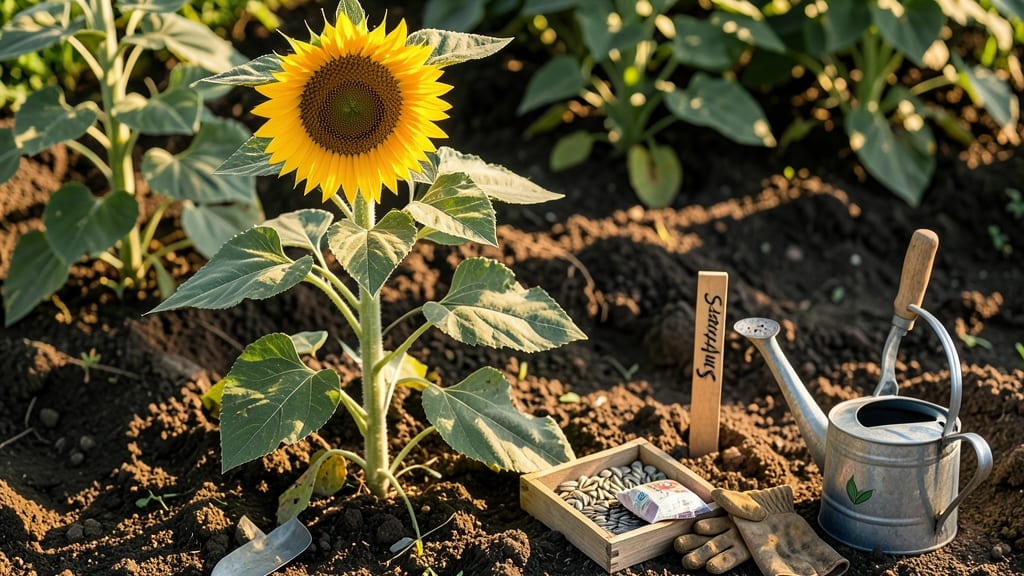
Planting sunflower seeds in Colorado after the last frost—typically mid-April to mid-June—sets the stage for towering 🌻 blooms that thrive in the state’s varied climates.
Colorado’s elevation zones create unique challenges: plant too early, and frost will nip tender seedlings; too late, and summer’s heat stunts growth. The key is matching your location’s last-frost date with soil warmth, whether you’re on the Front Range or the Western Slope.
In this guide, you’ll find exact planting windows by elevation, soil prep tips for Colorado’s dry climate, and how to choose sunflower varieties that suit your zone—from dwarf types for cooler areas to giants for longer summers.
Skip the guesswork and get a harvest-ready timeline, including when to thin seedlings and how to adjust for high-altitude microclimates.
Colorado sunflower planting calendar by elevation zone and last-frost dates
Colorado’s dramatic elevation changes—from the Front Range’s 5,000–7,000 ft to the Western Slope’s 4,000–6,000 ft and Mountain Regions’ 7,000+ ft—mean sunflower planting windows vary by 100+ days.
At lower elevations, you can sow seeds by mid-April, while high-altitude gardeners must wait until late May or June to avoid frost damage. Understanding your last-frost dates and soil temperature is key to successful germination.
Sunflowers thrive in warm soil (ideal germination occurs at 60–70°F), so timing is everything. Direct sowing after the last frost ensures strong starts, while transplanting requires hardened-off seedlings and careful acclimation.
Below, I’ve broken down planting windows by elevation zone, including average last-frost dates and pro tips for each region to maximize your sunflower harvest.
⚠️ NON-NEGOTIABLE: Always check your local Colorado State University Extension frost dates—these averages can shift yearly due to microclimates. For example, Denver’s last-frost date often falls around April 20, but mountain towns like Leadville (10,000 ft) may not see frost-free conditions until June 15.
🌱 SUMMARY TABLE:
| Elevation Zone | Avg. Last Frost | Direct Sowing Window | Transplanting Window | Soil Temp. for Germination | Pro Tip |
|---|---|---|---|---|---|
| Front Range (5,000–7,000 ft) | April 15–May 1 | Mid-April to early June | Late April to mid-May | 60–70°F | Use black plastic mulch to warm soil faster. |
| Western Slope (4,000–6,000 ft) | March 30–April 15 | Late March to early May | Early April to late April | 55–65°F | Choose early-maturing varieties like 'Autumn Beauty'. |
| Mountain Regions (7,000+ ft) | May 15–June 1 | Late May to early July | Late May to mid-June | 65–75°F | Start indoor seedlings in April for transplanting. |
For the Front Range, where cities like Denver and Boulder sit at 5,280 ft, aim to plant sunflower seeds between mid-April and early June. This window aligns with the average last-frost date of April 20, giving seedlings time to establish before summer’s heat arrives.
If you’re in Fort Collins (5,000 ft), you can push planting to late March for early varieties, but be ready to protect seedlings with row covers if frost lingers.
Gardeners in Western Slope areas like Grand Junction (4,800 ft) or Durango (6,500 ft) enjoy earlier planting windows. Here, soil warms faster, allowing direct sowing as early as late March. However, high-desert conditions mean wind protection is critical—use windbreaks or trellises to support tall varieties like 'Russian Giant'.
In Mountain Regions, such as Estes Park (7,500 ft) or Telluride (8,750 ft), sunflowers face shorter growing seasons. Plant dwarf or semi-dwarf varieties (e.g., 'Teddy Bear' or 'ProCut') in late May to early July to ensure they mature before the first frost in October.
For high-altitude gardens, consider container growing to move pots indoors if early frosts threaten.
Soil temperature is non-negotiable for germination. Use a soil thermometer to confirm your garden bed has reached 60°F or warmer before sowing. In cooler zones, try warming soil with black plastic mulch or plant in south-facing beds that absorb more sunlight.
For transplanting, harden off seedlings for 7–10 days before moving them outdoors to avoid shock.
Pro tip: Succession planting works well for Colorado’s varied climate. Sow a second batch of seeds in early June to extend your harvest into late September or October, especially in lower elevations. This strategy ensures continuous blooms and seed production, even as summer transitions to fall.
Finally, remember that sunflowers are drought-tolerant once established, but young seedlings need consistent moisture. Mulch around plants to retain soil warmth and reduce watering needs. With the right timing and care, your Colorado sunflowers will reward you with vibrant blooms and bountiful seeds—no matter your elevation!
How to adjust planting time for Colorado’s microclimates and sunflower varieties
Colorado’s microclimates mean your sunflower planting time depends on elevation and variety. Dwarf sunflowers like ‘Teddy Bear’ thrive in cooler soils as early as late April in lower zones, while ‘Russian Giant’ needs warmer soil by mid-May.
The key is matching your sunflower’s maturity timeline to your local frost dates and soil warmth.
High-altitude gardens (7,000+ ft) face shorter growing seasons, so early-maturing varieties like ‘Autumn Beauty’ are ideal. In contrast, lower elevations can support late-season giants like ‘Mammoth’, which need 120+ days to reach full height. Always check your last-frost date and adjust planting by 2–4 weeks based on variety.
Planting Sunflower Seeds in Colorado: Pros & Cons by Variety
| Variety | Planting Window | Pros | Cons |
|---|---|---|---|
| Dwarf (e.g., ‘Teddy Bear’) | Late April–Early May | Tolerates cooler soils; early blooms | Shorter stature; limited seed yield |
| Semi-Dwarf (e.g., ‘Autumn Beauty’) | Mid-April–Mid-May | Balanced height; long vase life | Needs consistent watering |
| Giant (e.g., ‘Russian Giant’) | Mid-May–Early June | Massive blooms; high seed yield | Requires warm soil; tall support needed |
*Adjust planting dates 2 weeks earlier for high-altitude zones (7,000+ ft) and 2 weeks later for lower elevations (4,000–6,000 ft).
For high-altitude gardens, extend the season by starting seeds indoors 4–6 weeks before the last frost. Use grow lights to simulate longer days, then transplant seedlings when soil reaches 55°F.
In lower elevations, direct sow after soil warms to 60°F—typically mid-May—to avoid bolting from heat stress.
Sunflowers labeled ‘early-season’ (e.g., ‘ProCut’) mature in 50–60 days, perfect for short seasons. Mid-season types like ‘Autumn Beauty’ take 60–90 days, while late-season giants need 90–120 days. Always calculate backward from your first-frost date to avoid winter kills.
Pro tip: Use black plastic mulch to warm soil faster in cooler zones. This lets you plant 2 weeks earlier and speeds germination. Pair it with drip irrigation to maintain consistent moisture—critical for Colorado’s dry summers.
Finally, group sunflowers by maturity timeline in your garden layout. Plant early varieties near the front, mid-season types in the middle, and late-season giants at the back. This creates a sequential bloom display from summer to fall.