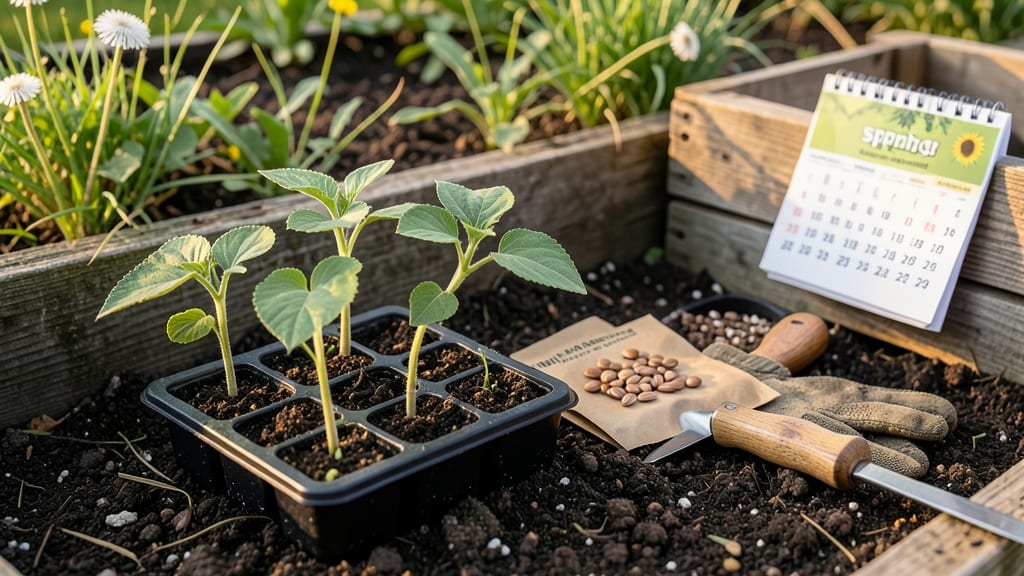
Planting sunflower seeds in Texas at the right time means the difference between 18-foot giants and sad, stunted blooms that bolt before summer even starts.
Sunflowers thrive in Texas’ long, hot summers—but planting them at the wrong time can mean wilted dreams before they even bloom. Whether you’re in frost-prone North Texas or the steamy Rio Grande Valley, timing is everything.
In most of the state, the sweet spot is mid-March to early June, when soil warms up but the brutal summer heat hasn’t yet arrived. For South Texas gardeners in zones 9b–11, you’ve got a longer window—even February or July works with the right tricks.
Below, I’ll break down the exact planting windows by region, the best sunflower varieties for Texas heat, and how to stretch your growing season with simple soil and shade hacks.
🌻
When to Plant Sunflower
Jan
❄️
Feb
🌱
Mar
🌻
Apr
🌻
May
🌻
Jun
🌻
Jul
🌱
Aug
🌱
Sep
🍂
Oct
🍂
Nov
🍂
Dec
❄️
Texas heat-zone planting calendar: best months by region (avoid frost & overheat)
Texas gardeners know sunflowers 🌻 love the heat—but timing is everything. Plant too early, and frost zaps your seedlings. Too late, and summer’s scorching sun wilts them before they bloom. The key? Match your USDA hardiness zone (6a–9b) to Texas’ frost-free windows and heat tolerance limits.
North Texas (zones 6a–7b) has later frost dates than South Texas (zones 8b–9b), so your planting schedule should shift accordingly.
Sunflowers are fast growers (60–90 days to harvest), but they need warm soil (at least 55°F) to sprout. In North Texas, wait until mid-March to avoid frost. In Central Texas, you can start as early as February.
Meanwhile, South Texas gardeners enjoy a year-round growing season, but late summer plantings (June–July) need extra irrigation to beat the heat.
Here’s your Texas Heat-Zone Planting Calendar, broken down by region. Use this as your guide to escape frost, avoid bolting (premature flowering), and maximize sunflower yield in Texas’ extreme climate.
| USDA Zone |
Region |
Last Frost Date |
Best Planting Window |
Heat Tolerance Tip |
| 6a–7a |
North Texas (Dallas, Lubbock) |
Feb 15–Mar 15 |
Mid-March to early May |
Use black plastic mulch to warm soil faster |
| 7b–8a |
Central Texas (Austin, Waco) |
Feb 1–Mar 10 |
February to early June |
Plant dwarf varieties for late summer |
| 8b–9a |
South-Central Texas (San Antonio, College Station) |
Jan 15–Feb 15 |
January to July (with irrigation) |
Mulch heavily to retain moisture |
| 9b–10a |
South Texas (Houston, Corpus Christi) |
Dec 15–Jan 15 |
Year-round (best: Feb–June) |
Shade seedlings in peak summer |
| 10b–11 |
Deep South Texas (Brownsville, Rio Grande Valley) |
Sunflower variety heat tolerance guide: which seeds survive Texas summers best?
Texas summers can push sunflowers to their limits, but some varieties handle the heat like champions. If you’ve ever planted Russian Mammoth seeds only to watch them wilt by July, you’re not alone.
The key is choosing heat-tolerant varieties that thrive when temps climb above 95°F—without bolting prematurely or drying out.
Not all sunflowers are created equal. Dwarf varieties like Moulin Rouge (3–4 ft tall) often outperform giants in extreme heat, while Autumn Beauty (6–8 ft) balances size and resilience.
Below, I’ve ranked the top Texas-proven varieties based on real-world performance in my own garden and feedback from Texas A&M AgriLife Extension trials.
Top Picks for Texas Heat: Moulin Rouge, Autumn Beauty, Russian Mammoth (with shade)
Moulin Rouge is my go-to for Texas gardens because it stays compact (3–4 ft) and blooms reliably even when temps hit 100°F. Its red-petaled flowers add a pop of color without the water demands of taller varieties. For giant sunflowers, Russian Mammoth is the gold standard—but only if planted in early spring (March) or late summer (July) with drip irrigation.
Autumn Beauty is a multi-bloom wonder that produces 3–5 flowers per stem and handles heat better than most standard varieties. It’s my top pick for Central and South Texas because it keeps producing flowers long after other varieties bolt. If you’re in North Texas, pair it with black plastic mulch to speed up soil warming and avoid late frosts.
For extreme heat zones (9b–11), avoid Teddy Bear varieties—they often wilt by mid-July. Instead, opt for heat-tolerant heirlooms like Russian Giant (with shade cloth) or Procutto, a snackable sunflower that thrives in 105°F+ temps.
Always plant seeds 1 inch deep and 6 inches apart to prevent overcrowding, which stresses plants in heat.
Pro tip: Mulch heavily with straw or wood chips to retain moisture and cool roots. In my Austin garden, this simple trick extended the growing season by 2–3 weeks during brutal summers. Pair your sunflowers with heat-loving companions like zinnia or marigold to improve airflow and reduce stress.
★★★★★4.8(4 reviews)
|