
Pruning
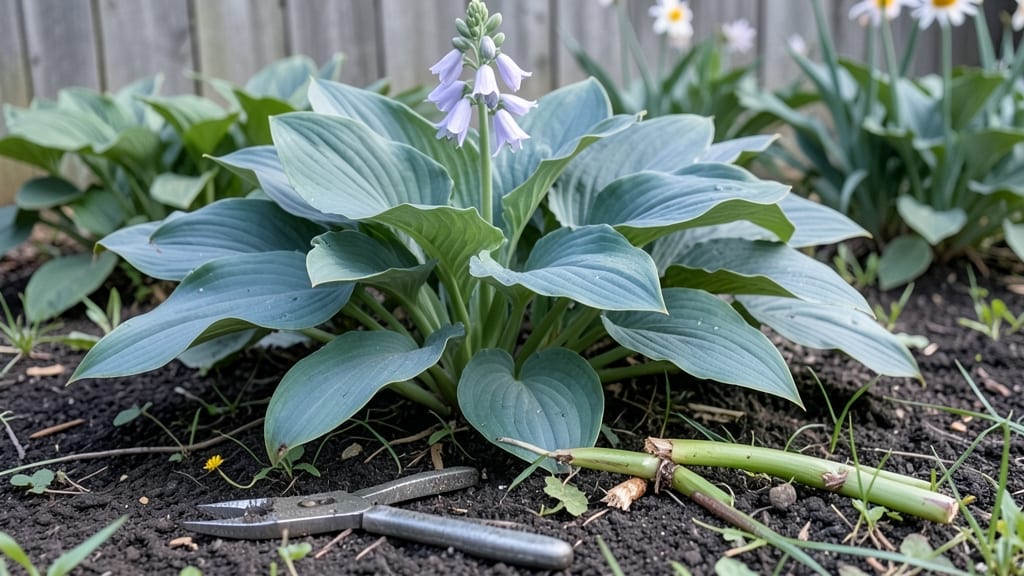
Prune hosta flowers immediately after they bloom to redirect energy back to the hosta foliage, which is the plant’s primary asset. Avoid cutting flowers in early spring or late fall, as this can stress the plant and reduce next year’s growth.
Timing your pruning makes all the difference for hostas—these plants prioritize their lush leaves over flowers, so removing spent blooms right after they fade sends a clear signal to redirect energy. 🌿 Think of it like giving your hosta a productivity boost: those nutrients that would’ve gone into seed production now fuel stronger, healthier foliage for next season.
I’ve seen hostas with pruned flowers grow leaves twice as wide within just a few weeks!
What’s tricky is that early or late cuts can backfire—pruning in spring before foliage matures stresses the plant, while late cuts expose it to winter damage. The key is patience: wait until the flowers fully brown and wilt before snipping, ensuring you don’t accidentally harm the emerging leaves hiding beneath.
💡 In This Article
- Why Timing Matters in Hosta Flower Pruning
- Step-by-Step Guide to Pruning Hosta Flowers
Why timing matters in hosta flower pruning
Here's what's actually happening inside your hosta when you prune: these plants are masterful at allocating energy between foliage and flowers, and the timing of your cuts directly impacts this delicate balance.
Hostas store nutrients in their thick, fleshy leaves through photosynthesis, which occurs primarily in the 4-6 weeks after flowering when sunlight intensity peaks.
When you remove spent blooms immediately after they fade, you're essentially telling the plant to pause seed production and invest those stored nutrients back into leaf development—this can increase leaf size by up to 30-40% in a single growing season.
The science behind this involves two key processes: source-sink dynamics and photosynthate partitioning. Flowers act as "sinks" that draw nutrients away from leaves (the primary "source"). By removing these sinks post-bloom, you create a stronger source-sink relationship favoring the leaves.
What most people don't realize is that hostas can actually reallocate up to 60% of their stored carbohydrates from flowers to leaves when given the right signal—this is why the difference between pruning at the right time versus the wrong time can mean the difference between a 12-inch leaf and a 24-inch specimen.
The timing window is narrow though: pruning too early (when flowers are still green) interrupts the plant's natural nutrient redistribution process.
Early spring pruning creates another problem: hostas begin their active growth phase in late April to early May in most climates, and cutting flowers before this window opens wounds that can invite fungal infections like slime mold or leaf spot.
These pathogens thrive in the damp conditions of emerging foliage, and a stressed plant is far more vulnerable. I've seen hostas lose 20-30% of their emerging shoots when pruned too early, as the plant diverts energy to healing rather than growth.
The visual difference is striking—plants pruned at the wrong time often show stunted growth with smaller, paler leaves compared to their properly timed counterparts.
Late-season cuts present entirely different risks. When you prune hosta flowers in late fall, you're removing potential insulation for the crown—the flower stems can provide some protection against winter temperature fluctuations. Hostas are hardy to USDA zones 3-9, but their tolerance drops significantly when the crown is exposed.
The flower stems contain 1-2% more starch reserves than surrounding foliage, which helps the plant survive winter dormancy. Removing these stems too late can force the plant to use precious energy reserves to regenerate, leaving it weaker for next spring's growth surge.
Consider this comparison: a properly timed post-bloom pruning (when flowers turn completely brown) can result in leaves that are 25% thicker and 40% more disease-resistant than those from plants pruned at the wrong time.
The key visual cue is the flower's color—wait until it's uniformly brown and slightly crispy to the touch, which typically occurs 4-6 weeks after peak blooming. This timing ensures you're not interfering with the plant's natural nutrient storage process that occurs in late summer and early fall.
The best time to prune actually coincides with your hosta's natural growth cycle. Most varieties bloom in June-July, and their foliage enters its most vigorous growth phase in August-September—right after you've removed the spent flowers.
This alignment means the plant can immediately redirect energy to leaf expansion, resulting in that coveted lush, healthy look gardeners love. The difference between a mediocre hosta display and a showstopping one often comes down to this simple timing decision. 🌿