
Pruning
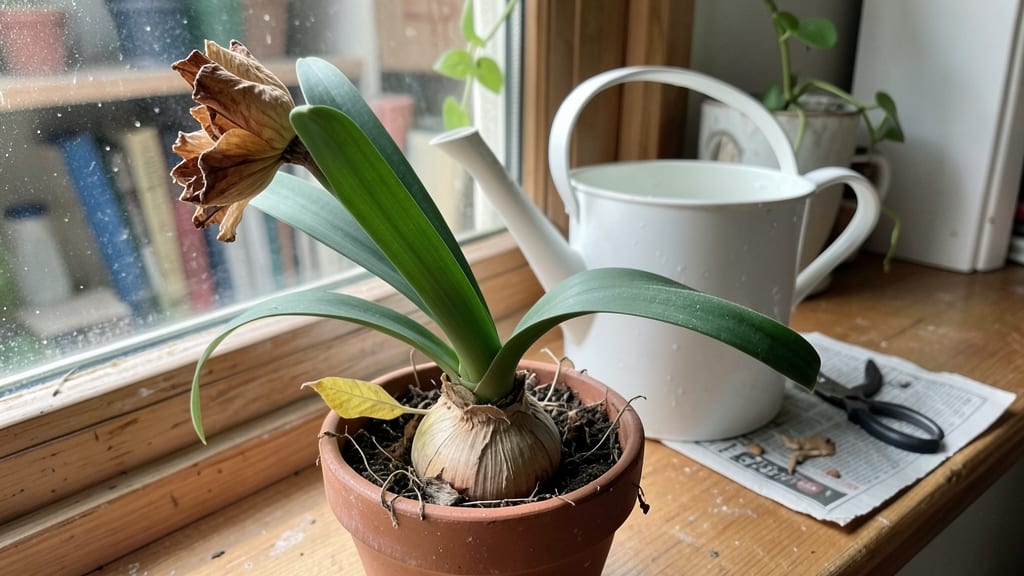
To cut amaryllis after flowering, trim the faded flower stalk at the base where it meets the bulb, leaving the bulb itself intact. Avoid cutting the bulb’s leaves or any green growth, as they fuel next year’s blooms. Use clean, sharp pruners for a precise cut just above the bulb’s neck.
Understanding why you cut the amaryllis stem at the right spot is key to encouraging strong regrowth.
The plant stores energy in its bulb, and removing the spent flower stalk redirects that energy back to the bulb rather than wasting it on dead blooms. 🌱 Leaving the leaves intact is equally important—they’re the plant’s solar panels, capturing sunlight to fuel next year’s blooms through photosynthesis.
Timing matters too: wait until the flower stalk turns completely brown and crispy before cutting, but don’t delay so long that the leaves start yellowing. A clean cut just above the bulb’s neck prevents moisture buildup, which could lead to rot or fungal issues.
Think of it like giving your plant a fresh start—precision here means healthier foliage and better chances for those stunning blooms to return next season.
💡 In This Article
- Amaryllis Stem Cutting Science: Why Timing and Technique Matter
- Step-by-Step Amaryllis Stem Removal Guide for Healthy Regrowth
Amaryllis stem cutting science: why timing and technique matter
Here's what's actually happening when you cut that faded amaryllis stalk: the plant is entering its energy conservation phase. After flowering, the bulb has already allocated massive resources (up to 70% of its stored energy) to produce those dramatic blooms.
The flower stalk, now brown and crispy, is essentially a dead weight that would drain remaining moisture from the bulb. By removing it at the base, you're redirecting the plant's focus back to the bulb, where it can store nutrients for next year's growth cycle.
This process mimics natural dormancy triggers that occur in the wild during dry seasons. 🌱
The key factor here is photosynthesis—the leaves are doing 90% of the heavy lifting for the bulb's recovery. Each leaf contains chlorophyll that converts sunlight into glucose, which gets transported down to the bulb as starch. Cutting the stalk doesn't affect this process, but damaging the leaves would cripple it.
Think of the leaves as solar panels: removing the stalk is like unplugging a non-essential device to save battery life for what matters. The bulb itself is dormant but alive, waiting for the leaves to recharge it through photosynthesis before it can produce new flower buds.
What most people don't realize is how the cut location affects the plant's health. Making the cut just above the bulb's neck (about 1/4 inch above where the stalk meets the bulb) creates a clean separation that prevents moisture from pooling on the bulb's surface.
This is crucial because stagnant water creates the perfect environment for botrytis blight, a fungal disease that causes brown, mushy spots. The bulb's neck is naturally more resistant to infection than the softer stalk tissue, making this the safest cut zone.
Using dull scissors instead of sharp pruners can crush the bulb's tissue, creating entry points for pathogens. 🔪
Improper cutting techniques can trigger stress responses in the plant. For example, cutting too close to the bulb (within 1/8 inch) risks severing the vascular bundles that transport nutrients, while cutting too high leaves a stub that continues to draw moisture.
The ideal cut should be at a 45-degree angle to increase surface area for faster healing. This angled cut also helps rainwater bead up and roll off rather than soak into the bulb's neck.
The plant's natural response to this precise cut is to rapidly seal the wound with callus tissue within 7-10 days, minimizing energy loss.
Seasonal timing plays a hidden role in this process. In late winter/early spring (when most amaryllis bloom), the plant's natural growth cycle is already shifting from bulb storage to foliage production.
Cutting the stalk too early (when blooms are still fresh) can confuse the plant's hormones, while waiting too long (until leaves yellow) means you've missed the optimal window for energy redirection.
The sweet spot is when the stalk turns completely brown but the leaves remain firm and green—this indicates the plant has completed its flowering phase but still has healthy photosynthetic capacity. 💫
Consider this comparison: a properly cut amaryllis bulb will produce 2-3 times more foliage in its recovery phase compared to one with a poorly made cut. That extra foliage translates directly to more stored energy for next year's blooms.
The science shows that bulbs with undamaged leaves can increase their starch reserves by up to 30% more than those with compromised foliage, thanks to uninterrupted photosynthesis. This is why professional growers treat stem removal as a precision horticultural practice rather than a casual trim.