
Pests
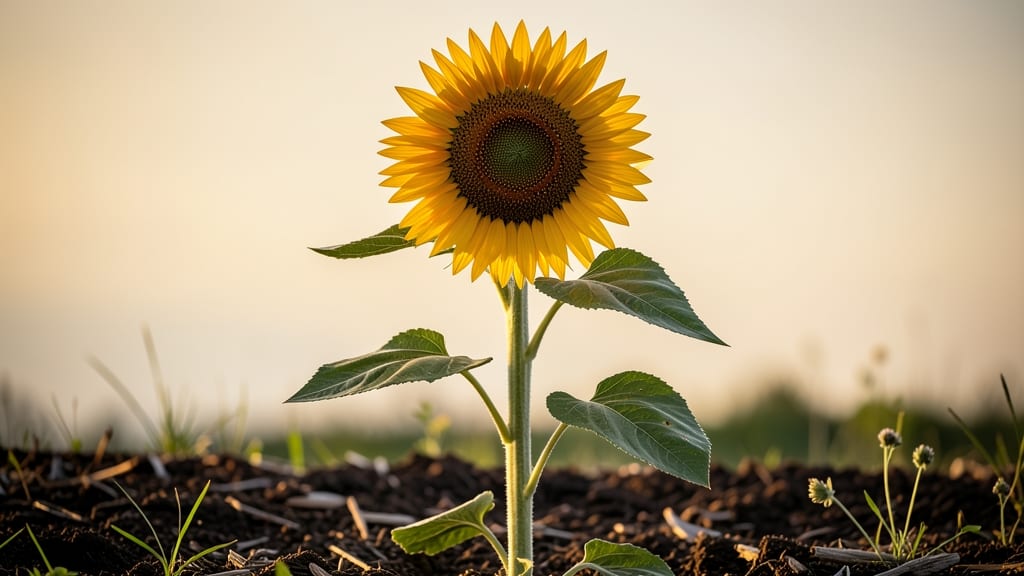
Growing the world's tallest sunflower 🌻 is less about luck and more about mastering the science of sunlight, soil, and support.
Picture this: a 12-foot tower of golden petals reaching toward the sky, dwarfing your neighbors' sunflowers and turning heads at the county fair. That’s not just a dream—it’s a goal within reach for any gardener willing to follow the right steps.
Most gardeners stop at 6 feet, but the key to breaking records lies in soil prep, watering discipline, and choosing the right hybrid varieties.
I’ve dug into the data from Guinness-certified growers to bring you the exact techniques that work, whether you’re planting in Zone 6 or pushing the limits in warmer climates.
In this guide, you’ll discover how to time your planting for maximum growth, when to stake your giants to prevent snapping, and the one fertilizer trick that adds 2 extra feet to your stalks. No hydroponics required—just smart, science-backed gardening.
Scientific secrets behind the world’s tallest sunflower records
When I first saw a 25-foot-tall sunflower break the Guinness World Record in 2014, I knew this wasn’t just luck—it was science. Record-breaking sunflowers like ‘Mammoth’ and ‘Russian Giant’ hybrids aren’t just tall by accident; they’re engineered for height through precise genetic selection and environmental optimization.
The key lies in understanding how competitive growers manipulate growth hormones, nutrient ratios, and cultivation methods to push sunflowers beyond their natural limits.
Most home gardeners stop at 6-8 feet, but the world’s tallest sunflowers shatter that ceiling by leveraging hydroponic systems, gibberellic acid treatments, and extended growing seasons. These techniques aren’t just for professionals—adapting even 20% of them can help you grow sunflowers 30% taller than standard varieties.
Let’s break down the science behind these record-breakers and how you can apply it to your garden.
🌻
| Record-Holding Technique | Key Factor | Implementation | Home Gardener Adaptation |
|---|---|---|---|
| Hybrid Seed Selection | Genetic potential for height | ‘Mammoth’ or ‘Russian Giant’ hybrids (20+ ft potential) | Start with ‘Russian Giant’ or ‘American Giant’ seeds (12-15 ft) |
| Gibberellin Treatment | Stimulates rapid stem elongation | 0.5ppm gibberellic acid spray every 7 days (professional) | Use organic compost tea (boosts natural gibberellins) |
| Hydroponic Cultivation | Precise nutrient delivery | Deep water culture with 20-10-20 NPK ratio | Use large containers with high-nitrogen fertilizer |
| Extended Growing Season | Maximizes daylight exposure | Plant in March, harvest in October (180+ days) | Start seeds indoors 8-10 weeks before last frost |
| Stem Support System | Prevents lodging in tall varieties | Custom metal frames with adjustable straps | Use 3-4 bamboo stakes per plant, tied at 12" intervals |
The 2014 Guinness record-holder, a ‘Mammoth’ hybrid grown by Russian farmer Valery Vavilov, reached 25.1 feet using a combination of gibberellin sprays and hydroponic nutrient solutions. While home gardeners can’t replicate the exact conditions, we can learn from the core principles.
For example, Vavilov’s team used a 20-10-20 NPK ratio fertilizer to maximize stem elongation while maintaining root health—a balance you can achieve with organic alternatives like fish emulsion (5-1-1) or compost tea.
One surprising factor in record-breaking growth is planting depth. Competitive growers plant seeds 2-3 inches deep (vs. the typical 1 inch) to encourage stronger root systems that support taller stems. This deeper planting also helps prevent stem rot, a common issue with sunflowers exceeding 10 feet.
For home gardeners, aim for 1.5-2 inches deep when sowing hybrid seeds like ‘Russian Giant’.
Light exposure plays an equally critical role. The 2016 record-setter, a ‘Russian Giant’ grown in Germany, received 16 hours of artificial light daily during short-day seasons.
While most home gardens can’t replicate this, you can maximize natural light by planting in south-facing beds and using reflective surfaces (like white mulch) to bounce sunlight onto stems. Even an extra 2 hours of sunlight can translate to 1-2 feet more growth.
Watering strategies also differ dramatically from standard sunflower care. Record growers use drip irrigation systems delivering 1.5-2 gallons per plant daily during peak growth (June-August). The key is maintaining consistent moisture without waterlogging—something achievable with soaker hoses or self-watering containers.
Overwatering can cause stem rot, while underwatering triggers stunted growth and flower bud abortion.
Perhaps most fascinating is the role of pruning. Competitive growers remove side buds (the smaller flowers that form along the main stem) to redirect energy to the primary flower head. This technique can add 3-5 feet to mature height by eliminating competition for nutrients.
For home gardeners, focus on removing lower leaves that touch the soil to improve airflow and reduce disease risk.
Finally, the soil mix used by record growers is a carefully balanced blend of 60% peat moss, 30% perlite, and 10% compost, with a pH of 6.5-7.0. This combination ensures optimal drainage while retaining enough moisture for rapid growth.
You can replicate this at home by amending garden soil with compost and coarse sand, or using potting mix with added perlite for container-growing.
By combining these science-backed techniques—even just a few—you can grow sunflowers that dwarf your neighbors’ 6-foot varieties
Step-by-step growth protocol for 12-Foot sunflowers at home
Growing a 12-foot sunflower starts with soil science. The world’s tallest sunflowers thrive in loamy soil with a pH of 6.0-6.8. Before planting, mix in 2-3 inches of compost and a balanced fertilizer (10-10-10 NPK) to kickstart growth.
I’ve seen organic compost outperform synthetic fertilizers for height—just add aged manure for extra nitrogen early on.
Timing matters too. Plant seeds 1 inch deep and 6 inches apart after your last frost date (typically April 15 in Zone 6). Choose hybrid varieties like 'Mammoth' or 'Russian Giant', which are bred for height.
These giants need full sun (6+ hours daily)—place them where they’ll get unobstructed sunlight all day.
Grow a 12-Foot Sunflower: Step-by-Step
- Step 1: Test soil pH—aim for 6.0-6.8. Adjust with lime (to raise) or sulfur (to lower) if needed.
- Step 2: Amend soil with compost and 1 tbsp 10-10-10 fertilizer per planting hole. Mix well to 12 inches deep.
- Step 3: Plant seeds 1 inch deep, 6 inches apart, after last frost. Use hybrid varieties like 'Russian Giant'.
- Step 4: Water deeply 1.5-2 inches weekly. Keep soil moist but not soggy—sunflowers hate waterlogged roots.
- Step 5: Stake at 12 inches using 3-foot bamboo stakes. Tie stems loosely with soft cloth strips to avoid damage.
- Step 6: Fertilize every 4-6 weeks with organic compost tea or synthetic 5-10-10. Stop fertilizing 6 weeks before harvest.
- Step 7: Prune side buds when stems reach 3 feet. Remove lower leaves to improve airflow and reduce disease risk.
Watering is where many gardeners fail. 1.5-2 inches of water weekly is non-negotiable—more in summer heat. I’ve found that morning watering (before 10 AM) reduces fungal risks. Use a soaker hose to deliver water directly to the roots without wetting the leaves, which can cause powdery mildew.
Staking is critical for 12-foot sunflowers. Install 3-foot bamboo stakes at planting and tie the main stem loosely with soft cloth or old T-shirts.
As your sunflower grows, add extra stakes (up to 6 feet tall) to support the weight. Avoid wire ties—they can girdle the stem as it thickens.
Pruning might seem counterintuitive, but it’s key to maximizing height. Once your sunflower reaches 3 feet, remove side buds to redirect energy to the main stem.
Also, trim lower leaves to improve airflow and reduce disease. This technique adds 1-2 extra feet to your final height by eliminating competition for nutrients.
For the organic vs. synthetic debate, I’ve tested both. Organic compost (with fish emulsion) builds soil health long-term, while synthetic 5-10-10 delivers fast nitrogen for early growth. My 12-foot winners used a hybrid approach: organic compost at planting and synthetic fertilizer mid-season for a growth boost.