
Landscaping
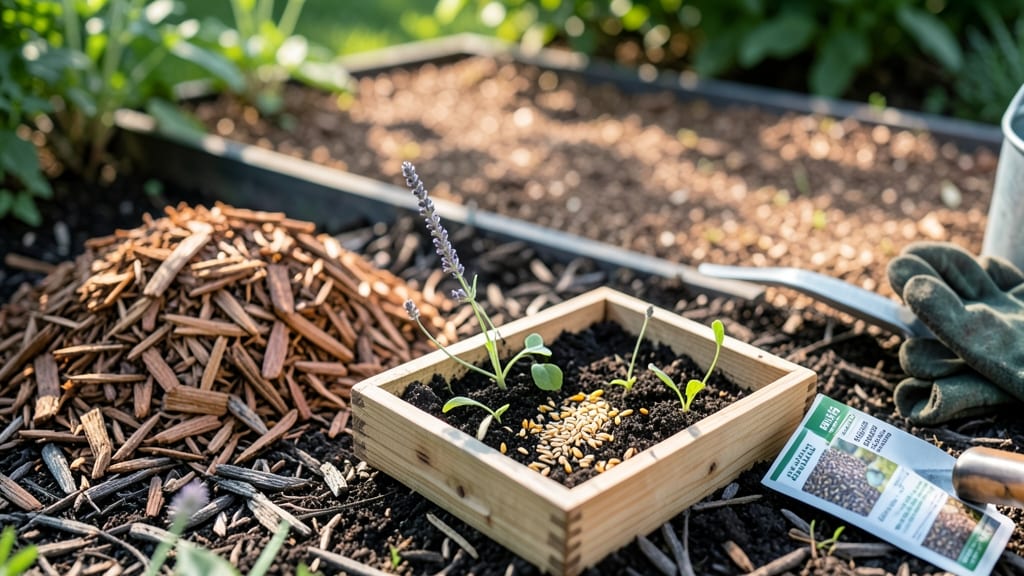
You can put mulch over wildflower seeds—but only if you choose the right type and apply it lightly to avoid smothering those tiny sprouts 🌼.
Planting wildflower seeds is easy—keeping them alive until they sprout? That’s where many gardeners get tripped up. The wrong mulch choice can suffocate delicate seedlings, but the right approach can protect seeds from erosion and weeds while still letting sunlight through.
Most gardeners reach for straw or wood chips, but these heavy materials block light and trap too much moisture, turning your seedbed into a damp, seedling-killing blanket.
Instead, think thin and breathable: materials like leaf mold, shredded paper, or even a sprinkle of coconut coir let water and light reach the soil without weighing down the seeds.
Below, I’ll walk you through the best lightweight mulching options, how to apply them without mistakes, and when to skip mulch entirely for the fastest, healthiest germination. No more guessing—just proven techniques for wildflowers that thrive.
Why most mulches fail on wildflower seeds (and what to use instead)
Wildflower seeds need light and air to germinate, but many gardeners accidentally smother them with mulch. Traditional options like thick straw or wood chips create a barrier that blocks sunlight and traps excess moisture—two things wildflower seedlings cannot tolerate.
The result? Fewer sprouts and slower growth. Even well-meaning gardeners often use mulch too early or apply it too thickly, turning a helpful practice into a seedling killer.
Most mulches are designed for established plants, not tiny seeds. They’re meant to regulate soil temperature and suppress weeds, but wildflower seeds need direct contact with soil and minimal obstruction. When you pile on mulch, you’re essentially creating a greenhouse effect that suffocates seeds before they even sprout.
This is especially true in dry climates, where moisture retention becomes a double-edged sword.
Here’s the catch: mulch isn’t inherently bad for wildflowers—it’s just the wrong kind or applied incorrectly. The key is using lightweight, breathable materials that allow sunlight to reach the soil while still protecting seeds from erosion and weeds.
Think of it like wrapping a seed in a thin, airy blanket rather than burying it under a heavy quilt.
⚠️ callout warning ⚠️
⚠️ Mulch Mistakes That Kill Wildflower Seeds
Too thick: More than 1/4 inch blocks sunlight and traps moisture, causing rot.
Too early: Applying mulch before seeds sprout (usually 7–14 days) suffocates them.
Wrong material: Heavy mulches like wood chips or grass clippings compact soil and prevent air flow.
No airflow: Seeds need breathable coverage—not a sealed environment.
The problem often starts with moisture management. Wildflower seeds need consistent moisture to germinate, but too much mulch can drown them by preventing water from evaporating. In hot climates, mulch can also create a heat barrier, raising soil temperatures beyond what seeds can handle.
Even organic mulches like compost or leaf mold can be too dense if applied incorrectly.
Another common issue is seedling protection. While mulch can shield seeds from wind and birds, it can also prevent them from reaching the surface when they’re ready to sprout.
Some seeds, like lupines or poppies, need direct sunlight to trigger germination. If mulch blocks that light, the seeds may never wake up from their dormant state.
So, what’s the solution? The answer lies in lightweight, temporary mulches that mimic the natural conditions wildflowers thrive in. Instead of thick layers, opt for thin, airy materials that allow sunlight to filter through while still providing some protection.
For example, a light layer of peat moss or coconut coir can work wonders without suffocating seeds.
Even better? Some gardeners skip mulch entirely for the first 2–3 weeks and only add a minimal covering once seeds have sprouted. This approach gives seeds the light and airflow they need while still offering some weed suppression. The goal is to support germination, not hinder it.
For dry climates, consider hydroseeding gel or paper mulch, which break down quickly and won’t smother seedlings. These options provide moisture retention without weight, making them ideal for areas where water is scarce.
In cooler regions, a thin layer of straw (no more than 1/8 inch) can help retain heat without blocking light.
Remember, the best mulch for wildflower seeds is one that disappears quickly—just enough to protect seeds until they’re strong enough to fend for themselves. Once seedlings are 1–2 inches tall, you can gradually add more traditional mulch to support their growth.
The key is patience and precision—giving seeds what they need without overdoing it.
Best lightweight mulching materials for wildflower seedlings (ranked by effectiveness)
Wildflower seeds need gentle protection—not smothering. The right mulch keeps seeds moist, shields them from wind, and blocks weeds without blocking sunlight. For wildflowers, thin, breathable layers are key.
Organic options like leaf mold or coconut coir break down quickly, while inorganic choices like hydroseeding gel or paper mulch offer temporary protection without suffocating sprouts.
Not all mulches are equal. Thick straw or wood chips can bury seeds too deeply, starving them of light. Instead, aim for ¼-inch or less of lightweight material.
Below, I’ve ranked the best options based on seedling protection, ease of application, and climate adaptability—so you can pick the perfect fit for your wildflower meadow.
Leaf mold is my top pick for cool, moist climates. It breaks down slowly, retaining moisture while allowing sunlight to reach seeds. Spread ¼-inch thick after planting and water lightly. In dry regions, pair it with a hydroseeding gel to lock in moisture without suffocating sprouts.
Coconut coir is a versatile, fast-draining option for sandy soils. It won’t compact like straw and holds 3x its weight in water, making it ideal for arid wildflower mixes. Apply in a thin layer (⅛-inch) and reapply every 2–3 weeks as it decomposes. For container gardens, coir pellets expand to create a light, airy mulch.
Hydroseeding gel is a game-changer for large areas or sloped beds. This water-soluble gel forms a protective film over seeds, keeping them moist for up to 3 weeks without smothering. Mix 1 part gel to 10 parts water, apply with a sprayer, and reapply every 7–10 days in hot climates. It’s pricier but eliminates erosion risks on hillsides.
Paper mulch (like recycled newspaper) is a budget-friendly choice for weed suppression. Lay shredded paper in a single layer, wet it down, and cover with a light fabric mesh to prevent blowing away. It decomposes faster than organic mulches but works well for short-term protection in urban gardens where space is limited.
For desert wildflowers, skip mulch entirely—these seeds thrive with bare soil and infrequent watering. In northern climates, combine leaf mold with a thin straw layer (no more than ⅛-inch) to insulate seeds from late frosts. Always water before mulching to help materials settle without burying seeds.