
Blooming
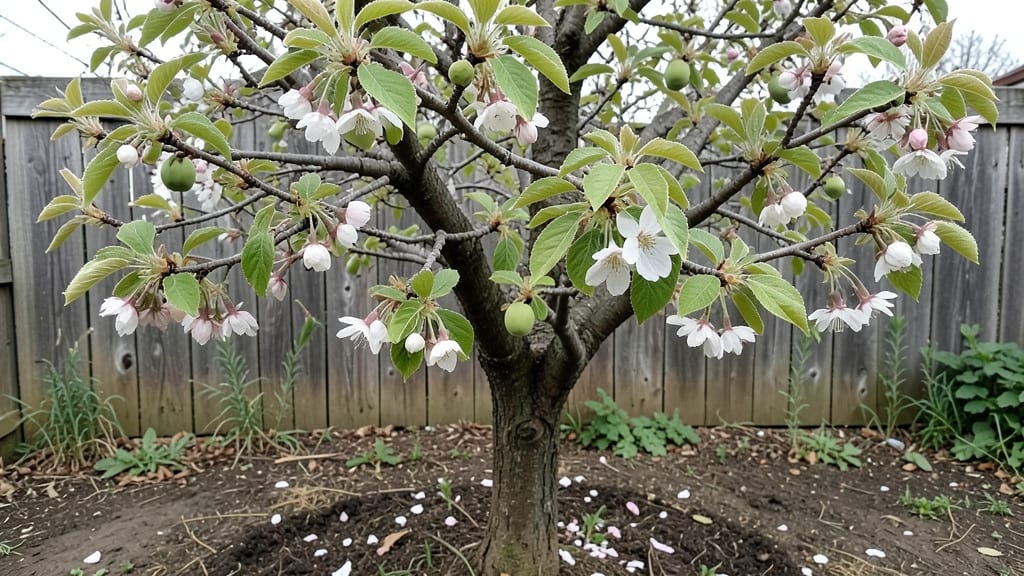
Peach trees have flowers as part of their fruiting process, producing delicate pink or white blossoms in early spring before fruit develops. These flowers are essential for pollination and eventual peach production.
Those vibrant blooms aren't just pretty—they're the foundation of your peach harvest. 🌸 The flowers appear in clusters along the tree's branches, typically between late winter and early spring, with timing depending on your climate zone.
What's fascinating is how these delicate blossoms transform into fruit within weeks, provided they get proper pollination from bees or wind. Without them, you'd have no peaches at all!
The blooming window is brief, usually lasting just 7-10 days, which makes timing everything. I've seen firsthand how early frosts can devastate blossoms before they even pollinate, so knowing your local frost dates becomes crucial for protecting that year's potential crop.
The scent alone can attract pollinators from miles away—a natural perfume that turns your orchard into a buzzing ecosystem!
💡 In This Article
- Peach Tree Flowering Stages and Pollination Needs
- Identifying Healthy Peach Tree Blossoms and Common Issues
Peach tree flowering stages and pollination needs
Here's what's actually happening in those magical few weeks: peach trees undergo a precise biological sequence that begins with dormant buds forming in late summer.
These buds contain the flower's reproductive structures, and their development requires 600-1,000 chill hours below 45°F—that's why trees in warmer climates often need winter chilling treatments. The buds swell dramatically in late winter when temperatures consistently stay above 50°F during the day, signaling the start of bloom.
The flowers themselves emerge in dense clusters called racemes, with each blossom measuring about 1-1.5 inches across.
What's fascinating is their dual function: the five delicate petals (typically pink but sometimes white) aren't just for show—they contain both male and female reproductive organs in a structure called a hermaphroditic flower.
This self-compatibility means a single tree can pollinate itself, though cross-pollination from other trees often produces better fruit sets. The blooming period typically lasts 7-10 days, with peak bloom occurring when 50% of flowers are open.
The pollination process kicks into high gear when bees (especially honeybees and native solitary bees) arrive to collect nectar. Each flower produces about 0.0005 ounces of nectar, but that's enough to attract hundreds of pollinators.
Wind also plays a role, especially for trees without abundant bee activity, as it can carry pollen between flowers.
What most people don't realize is that only about 10-20% of pollinated flowers will successfully develop into fruit—the rest drop off naturally through a process called fruit thinning, which helps the remaining peaches grow larger.
After successful pollination, the petals fall away, and tiny peach pits begin forming within the developing fruit. This post-bloom phase is critical because the tree's energy shifts from flower production to fruit development.
Here's where temperature matters again: ideal fruit set occurs when daytime temperatures stay between 60-85°F during this transition. Extreme heat or cold can cause fruit drop, while consistent warmth promotes steady growth.
The scent of blooming peach trees isn't just pleasant—it's a biological signal that says "pollinators welcome!" to insects that can travel up to 3 miles in search of nectar.
One advanced consideration is how different peach varieties have varying chill requirements. For example, Elberta peaches need 800 chill hours, while Redhaven varieties thrive with just 500 hours. This explains why some trees bloom earlier or later depending on their genetic background.
The post-bloom fruit set phase also reveals why commercial orchards often use chemical thinners—they prevent overcrowding that would lead to small, poor-quality fruit. In home gardens, natural thinning by birds and weather often does the job just as effectively.
What this all means for your garden is that timing and pollinator support are everything. Planting bee-friendly flowers nearby can increase your fruit yield by up to 30%, while protecting blossoms from late frosts (below 28°F) can mean the difference between a bumper crop and disappointment.
The transformation from bloom to fruit is one of nature's most remarkable processes—all starting with those delicate pink stars that appear so briefly in spring. 🌸