
Planting
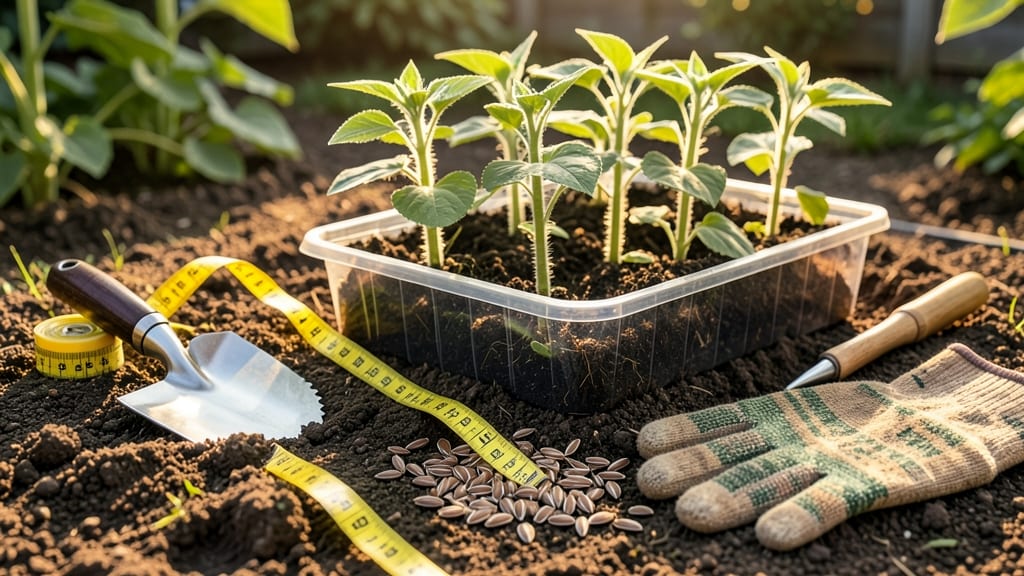
To plant sunflower seeds the right distance apart ensures your 🌻 sunflowers grow strong and tall, reaching their full potential without competing for nutrients or sunlight.
Picture this: you’ve spent weeks waiting for those bright yellow blooms, only to end up with weak, spindly stems because they were crowded too closely. Or worse, you’ve wasted garden space by planting them too far apart.
The secret to optimal growth lies in the spacing—whether you’re growing for seeds, bouquets, or just the joy of watching them tower over your garden.
Sunflowers aren’t one-size-fits-all. Dwarf varieties need 12 inches of space, while giant sunflowers can stretch up to 16 feet and require 24 inches or more. Soil type, climate, and even your planting goals (like maximizing seed production or creating a cut-flower display) all play a role in getting it right.
In this guide, I’ll break down the exact spacing you need for every sunflower type, how to adjust for different soil and weather conditions, and even how to pair them with companion plants for a thriving garden. Let’s get those seeds planted the perfect distance apart!

Optimal sunflower seed spacing by variety and growth type
Sunflowers come in three distinct growth types: dwarf (2–4 ft), semi-dwarf (4–6 ft), and giant varieties (8–16 ft). Each requires different spacing to prevent root competition and ensure sunlight access.
Dwarf varieties can thrive in tight spaces, while giants need room to sway in the wind without toppling. The key is balancing plant width with mature height—a 10-foot sunflower planted too close will lean dramatically or snap in storms.
For in-ground planting, most gardeners start with 6-inch spacing between seeds, then thin seedlings to 12–24 inches apart once they’re 4–6 inches tall. This initial density helps prevent weeds while giving weak seedlings a fighting chance.
However, giant varieties like 'Russian Giant' or 'Mammoth' need 36–48 inches between plants to support their massive heads—imagine a 1,000+ seed flower head struggling to balance on a crowded stem!
Container growing changes the game entirely. Dwarf varieties like 'Teddy Bear' or 'Little Becka' can thrive in 5-gallon pots with 2–3 seeds per container, spaced 4 inches apart. Semi-dwarf types need 10–15 gallon pots with 1 plant per container and 12-inch spacing between pots.
Giant sunflowers? Skip containers—their towering roots and wind resistance needs make in-ground planting a must.
| Variety Type | Mature Height | Initial Spacing (Seeds) | Final Spacing (Seedlings) | Container Size (If Applicable) |
|---|---|---|---|---|
| Dwarf (e.g., 'Teddy Bear', 'Little Becka') | 2–4 ft | 4 inches | 6–12 inches | 5–10 gallon pots (2–3 seeds) |
| Semi-Dwarf (e.g., 'Moulin Rouge', 'Autumn Beauty') | 4–6 ft | 6 inches | 12–18 inches | 15+ gallon pots (1 seedling) |
| Giant (e.g., 'Russian Giant', 'Mammoth') | 8–16 ft | 12 inches | 36–48 inches | Not recommended |
| All Types (In-Ground) | — | 6 inches (initial) | Adjust based on variety | Full sun, well-draining soil |
Why does thinning seedlings matter so much? Crowded sunflowers develop weak stems and smaller flower heads due to nutrient competition. When you thin, you’re not just making space—you’re strengthening each plant.
Use sharp scissors to snip at soil level, leaving the strongest seedling in each spot. Pro tip: Save the thinned seedlings! Their greens are edible and packed with nutrients.
For wind-prone areas, increase spacing by 25–50% to give plants room to lean without breaking. Giant varieties benefit from staking or trellising when spaced closer than 48 inches. A simple bamboo stake tied at the base can prevent toppling, especially in late summer storms.
Even dwarf varieties may need support if grown in high-traffic garden beds where accidental brushing could snap their stems.
Sunflowers also compete with nearby plants for sunlight. If growing near corn, beans, or borage (great companions!), increase spacing to 18–24 inches for semi-dwarfs and 48 inches for giants. These companions help repel pests and improve soil health, but they’ll also steal sunlight if planted too close.
Always face sunflowers southward in the Northern Hemisphere to maximize their sun exposure.
In small-space gardens, consider succession planting: sow dwarf varieties every 2–3 weeks in the same spot. Since they mature quickly (60–75 days), you’ll get continuous blooms without overcrowding.
This works especially well for cut-flower gardens where you want fresh blooms every few weeks. Just rotate crops yearly to prevent soil depletion—sunflowers are heavy feeders!
One final pro tip: Mark your rows with biodegradable flags or a string line to maintain even spacing. Sunflowers grow fast—too fast—and you’ll forget where you planted what if you don’t track it.
I once let a batch of 'Russian Giants' get too close, and by the time I noticed, their 12-foot stems were already leaning into each other like drunken dancers at a garden party.
Remember, spacing isn’t just about numbers—it’s about giving each sunflower the space to shine, both literally and figuratively. With the right distance, you’ll end up with taller stalks, bigger blooms, and a garden that’s the talk of the neighborhood.
Now go forth and plant with confidence—your sunflowers will thank you with faces that follow the sun! ☀️🌻
How to adjust spacing for different sunflower goals
Your sunflower goals completely change how you should space those seeds. If you're growing for seed production, you’ll need more room between plants to ensure healthy heads that develop plump, viable seeds. For cut-flower arrangements, closer spacing can create a lush display while still allowing easy harvesting.
And if you're using sunflowers as a living privacy screen, you’ll want them packed tightly to create an impenetrable barrier.
Let’s break down the ideal spacing for each goal, plus how to pair sunflowers with companion plants to make the most of your garden space. The right spacing isn’t just about avoiding overcrowding—it’s about maximizing your harvest, whether that’s seeds, stems, or sheer visual impact.
Here’s the pros and cons of different spacing strategies to help you decide what works best for your garden:
Spacing Strategy Comparison
Maximizing Seed Production
- Pros: Larger, healthier seed heads; higher yield per plant
- Cons: Requires more garden space; slower to fill beds
Spacing: 24–36 inches apart
Cut-Flower Arrangements
- Pros: Creates dense, visually striking displays; easier harvesting
- Cons: Smaller seed heads if grown for both flowers and seeds
Spacing: 12–18 inches apart
Living Privacy Screen
- Pros: Fast-growing barrier; maximizes vertical space
- Cons: May require staking; fewer flowers per plant
Spacing: 6–12 inches apart (closer for dwarf varieties)
For seed production, space your sunflower seeds 24–36 inches apart to give each plant room to develop a robust stem and a large, heavy flower head. This spacing reduces competition for nutrients and sunlight, ensuring that each plant can produce a bountiful harvest of seeds.
If you're growing giant varieties like Russian Mammoth, lean toward the 36-inch mark—these can reach 12–16 feet tall and need ample space to avoid toppling over.
If your goal is cut-flower arrangements, you can plant seeds 12–18 inches apart. This closer spacing creates a lush, full-looking display while still allowing you to harvest stems easily.
Varieties like Autumn Beauty or ProCut are perfect for this, as they produce multiple blooms per stem and thrive in slightly tighter conditions. Just be sure to harvest stems early in the morning for the longest vase life.
When using sunflowers as a living privacy screen, you’ll want to plant them 6–12 inches apart, especially if you’re using dwarf varieties like Teddy Bear or Moulin Rouge. This tight spacing ensures a dense, unbroken barrier that blocks views and noise effectively.
For taller varieties, consider planting them in staggered rows to create a more uniform screen and reduce wind damage to individual plants.
To optimize space efficiency, pair your sunflowers with companion plants like bush beans, marigolds, or basil. These plants help deter pests, improve soil health, and make the most of your garden’s real estate.
For example, beans fix nitrogen in the soil, benefiting sunflowers, while marigolds repel harmful insects. Just avoid planting sunflowers near potatoes or tomatoes, as they compete for the same nutrients and can stunt each other’s growth.