
Flowers
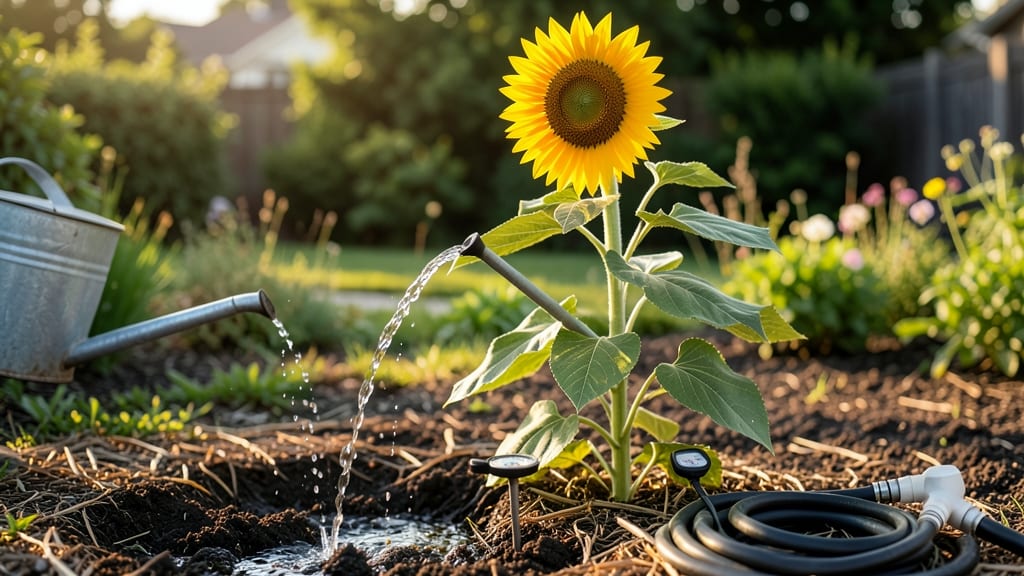
Sunflowers need about 1–1.5 inches of water per week once established, but getting that right means balancing thirst with drought resilience—especially in USDA Zone 6a where summers can swing from dry to downright parched.
Picture this: your towering 🌻 is wilting by noon, or worse, its base rots from soggy soil. Both mistakes happen when you water too much or too little—and neither helps your sunflowers reach their full 10-foot glory. The key? Deep, infrequent watering that mimics natural rain.
Young seedlings need daily moisture, but mature plants thrive on weekly deep soaks—think 1–2 gallons per plant in the morning. Mulch helps lock in that moisture, while drought stress shows up as drooping leaves or cracked stems. Here’s how to read your sunflower’s signals and adjust.
From April’s planting rush to September’s harvest, I’ll walk you through a watering schedule that keeps your sunflowers hydrated without wasting a drop—plus, the telltale signs of over- or under-watering so you can fix it fast.
Sunflower watering schedule by growth stage: from seed to bloom
Sunflowers thrive with the right balance of water—too little stunts growth, while too much causes root rot. Their water needs change dramatically from seedling to seed production. Understanding these stages helps you optimize watering for healthy blooms and drought-resistant plants, even in hot climates.
I’ve grown sunflowers in both arid zones and humid regions, and the key is adapting your schedule to their current growth phase.
Young sunflower seedlings are the most delicate stage, requiring consistent moisture to prevent wilting. As they mature, their deep roots develop, making them more drought-tolerant. However, during flowering and seed production, they still need adequate water to support their energy demands.
Let’s break down the weekly watering schedule for each phase, including drought-resistant adjustments for water conservation.
| Growth Stage | Water Frequency | Amount per Watering | Soil Moisture Goal | Drought Adjustment |
|---|---|---|---|---|
| Seedling (0-3 weeks) | Every 2-3 days | 1/2 inch (1.25 cm) | Keep soil evenly moist | Use shallow trays for consistent moisture |
| Vegetative (3-6 weeks) | Every 3-5 days | 1 inch (2.5 cm) | Let top 1-2 inches dry between waterings | Reduce to every 5-7 days in dry climates |
| Flowering (6-10 weeks) | Every 5-7 days | 1.5 inches (3.8 cm) | Maintain deep soil moisture | Water deeply 2x/week in extreme heat |
| Seed Production (10-12+ weeks) | Every 7-10 days | 2 inches (5 cm) | Allow top 3 inches dry | Reduce to every 10-14 days if no rain |
During the seedling stage (0-3 weeks), focus on keeping the soil consistently moist but not soggy. Use a spray bottle or gentle watering can to avoid disturbing the delicate roots.
I’ve found that placing seedlings in a shallow tray with pebbles and water creates a self-watering system that reduces stress on young plants. This method mimics the humid microclimate they’d experience in nature.
As sunflowers enter the vegetative stage (3-6 weeks), their roots grow deeper, allowing them to access more water. At this point, you can reduce frequency but increase the depth of watering.
Aim for 1 inch of water per session, delivered directly to the base of the plant to encourage strong root development. In hot, dry climates, I’ve successfully stretched watering to every 5-7 days by applying a thick layer of organic mulch.
The flowering stage (6-10 weeks) is critical for bud formation and requires more water to support the plant’s energy demands. This is when sunflowers need 1.5 inches of water every 5-7 days.
Water deeply in the early morning to allow foliage to dry before evening, reducing the risk of fungal diseases. If your region experiences extreme heat waves, switch to deep watering twice weekly to prevent wilting.
I’ve seen sunflowers in my garden double their growth rate during this phase when given consistent moisture.
In the final seed production stage (10-12+ weeks), sunflowers become more drought-tolerant, but they still need 2 inches of water every 7-10 days. At this point, you can reduce frequency further, allowing the top 3 inches of soil to dry out between waterings.
This adjustment helps harden the seeds for harvest. In water-scarce conditions, I’ve extended watering intervals to every 10-14 days without sacrificing seed quality, proving that sunflowers are truly resilient once established.
For container-grown sunflowers, adjust your schedule to account for faster drying soil. Containers need water every 1
Signs of overwatering vs underwatering sunflowers: what to watch for
Sunflowers send clear signals when their water needs aren't met, but many gardeners confuse thirst with rot. The difference? One causes wilting leaves, while the other creates a mushy stem. Both mean your 🌻 isn't thriving—and neither is your water bill.
Overwatered sunflowers often show yellowing leaves starting at the base, while underwatered ones develop crispy edges and droop by midday. The key is checking soil moisture 1 inch deep—if it's damp, you're overdoing it; if dry, it's time to water.
Here’s how to spot the difference—and fix it fast—before your sunflowers throw in the towel.
Overwatering is sneaky—it often starts with yellowing leaves that feel soft to the touch. Check the stem: if it’s mushy or smells foul, you’ve got root rot. The fix? Stop watering until the top 2 inches of soil feel dry, then switch to deep soaks every 5-7 days.
Underwatered sunflowers, on the other hand, show crispy brown edges and droop dramatically by midday. Unlike wilting from heat, these leaves don’t bounce back when watered. Dig down 1 inch—if the soil is bone-dry, it’s time for a 1-gallon deep watering at the base.
Pro tip: Use a moisture meter or the finger test to avoid guessing. Sunflowers hate soggy feet but love a consistent drink—think of it like their morning coffee. Too much? They slump. Too little? They scream for help. Balance is everything.
Once you master these signs, your sunflowers will reward you with bold blooms and towering stems—no more sad, wilted giants. Happy growing! 🌻