
How To
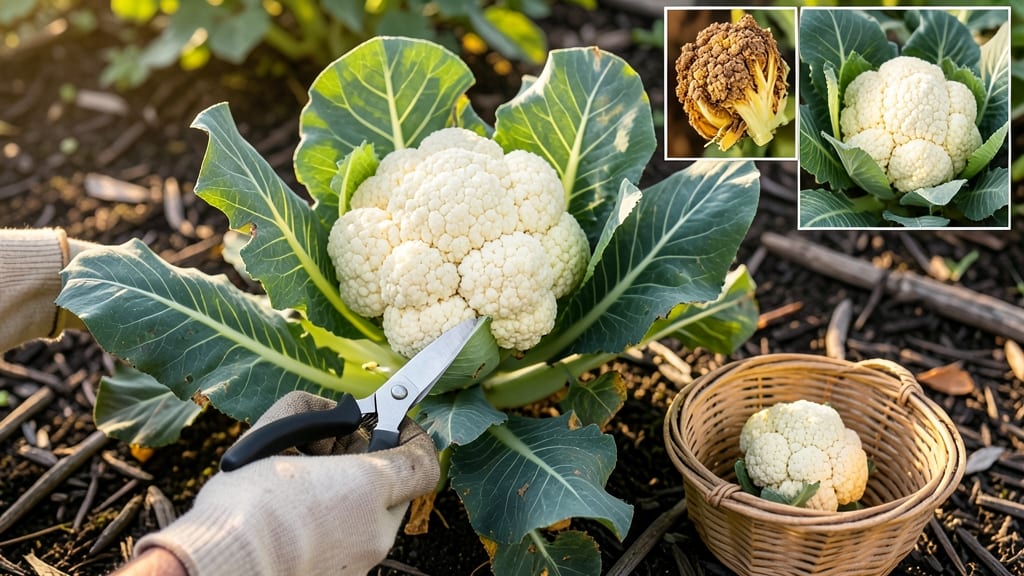
Knowing when to harvest cauliflower means catching it at the perfect moment—when the curd is firm, compact, and ready to eat.
Harvesting too early gives you a small, underdeveloped head, while waiting too long turns that tender white 🥬 into a tough, bitter mess. The difference between a perfect dinner and a disappointing one often comes down to timing—and I’ve learned that the hard way.
Here’s what to look for: a head that’s fully formed, with no gaps or browning, and leaves that are still vibrant. Temperature and variety also play a role, and I’ll break down how to use these clues to avoid common mistakes that ruin your harvest.
By the end, you’ll know exactly when to pick your cauliflower for the best flavor and texture, every time.


3 Visual signs your cauliflower is ready for harvest
Nothing beats the satisfaction of harvesting a perfectly formed cauliflower head—tender, tight, and ready to elevate your dishes. But timing is everything. Harvest too early, and you’ll get a small, underdeveloped curd. Wait too long, and you’ll end up with a woody, bitter mess.
The key? Knowing exactly what to look for in those final days before harvest. Here’s how to spot the three unmistakable signs your cauliflower is begging to be picked.
First, let’s talk about the head’s size and shape. A ready-to-harvest cauliflower should be 6 to 8 inches in diameter, with a smooth, compact surface. Think of it like a perfectly wrapped gift—no loose paper (or gaps) peeking through.
If the head is smaller than a softball, it’s not quite there yet. And if it’s starting to spread out or look lumpy, you’ve waited too long. The ideal head is firm to the touch, like a well-set Jell-O mold.
Now, let’s focus on color consistency. This is where variety matters. For classic white cauliflower, the head should be a bright, creamy white with no yellowing or browning. Purple varieties should have a deep, even hue, while orange cauliflower should glow like a sunset.
Any discoloration is a red flag—it means the head is either overripe or stressed. Check the underside of the leaves too; if you see yellowing or brown spots, it’s time to act fast.
🌱 3 Visual Signs Your Cauliflower Is Ready
- 📏 Head Size: 6–8 inches wide, firm, and compact like a closed fist. Gently squeeze—it should feel solid, not spongy.
- 🎨 Color: Uniform and vibrant (white, purple, or orange). No yellowing or browning on the head or leaves.
- 🌿 Leaf Position: Outer leaves still green but curling away from the head. If leaves are yellowing or dying, harvest immediately.
Don’t overlook the leaf positioning around the head. Healthy outer leaves should still be green and vibrant, but they’ll naturally start to curl away from the curd as it matures. This is a good sign—the plant is directing its energy toward the head.
However, if the leaves are turning yellow or brown, it’s a clear signal that the head is overripe or struggling. In this case, harvest immediately, even if the head isn’t perfectly sized. Waiting longer will only lead to bitter, tough curds.
One more critical detail: the stem and base of the cauliflower head. A ready-to-harvest head should have a thick, sturdy stem that doesn’t feel woody or hollow. If you gently twist the stem and it snaps easily, the head is fully mature.
If it resists, it’s not quite time yet. Also, check for pests or damage—if you spot caterpillars or holes, harvest and inspect the head before cooking.
Here’s a quick reality check: If your cauliflower head has started to open up like a flower, you’ve missed the boat. Those little yellow florets are a sure sign of overmaturity. The same goes for heads that feel soft or mushy—they’ve passed their prime.
The goal is to harvest when the head is at its peak firmness and flavor, before it starts to break down.
For purple or orange varieties, the color cues are especially important. These types can sometimes look fully formed but still taste bland if harvested too early. Wait until the color is deep and even, with no streaks of green or white remaining.
This ensures the flavor compounds have fully developed. And remember: smaller heads from dwarf varieties (like ‘Snowball Y Improved’) will mature faster than larger standard types.
If you’re growing cauliflower in hot climates, keep an extra-close eye on the heads. Heat stress can cause them to bolt prematurely or develop off-flavors. In these cases, prioritize leaf color and head firmness over size.
A slightly smaller head that’s tight and fresh is always better than a large, bitter, or woody one. And if your plants are struggling, consider shading them with row covers to slow down maturation.
Finally, trust your instincts. Gardening is as much about observation as it is science. If your cauliflower looks perfect in every way—firm, vibrant, and compact—it’s time to harvest.
Grab a sharp knife, cut the head about 1 inch below the base, and enjoy the fruits of your labor. And if you’re lucky enough to have multiple heads forming, prioritize the ones that look ready first—they won’t wait forever!
With these three visual cues in mind, you’ll never second-guess your cauliflower harvest again. Soon, you’ll be serving up tender, snow-white curds that taste like summer in every bite. Happy harvesting! 🥬
How long cauliflower takes to mature (and why timing matters)
Cauliflower typically takes 60 to 100 days to mature, but the exact timing depends on the variety and growing conditions. Early varieties like 'Snowball Y Improved' reach harvest in 55-65 days, while late varieties such as 'Romanesco' may take 100+ days.
Understanding these stages helps you plan your garden and avoid missing the perfect harvest window.
Climate plays a huge role—cool, consistent temperatures between 60°F and 70°F speed up growth, while extreme heat or cold can delay maturity. In my Zone 6a garden, I’ve found that planting in early spring or late summer yields the best results, with harvests aligning with May-July timing.
Environmental factors like sunlight and soil moisture also impact maturity. Full sun (6-8 hours daily) is non-negotiable, while consistent moisture prevents stress that can stall growth. I once waited too long because my plants were in partial shade, and the heads stayed small and loose—never again!
Here’s a quick breakdown of what to expect at each stage:
| Stage | Days to Maturity | Key Features | Harvest Window |
|---|---|---|---|
| Seedling | 14-21 days | 2-3 true leaves | Transplant |
| Vegetative Growth | 30-45 days | Leaves expand rapidly | N/A |
| Head Formation | 45-75 days | Curd tightens, 6-8" | Ready to harvest |
| Overmaturity | 75-100+ days | Yellowing, loose heads | Too late! |
Timing matters because overmature cauliflower becomes tough and bitter, while undermature heads are small and loose. I’ve learned to check my plants daily during the last 2 weeks of growth—this is when the head tightens up and signals it’s nearly ready.
A quick squeeze test (firm = good, soft = wait) saves me from harvesting too early.
For successive planting, I stagger my seeds every 2 weeks in spring and summer. This spreads out the harvest and ensures a steady supply. In hot climates, I opt for shade-tolerant varieties like 'Graffiti' to avoid bolting, which can cut maturity time short.
Remember, temperature fluctuations can throw off your timeline. If nights dip below 50°F, growth slows, and heads may take longer to form. I’ve even used row covers in early spring to protect young plants and keep them on track for a timely harvest.