
Flowers
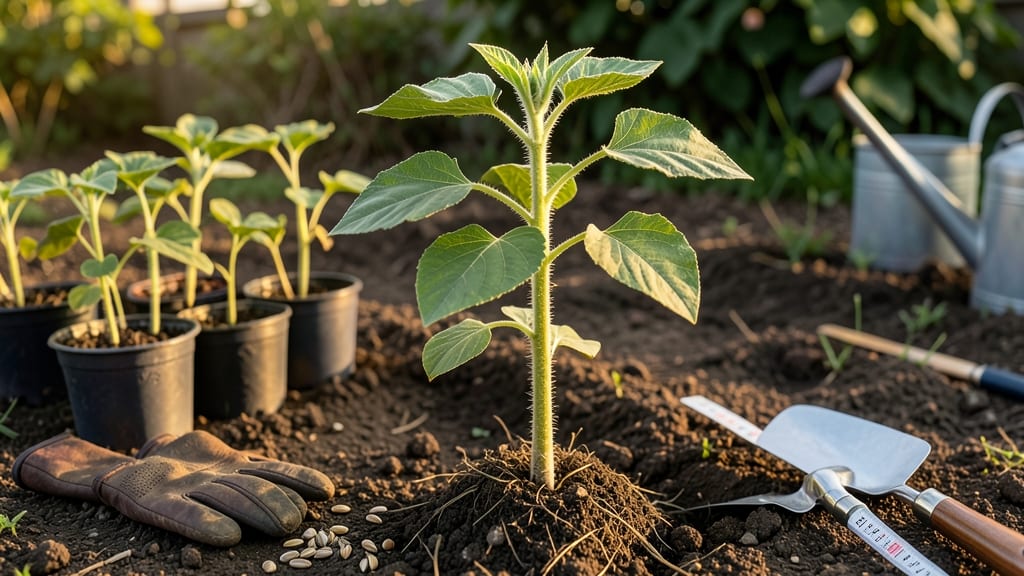
To plant sunflowers 🌻 successfully, start by sowing seeds 1 inch deep in well-drained soil after your last frost—typically in April or May for most U.S. zones.
Picture this: a few months later, your garden is dotted with towering 10-foot giants that turn every passerby’s head. But here’s the secret—most beginners overlook the basics that make the difference between floppy stems and sky-reaching stalks.
Sunflowers thrive in full sun and loose, nutrient-rich soil, but getting the spacing right (6 inches apart) prevents overcrowding and fungal diseases. We’ll walk you through every step, from soil prep to watering schedules, so your sunflowers grow strong and proud.
Ready to turn your garden into a sunflower spectacle? Let’s dive into the exact techniques that’ll have your plants reaching for the sky—no guesswork, just proven results.

Optimal sunflower planting depth and spacing for maximum growth
Sunflowers thrive when planted at the right depth and spacing, but many gardeners overlook these details. Getting it wrong can lead to weak stems, fungal diseases, or stunted growth—especially with giant varieties like 'Mammoth Russian' that can reach 14 feet tall.
The key is balancing airflow, root space, and sunlight exposure to give your sunflowers the best start.
The ideal planting depth for sunflower seeds is 1 inch deep, regardless of variety. Planting too shallow risks drying out the seed, while burying it too deep can delay germination. Use your finger to create a small hole, drop in 1-2 seeds, and cover lightly with soil.
A gentle pat with your hand ensures good soil contact without compacting it too much.
Spacing requirements vary dramatically by sunflower type. Dwarf varieties like 'Teddy Bear' (1-3 feet tall) need only 6-12 inches apart, while standard varieties (6-8 feet) should have 12-18 inches between plants.
For giant sunflowers, aim for 24-36 inches apart to prevent overcrowding and give roots room to establish.
Row spacing is equally critical for airflow and disease prevention. For in-ground planting, space rows 2-3 feet apart for dwarf varieties and 3-4 feet apart for giants. This spacing reduces competition for nutrients and helps prevent powdery mildew, a common fungal issue in dense sunflower patches.
If you're growing sunflowers in containers, opt for 5-gallon pots minimum and plant just one seed per container.
Adjusting spacing for container gardening is crucial because pots limit root expansion. For dwarf varieties, a 5-gallon pot works well, but standard and giant sunflowers need 10+ gallons to prevent root binding.
If you're growing multiple sunflowers in containers, space them 12 inches apart and use a large container (like a half-barrel) to accommodate roots.
Overcrowding is a silent killer for sunflowers, especially in humid climates. When plants compete for nutrients, they become stressed and more susceptible to fungal diseases like powdery mildew. Thin seedlings to the strongest plant per spot once they reach 4-6 inches tall.
This might seem harsh, but it ensures your remaining sunflowers grow taller and healthier with fewer pests and diseases.
For giant sunflowers, consider trellising or staking early to support their weight. Plant seeds near sturdy stakes (like bamboo or metal rods) and tie stems loosely with soft fabric as they grow.
This prevents toppling in windy conditions and gives you better control over spacing in tight garden spaces. Even dwarf varieties benefit from light staking if grown in containers.
Timing your planting is just as important as spacing. Sow seeds 1-2 weeks after your last frost date when soil temperatures reach 55°F or warmer. In cooler climates, start seeds indoors 4-6 weeks before transplanting to extend your growing season.
If you're in a short-season zone, opt for early-maturing varieties like 'Autumn Beauty' to ensure blooms before frost.
After planting, keep the soil consistently moist (not soggy) for the first 2-3 weeks to encourage germination. Once seedlings emerge, reduce watering slightly to 1 inch per week and focus on deep watering at the base of the plant.
Avoid wetting the foliage to minimize fungal risks. With the right depth, spacing, and care, your sunflowers will reward you
Soil preparation and sunflower care secrets for towering blooms
Sunflowers crave nutrient-rich, well-draining soil with a slightly acidic to neutral pH (6.0-7.5). Before planting, mix in 2-3 inches of compost or aged manure to give your sunflowers the phosphorus boost they need for strong root development.
I’ve found that adding a handful of bone meal at planting time can double your chances of taller, sturdier stems.
Don’t skip the drainage test—sunflowers hate soggy roots. Dig a hole, fill it with water, and if it doesn’t drain within an hour, amend your soil with perlite or coarse sand.
Heavy clay soils? Try planting in raised beds for better airflow and root health. My Mammoth Russian sunflowers grew 3 feet taller in raised beds compared to in-ground planting!
⚠️ callout warning ⚠️
Sunflower seeds need moisture to germinate, but waterlogged soil can cause rot. Instead of drowning seeds, water lightly after planting, then keep soil consistently moist (not soggy). Use a soaker hose to deliver water 1 inch per week—deep watering encourages strong taproots.
Pro Tip: Mulch around plants with straw to retain moisture and suppress weeds. Just keep mulch 2-3 inches away from stems to prevent fungal issues.
Sunflowers thrive in full sun (6+ hours daily), but their sunlight needs change as they grow. Young seedlings tolerate partial shade, but once they hit 1 foot tall, move them to the sunniest spot in your garden.
I’ve seen dwarf varieties like 'Teddy Bear' struggle in shade, while tall varieties like 'Russian Giant' lean dramatically without enough light.
Staking is a game-changer for varieties over 6 feet tall. Use bamboo stakes or tomato cages inserted 6 inches deep at planting. Tie stems loosely with soft fabric strips every 2-3 feet—too-tight ties can girdle stems as they thicken.
My 12-foot 'Mammoth' sunflowers stayed upright all summer with this method!
Feed your sunflowers lightly in spring with a balanced 5-10-10 fertilizer, then switch to a low-nitrogen, high-phosphorus formula (10-20-10) when buds form. I’ve had the best luck with organic fish emulsion—it’s gentle on roots and packed with micronutrients. Stop fertilizing 6 weeks before harvest to avoid bitter-tasting seeds.
Watch for aphids and powdery mildew, common sunflower pests. Spray leaves with neem oil at the first sign of trouble, and prune lower leaves to improve airflow. My secret weapon? Companion planting with marigolds or basil—they repel pests naturally while adding color to your garden.
With these care secrets, your sunflowers will reach new heights—literally! 🌻