
Planting
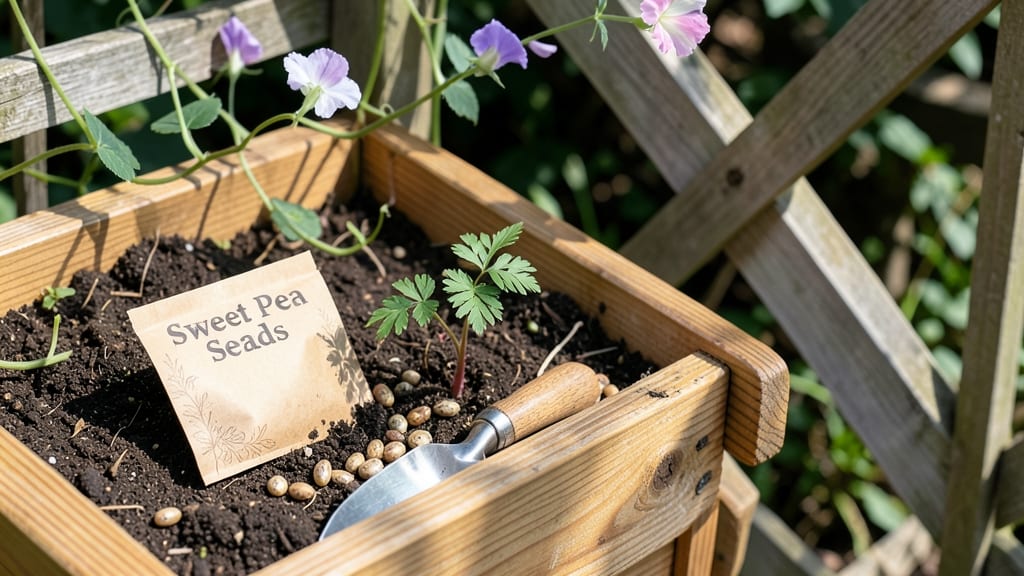
Planting sweet pea flower seeds the right way means fast germination and fragrant blooms in just 6-8 weeks—no fancy green thumb required.
Sweet peas aren’t just beautiful climbers—they’re one of the easiest flowers to grow from seed, but their germination secrets lie in soil depth and timing. Master these tricks, and you’ll see delicate blooms in just 6-8 weeks!
Whether you’re sowing directly in your garden or starting indoors, the key is getting the soil depth and moisture just right. Too deep, and they’ll struggle; too shallow, and they’ll dry out. I’ll walk you through the exact steps—plus pro tips to avoid common mistakes that kill germination.
By the end, you’ll know exactly when to plant, how deep to bury those tiny seeds, and the simple care routine that keeps them thriving. Let’s get those 🌸 growing!

Optimal sweet pea seed planting depth and soil conditions for best germination
Sweet pea seeds (🌸 Lathyrus odoratus) are tiny powerhouses, but they need precise conditions to break dormancy and sprout reliably. The #1 mistake gardeners make? Planting them too deep or in soil that’s either too cold or too dry.
These delicate seeds require a perfect balance of moisture, warmth, and light exposure to germinate consistently within 7-14 days.
Research shows that sweet pea seeds germinate best when planted at a ¼–½ inch depth in soil that’s 60–70°F. Any shallower, and they dry out; any deeper, and they suffocate.
The soil must also stay consistently moist (not soggy) during germination. Let’s break down the science-backed requirements to ensure your seeds don’t just sprout—they thrive from day one.
📋 Key Takeaway: Sweet peas are cool-season plants, meaning they germinate fastest in spring or fall when soil temperatures hover around 55–70°F. Avoid planting in hot summer soil (above 80°F), which can cause seeds to rot before sprouting.
| Requirement | Specification | Pro Tip |
|---|---|---|
| Planting Depth | ¼–½ inch (0.6–1.3 cm) | Use a toothpick to mark depth if unsure. |
| Soil Temperature | 60–70°F (15–21°C) | Test with a soil thermometer before planting. |
| Moisture Level | Consistently damp (not waterlogged) | Mist seeds with a spray bottle daily until sprouts appear. |
| Soil pH | 6.0–7.0 (slightly acidic to neutral) | Add compost or lime to adjust pH if needed. |
| Drainage | Well-draining (no standing water) | Mix in perlite or sand for sandy soils. |
| Light Exposure | Bright, indirect light (or full sun after sprouting) | Use a grow light if starting indoors. |
Sweet pea seeds contain a hard outer coat that sometimes resists water absorption, slowing germination. To bypass this, I recommend soaking seeds overnight in lukewarm water before planting.
This mimics natural rainfall and can cut germination time by 3–5 days. Just be sure to plant them immediately after soaking—they’ll dry out quickly.
The soil texture also plays a critical role. Sweet peas prefer loamy soil that’s rich in organic matter but drains freely. If your garden soil is clay-heavy, amend it with 3–4 inches of compost or well-rotted manure at least 2 weeks before planting.
This improves aeration and prevents seed rot.
Another often-overlooked factor is seed spacing. While depth is critical, planting seeds 2–3 inches apart in rows 12–18 inches apart gives roots room to establish without competing.
Crowding leads to weak, leggy plants with fewer blooms. For containers, space seeds 1 inch apart and use a trellis to support their climbing habit.
If you’re planting in cooler climates (USDA Zones 3–5), consider stratifying seeds for 2–4 weeks in a damp paper towel in the fridge. This mimics winter conditions and boosts germination rates by 20–30%. For warmer zones (6–10), direct sow in late winter to avoid summer heat stress.
Finally, avoid fertilizing during germination—too much nitrogen can burn tender seedlings. Wait until plants have 2–3 true leaves before applying a balanced 5-10-10 fertilizer at half strength. This ensures steady growth without shocking young roots.
With these science-backed conditions, your sweet pea seeds will germinate reliably and grow into fragrant, disease-resistant vines in no time. The key is patience and precision—once you master the depth and moisture balance, you’ll enjoy cutting-garden-worthy blooms all season long! 🌿
Step-by-step sweet pea seed planting process with pro tips
Sweet peas thrive when planted at the right time and with the right prep. For indoor starts, begin seeds 8-10 weeks before your last frost date—typically in February or early March.
If sowing directly outdoors, wait until soil reaches 60°F (15°C) and all frost risk has passed, usually mid-April to May in most climates.
Containers or garden beds both work, but well-draining soil is non-negotiable. Mix in compost or aged manure to enrich the soil, and avoid heavy clay. Sweet peas need support, so install trellises or stakes early—even before planting—to give their vines a place to climb as they grow.
-
1
Prep Seeds for Faster Germination
Use scarification (lightly nicking the seed coat) or stratification (moist chilling for 1-2 weeks) to break dormancy. Soak seeds overnight in lukewarm water to soften their tough outer shell. -
2
Plant at the Right Depth
Bury seeds only ½ inch deep—no deeper! Use a toothpick or pencil to mark planting spots in containers. Space seeds 2-3 inches apart in rows 12 inches apart for outdoor planting. -
3
Keep Soil Moist (But Not Soggy)
Water gently with a spray bottle to avoid displacing seeds. Cover containers with plastic wrap to retain humidity, or use a clear lid if starting indoors. Maintain consistent moisture until germination (7-14 days). -
4
Provide Bright, Indirect Light
Place seedlings near a south-facing window or under grow lights (12-14 hours/day). Avoid direct sun until seedlings develop true leaves—this prevents legginess. Rotate containers daily for even growth. -
5
Hardening Off Indoors Starts
1 week before transplanting, move seedlings outdoors for 2-3 hours daily, gradually increasing time. Protect from wind and harsh sun with shade cloth. Acclimate them to outdoor conditions to prevent shock. -
6
Transplant with Care
Dig holes twice as wide as the root ball and space plants 4-6 inches apart. Bury stems up to the first set of leaves to encourage stronger roots. Water thoroughly after transplanting to settle soil around roots.
Once your sweet peas are planted, consistent watering and regular pruning will keep them blooming all season. Pinch back tips of vines to encourage bushier growth, and remove spent flowers to prolong flowering. With these steps, you’ll enjoy fragrant blooms in just 6-8 weeks!
Pro tip: If you’re in a warmer climate, you can also plant sweet peas in fall for winter blooms. Just adjust your timing to avoid heat stress during germination. Happy planting!