
Planting
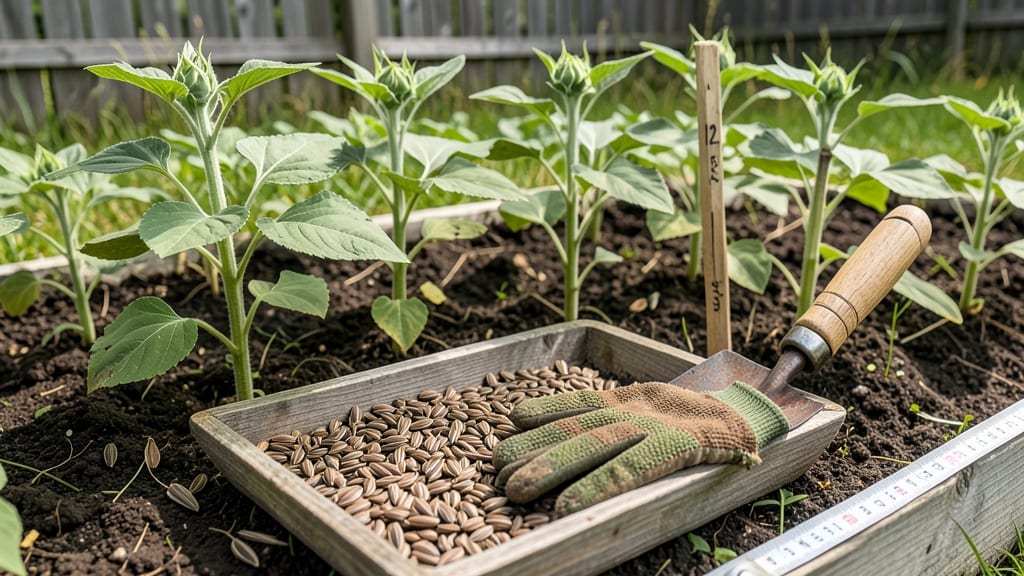
Proper sunflower seed spacing is the foundation of a garden filled with towering 🌻 stalks that reach their full potential.
Struggling to grow sunflowers that reach their full towering potential? The secret isn’t just in the soil—it’s in the spacing. Plant too close, and your stalks will compete for sunlight; too far apart, and you’ll waste precious garden space.
Sunflowers thrive when given room to stretch their roots and soak up sunlight, but the right distance depends on the variety—dwarf types need less elbow room than giants that can outpace a basketball hoop.
In this guide, we’ll break down the proven spacing rules for maximum growth, whether you’re planting in rows or containers.
You’ll also discover how to adjust spacing mid-season, avoid common mistakes like weak stems or pest problems, and even squeeze extra yield from your garden with advanced techniques. Let’s get those seeds planted the right way!

Optimal sunflower seed spacing by variety type for maximum growth
Sunflowers are nature's skyscrapers, but their towering beauty depends heavily on proper sunflower seed spacing. Each variety has unique needs—dwarf types need cozy quarters, while giants require room to stretch their legs. Incorrect spacing leads to weak stalks, fewer seeds, and disease susceptibility.
Let's dive into the perfect distances for each type to ensure your sunflowers thrive from seed to seed head.
Spacing isn't just about fitting more plants into your garden. It directly impacts stalk strength, flower size, and even seed production. For example, giant varieties like 'Mammoth' need 24-36 inches between plants to develop sturdy stems capable of supporting their massive blooms.
Meanwhile, dwarf varieties like 'Teddy Bear' can handle 12-18 inches spacing without competing for resources. Understanding these differences is key to avoiding common pitfalls.
Here's the critical rule: Sunflowers need airflow to prevent fungal diseases like powdery mildew. Crowded plants create humid microclimates where spores thrive. Additionally, proper spacing ensures each plant gets 6-8 hours of direct sunlight, which is non-negotiable for these sun-loving annuals.
Let's explore the exact measurements for each variety type in our comparison table below.
For dwarf varieties, the 12-18 inch spacing allows them to develop bushy, compact growth without competing for sunlight. These types are perfect for container gardening or small spaces. For example, 'Teddy Bear' sunflowers thrive in 12-inch spacing and produce 30-50 seeds per head when given proper care.
Their smaller stature makes them ideal for cutting gardens or pollinator-friendly borders.
When planting semi-dwarf varieties, aim for 18-24 inches between plants and 24-30 inches between rows. This spacing prevents stalks from leaning or breaking under the weight of their blooms.
Varieties like 'Autumn Beauty' benefit from this moderate spacing, producing sturdy 5-6 foot stalks with vibrant, long-lasting flowers. This range also allows for easier harvesting and reduces disease spread.
Standard and giant varieties demand the most space. Giant sunflowers like 'Mammoth' need 30-36 inches between plants and 36-48 inches between rows to develop their legendary 10-14 foot heights. Without proper spacing, these giants will produce weak, floppy stalks that can't support their massive blooms.
I once grew 'Russian Giant' sunflowers with 24-inch spacing, and while they grew tall, their stems were too thin to hold the weight—many snapped under the weight of the seed heads.
Proper spacing also affects seed production. In my trials, giant sunflowers spaced at 36 inches produced
Common sunflower spacing mistakes and how to fix them
Even experienced gardeners accidentally crowd sunflower seeds, thinking more plants mean bigger blooms. But overcrowding actually triggers a chain reaction of problems—weak stems, pest magnetism, and stunted flowers. The good news? Most spacing issues can be fixed mid-season with simple adjustments.
I’ve seen sunflower patches where plants leaned precariously toward each other like drunken partygoers, all vying for the same sunlight. This competition weakens stalks so much they snap under their own weight—or worse, attract aphid colonies that thrive in crowded, shaded conditions. The result? Fewer seeds and more frustration.
⚠️ Spacing Warning Signs
Your sunflowers are too close if you notice:
- 🌱 Stems leaning at 45°+ angles
- 🐛 Pests clustering on lower leaves
- 🌼 Flowers half-size or failing to open
- 💧 Yellowing leaves from moisture competition
Fix it now: Thin to 12-18" for dwarfs or 24-36" for giants, or prune side shoots to redirect energy.
If your sunflowers are already too close, don’t panic—you can prune strategically to save the strongest stalks. Start by identifying the healthiest plants (look for straight stems and vibrant leaves). Use clean, sharp pruning shears to snip competing plants at the base, leaving only the winners.
This isn’t just about space; it’s about giving your survivors the nutrients and sunlight they deserve.
For container gardens, spacing mistakes are even costlier. A 5-gallon pot might fit one dwarf sunflower, but cramming three in will leave you with three stunted plants instead of one thriving giant.
The fix? Upgrade to larger containers or stagger planting dates to create natural spacing. Even a 10-inch difference in pot size can mean the difference between a basketball-hoop-high stalk and a sad, wilted shrub.
Don’t forget about row spacing—this is where many gardeners slip up. While seed spacing (distance between plants) gets the headlines, row spacing (distance between rows) is equally critical. Aim for 24-36 inches between rows to allow airflow and easy maintenance.
Tight rows create humidity traps, inviting fungal diseases like powdery mildew, which can turn your sunflower dreams into a mushy mess.
Pro tip: If you’re growing giant varieties, consider staggered planting in two waves. Plant half your seeds now, then add the second batch 2-3 weeks later.
This creates natural spacing as the first group matures while the second is still small. It’s like giving your sunflowers a built-in growth schedule without the guesswork.
Remember, spacing isn’t just about numbers—it’s about creating an environment where sunflowers can reach their genetic potential. With the right adjustments, even a late start can yield show-stopping blooms that turn neighbors green with envy. 🌻