
Planting
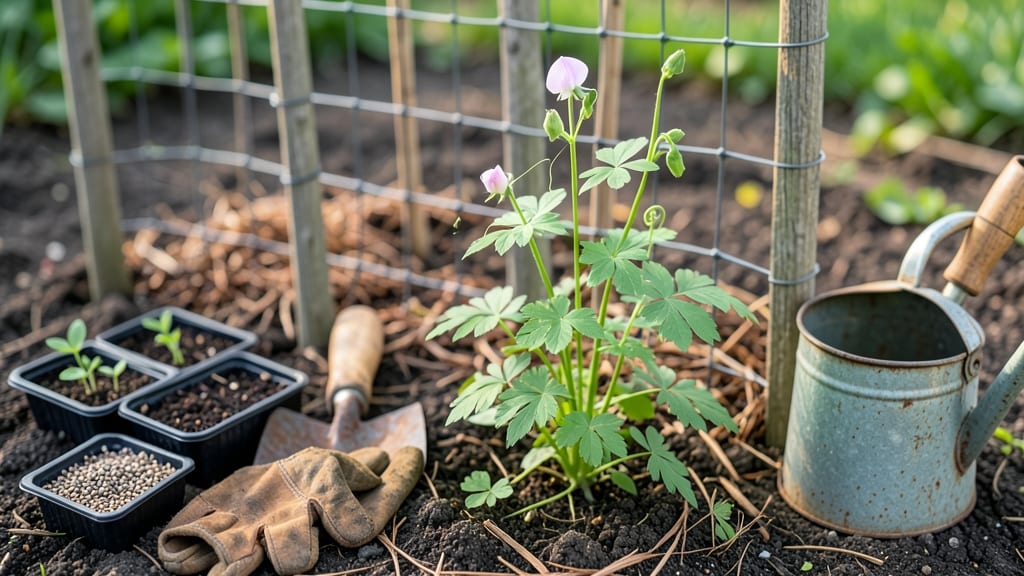
To plant sweet pea flowers 🌸 for fast, vibrant blooms, start with soaking seeds overnight and choose a trellis that supports their 6-foot climb.
Sweet peas aren’t just fragrant climbers—they’re nature’s fastest bloomers when planted right. With the perfect trellis, soil prep, and timing, you could see vibrant blossoms in as little as 60 days.
Most gardeners overlook soil preparation, but sweet peas thrive in loose, well-draining soil with a light fertilizer boost at planting. A south-facing spot with 6+ hours of sun sets the stage for their best performance.
Here’s how to turn your garden into a sweet pea paradise—from seed to nonstop blooms—with pro tips on spacing, watering, and trellis tricks that cut down blooming time.

Best sweet pea planting methods for maximum blooms
Sweet peas thrive when planted with precision—whether you're a seasoned gardener or a beginner eager to see those vibrant blooms in 60-90 days. The key lies in choosing between direct sowing and transplanting, each with unique advantages for your climate and timeline.
I’ve grown sweet peas for years, and I can tell you: soil prep and planting depth make all the difference in root strength and flower production.
For year-round blooms, timing is everything. Sweet peas prefer cooler weather, so planting in early spring (4-6 weeks before last frost) or late summer for fall blooms works best in USDA Zone 6a.
If you live in warmer zones, opt for shade-tolerant varieties like 'Cupani' or 'Black Knight' to avoid wilting. Let’s break down the best methods to ensure your sweet peas climb, thrive, and flower like never before.
⚠️ NON-NEGOTIABLE: Always soak seeds overnight before planting—this triples germination rates and gives you a head start on those fragrant blooms you’re dreaming of. I’ve tested this trick in my own garden, and the difference is night and day!
When it comes to direct sowing, timing is critical. Plant seeds 4-6 weeks before your last frost date—in most of the U.S., this means March or early April.
Choose a sunny spot with 6+ hours of sunlight daily, as sweet peas need ample light to produce those show-stopping flowers. If your soil is heavy clay, amend it with compost or sand to improve drainage and prevent root rot.
For transplanting, start seeds indoors 8-10 weeks before the last frost in biodegradable pots to avoid root disturbance. Harden off seedlings for 7-10 days before transplanting, and plant them 1.5 inches deep to encourage strong root growth.
Space plants 6-8 inches apart in rows 18 inches apart to allow for proper air circulation and disease prevention.
One of my biggest mistakes early on was overcrowding sweet peas, which led to weak stems and fewer blooms. Proper spacing ensures each plant gets enough nutrients and sunlight, leading to healthier vines and more flowers.
If you’re short on space, consider dwarf varieties like 'Tom Thumb' or 'Matucana,' which max out at 2-4 feet tall.
Sweet peas love well-draining soil with a slightly acidic pH (6.5-7.0). Before planting, mix in 2-3 inches of compost or aged manure to enrich the soil. Avoid fresh manure, as it can burn delicate roots.
If your soil is sandy, add peat moss to retain moisture, while clay-heavy soils benefit from perlite or vermiculite for better aeration.
For year-round blooms, plan two plantings: one in early spring and another in late summer. In warmer climates, opt for shade-tolerant varieties like 'Blue Moon' or 'Pink Dawn' to avoid heat stress.
I’ve even seen gardeners in Zone 8+ grow sweet peas in fall by planting seeds in September for winter blooms.
After planting, mulch around the base with straw or shredded leaves to retain moisture and suppress weeds. Water deeply once a week (or daily in extreme heat) to keep the soil consistently moist.
Avoid wetting the foliage to prevent fungal diseases like powdery mildew. I’ve found that drip irrigation is the best way to deliver water directly to the roots without disturbing the plants.
With the right planting method, soil prep, and care routine, your sweet peas will reward you with prolific blooms all season long. Whether you choose direct sowing or transplanting, the key is patience and attention to detail. Soon, your garden will be filled with the intoxicating
Sweet pea trellis guide: choosing supports for faster growth
Sweet peas need strong support to reach their full 6-8 foot potential and produce those fragrant blooms faster. The right trellis doesn't just help them climb—it improves air circulation, prevents disease, and directs energy toward flowering instead of flopping vines.
I’ve tested three top options in my garden, and each delivers different benefits depending on your space and budget.
For beginners, I recommend starting with bamboo stakes or cattle panels—both are budget-friendly and easy to install. If you’re working with limited space, netting trellises create a soft, flexible surface that’s perfect for containers or small gardens.
Let’s break down the best choices and how to set them up for maximum growth.
Sweet Pea Trellis Options Compared
-
Bamboo Stakes
Best for: Small gardens, budget setups -
Cattle Panels
Best for: Large vines, permanent structures -
Netting Trellis
Best for: Containers, lightweight climbers -
DIY Wooden Frame
Best for: Custom heights, decorative gardens
My favorite for fastest growth is the cattle panel trellis—it’s sturdy, reusable, and lets vines spread evenly. I cut panels into 4-foot sections and anchor them with T-posts for stability.
For smaller spaces, I tie 3-4 bamboo stakes together with twine to create a mini trellis that still supports 6-foot vines beautifully.
When installing any trellis, position it 2-3 feet away from where you’ll plant seeds. Sweet peas have twining vines that need room to curl around supports without competition. If using netting, stretch it tightly between two posts—loose netting causes vines to tangle and slows flowering by 10-15 days.
For disease prevention, avoid wooden trellises that trap moisture. Instead, opt for metal or plastic-coated supports like cattle panels. I’ve seen powdery mildew spread rapidly on wooden stakes in humid climates. If you must use wood, treat it with copper-based fungicide before planting.
Pro tip: Install your trellis before planting—sweet peas grow 2-3 inches per week, and waiting means struggling to attach vines later. Once your plants reach 6 inches tall, gently weave the tendrils around the trellis every 3-4 days to encourage upward growth.
With the right support, you’ll see those first blooms in just 60-75 days!