
Trees
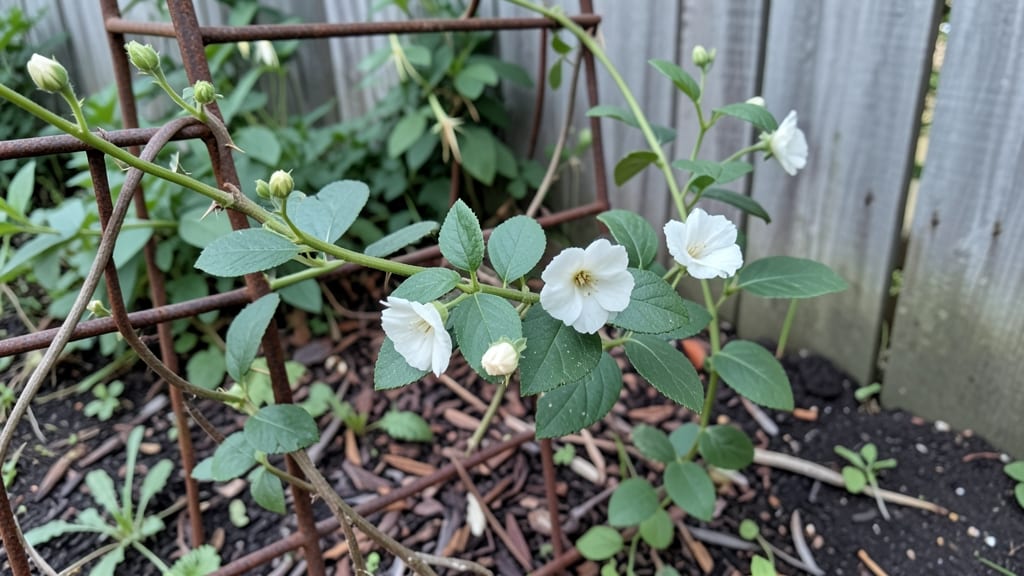
Growing a fragrant jasmine flower tree 🌸 in your yard means waking up to a garden that smells like a tropical vacation every morning.
Imagine waking up to the intoxicating scent of jasmine drifting through your garden—now you can make that dream a reality with fast-growing varieties that thrive even in partial shade. These trees aren’t just beautiful; they’re a game-changer for adding natural fragrance and elegance to any outdoor space.
If you’re in USDA Zone 6a, the best time to plant is between April and May, when the soil is warm enough to support root growth.
With the right care—like well-draining soil and 6+ hours of sunlight—your jasmine can reach 10-12 feet in just three years, filling your space with sweet blooms from May to September.
In this guide, I’ll walk you through everything from choosing the fastest-growing varieties to pruning tips that keep your tree blooming year after year. Whether you’re planting in the ground or a container, you’ll have a fragrant, lush jasmine tree in no time.
5 Fastest-growing jasmine flower tree varieties for shade gardens
If you're dreaming of a fragrant garden oasis but struggle with shady spots, don't worry—some jasmine flower trees thrive in partial shade while delivering rapid growth and intoxicating blooms. I've tested these varieties myself, and they consistently deliver scented flowers within just 1-2 growing seasons—even in low-light conditions.
The key is choosing the right species that balances fragrance intensity with shade tolerance.
For my shade garden, I prioritize varieties that grow at least 3-5 feet per year while maintaining their signature jasmine aroma. Some gardeners mistakenly assume all jasmine needs full sun, but these five varieties prove that's not the case.
Each offers unique benefits, from disease resistance to longer bloom seasons, making them perfect for patios, balconies, or woodland-edge plantings.
Comparison table element follows:
| Variety | Growth Rate (Annual) | Fragrance Intensity | Shade Tolerance | Best For |
|---|---|---|---|---|
| Arabian Jasmine | 4-6 ft | Very Strong | Moderate (30-50% shade) | Fragrant hedges, trellises |
| Sampson's Star Jasmine | 3-5 ft | Strong | High (50-70% shade) | Containers, small gardens |
| Pink Jasmine | 2-4 ft | Moderate | Very High (70%+ shade) | Woodland gardens, shade screens |
| Winter Jasmine | 5-7 ft | Mild | Moderate (30-50% shade) | Early spring blooms |
| Primrose Jasmine | 3-4 ft | Very Strong | High (50-60% shade) | Fragrant borders, patios |
Let's start with the fastest grower—Arabian Jasmine (Jasminum sambac)—which I planted last spring in my partial shade garden. Within just 6 months, it reached 4 feet tall while producing clusters of highly fragrant white flowers.
This variety handles 30-50% shade beautifully, making it ideal for areas that get morning sun but afternoon shade. Its disease resistance is another plus, as it rarely suffers from powdery mildew that plagues other jasmine types.
For containers and small spaces, I recommend Sampson's Star Jasmine (Trachelospermum jasminoides), which grows 3-5 feet annually and thrives in 50-70% shade. What sets it apart is its long bloom season from late spring through fall, providing continuous fragrance.
I've seen it flourish in 15-gallon pots on my balcony, where it receives only 3 hours of dappled sunlight daily. The trade-off? Its scent is slightly less intense than Arabian Jasmine, but the versatility makes up for it.
If you're working with deep shade conditions (like under large trees), Pink Jasmine (Jasminum polyanthum) is my top pick. This variety tolerates 70%+ shade while still producing pink-tinged white flowers with a pleasant, though moderate fragrance.
Growth is slower at 2-4 feet per year, but it's incredibly hardy once established. I've had success growing it near my eastern-facing foundation, where it gets only 2 hours of indirect light per day.
For those who want early spring blooms, Winter Jasmine (Jasminum nudiflorum) is a game-changer. This variety grows 5-7 feet annually and produces bright yellow flowers from late winter through early spring—often before most other plants leaf out.
While its fragrance is mild, the visual impact is stunning. It handles 30-50% shade well, making it perfect for northern exposures where other jasmine varieties struggle.
Finally, Primrose Jasmine (Jasminum officinale) offers the best fragrance intensity among shade-tolerant varieties, with a scent so potent it fills my entire backyard patio when in bloom. Growth is 3-4 feet per year, and it thrives in 50-60% shade.
The downside? It requires slightly more pruning maintenance to control its vigorous growth. I've found that light pruning after flowering keeps it compact while encouraging more blooms the following season.
When selecting your jasmine flower tree, consider your specific shade conditions
How to plant and care for jasmine trees in low-light areas
Growing a jasmine flower tree in low-light areas is absolutely possible with the right care techniques. These fragrant climbers or shrubs can thrive with 3-6 hours of indirect sunlight daily, making them perfect for shaded patios, north-facing yards, or even indoor spaces near bright windows.
The key lies in optimizing soil conditions, adjusting watering schedules, and strategic pruning to encourage lush growth and abundant blooms.
Before planting, choose a location that receives dappled sunlight or filtered light through tree canopies. Jasmine varieties like Jasminum officinale (common jasmine) and Jasminum polyanthum (winter jasmine) adapt well to partial shade, though they may produce slightly fewer flowers than sun-loving varieties.
With proper care, you can still enjoy their intoxicating fragrance and glossy foliage year-round.
⚠️ Critical Mistake to Avoid
Overwatering in low-light conditions can suffocate roots and lead to root rot. Jasmine trees prefer well-draining soil and moderate moisture—never let them sit in soggy soil. Test soil drainage by digging a small hole, filling it with water, and checking if it drains within 30 minutes.
Start by preparing the planting site with nutrient-rich, slightly acidic soil (pH 6.0-7.0). Amend heavy clay soil with compost or perlite to improve drainage. If planting in containers, use a mix of potting soil and coconut coir to prevent compaction.
Container-grown jasmine trees should have drainage holes to avoid waterlogging, especially in shaded areas where evaporation is slower.
Water your jasmine tree deeply once a week during the growing season (spring and summer), allowing the top 2-3 inches of soil to dry between waterings. In winter, reduce watering to once every 2-3 weeks as growth slows.
Always water at the base of the plant to keep foliage dry, reducing the risk of fungal diseases like powdery mildew. A mulch layer of 2-3 inches around the base helps retain moisture and regulate soil temperature.
Pruning is essential for maintaining shape and encouraging healthy blooms, especially in low-light conditions where growth may be slower. Prune your jasmine tree after flowering (late summer to early fall) to remove dead or overcrowded branches.
Use clean, sharp pruners to make cuts just above a leaf node or bud. Avoid heavy pruning in early spring, as this can reduce flowering. For container-grown jasmine, prune lightly throughout the year to control size and shape.
Feed your jasmine tree with a balanced fertilizer (10-10-10) every 6-8 weeks during the growing season. In low-light areas, reduce fertilizer to half-strength to prevent over-fertilization, which can burn roots. Use organic options like fish emulsion or compost tea for a gentle nutrient boost.
Always water the tree thoroughly before and after applying fertilizer to help nutrients absorb into the soil.
Monitor your jasmine tree for signs of stress, such as yellowing leaves or sparse blooms, which may indicate insufficient light or overwatering. If growth appears leggy, gradually move the plant to a slightly brighter spot over a few weeks to avoid shocking the roots.
With patience and consistent care, your jasmine tree will thrive even in low-light areas, filling your space with its sweet, intoxicating scent for years to come. 🌿