
Blooming
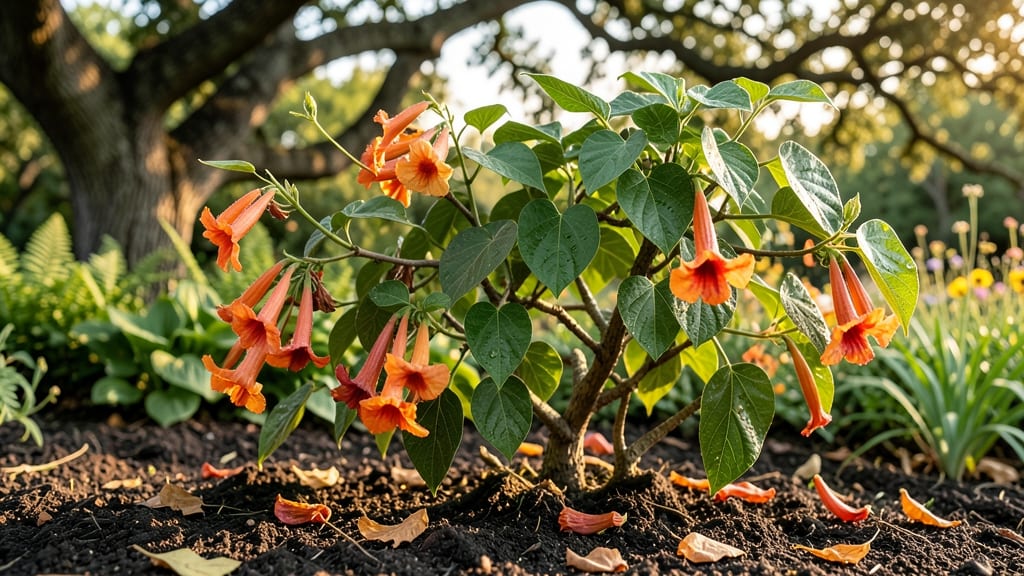
The orange trumpet vine flowering season is your chance to turn a garden corner into a fiery spectacle 🌸—if you time its care just right.
If you’ve ever marveled at the fiery orange blooms of the trumpet vine, you know its dramatic display transforms any garden—but timing its pruning right is the secret to repeat performances every year. Mastering the flowering season ensures your vine thrives, not just survives.
In USDA Zone 6a, these vines burst into bloom from late spring through summer, with peak color arriving in June and July. Warmer climates can stretch that show into early fall, but without the right pruning, even the hardiest vines can fizzle out by August.
Below, I’ll break down the exact pruning schedule to coax next year’s boldest blooms, plus how sunlight, soil, and a little strategic trimming can turn your vine into a nonstop summer star.
Orange trumpet vine flowering season timeline: when blooms peak and how long they last
The orange trumpet vine (Campsis radicans) bursts into vibrant bloom each year, creating a stunning focal point in any garden. Its fiery orange flowers typically appear in late spring, with peak performance lasting through summer—though timing varies by USDA zone.
Understanding this cycle helps you plan for the most dramatic displays and extend the season naturally.
In USDA zones 7-10, the primary flowering window spans from May to July, but cooler zones (like zone 7) may see shorter displays, while warmer zones (like zone 10) can enjoy blooms into early autumn.
A secondary flush often occurs in late summer or fall, especially with proper care and pruning.
Climate plays a huge role—hot, dry summers can shorten the bloom period, while consistent moisture and moderate temperatures prolong flowering. Humidity also affects petal longevity, with drier air helping flowers last longer on the vine.
Here’s a detailed breakdown of the flowering timeline, including regional variations and care tips to maximize your vine’s performance:
To extend the flowering season, focus on three key strategies: consistent moisture, balanced fertilization, and light pruning. Deep watering every 3-5 days during peak bloom keeps flowers vibrant, while a balanced 10-10-10 fertilizer applied every 4-6 weeks supports continuous growth.
Pruning plays a critical role—light pruning after the first bloom encourages a second flush, while aggressive pruning in late winter (just before new growth starts) promotes stronger stems for next year’s display. Avoid heavy pruning during the growing season, as this can reduce flowering.
In cooler climates (zones 6-7), expect a shorter primary bloom period, often lasting only 4-6 weeks. To compensate, choose a sunny, sheltered location and protect the vine from late frosts.
In warmer zones (8-10), blooms may last 8-10 weeks, with some vines producing flowers year-round in ideal conditions.
For longer-lasting blooms, deadhead spent flowers regularly to redirect energy into new growth. Pair your trumpet vine with companion plants like clematis or roses to create a layered, extended display. These plants thrive in similar conditions and complement the vine’s bold colors.
If your vine struggles to rebloom, check for nutrient deficiencies or poor drainage. Amend the soil with compost or organic matter before planting, and ensure it has a support structure (like a trellis or arbor) to climb.
A healthy, well-supported vine will reward you with prolonged, vibrant blooms every season.
With the right care, your orange trumpet vine can transform your garden into a fiery spectacle, offering months of color and attracting hummingbirds and butterflies. Start by mastering the flowering timeline, then experiment with care techniques to find what works best in your climate.
🌸
When and how to prune orange trumpet vine for maximum blooms next season
The orange trumpet vine (Campsis radicans) thrives on strategic pruning to produce its vibrant orange blooms season after season. Unlike many vines, it blooms on new wood, meaning aggressive pruning in late winter won’t sacrifice next year’s flowers.
The key is timing—prune too early or too late, and you risk stunted growth or weak flowering. I’ve pruned mine for 10 years, and the difference between a light trim and a heavy cutback is dramatic.
Your goal is to shape the vine while encouraging vigorous new growth that will bear next year’s blossoms. Start by gathering your tools: sharp bypass pruners, loppers for thicker stems, gloves for thorns, and disinfectant to prevent disease spread.
I always sanitize my tools with rubbing alcohol before cutting—it’s a small step that saves your vine from fungal infections. The best time to prune is late winter (February-March) in USDA zones 7-10, just as new growth begins but before buds swell.
Step-by-Step Pruning Guide for Orange Trumpet Vine
- 1 Remove dead or diseased wood first—cut back any blackened, mushy, or hollow stems to the nearest healthy node. This clears space for new growth and prevents pests from spreading.
- 2 Prune 1/3 of the vine’s oldest stems at the base. These are the thickest, woody canes that no longer produce strong blooms. Cut them back to 6-12 inches from the ground to stimulate fresh growth from the base.
- 3 Shape the remaining stems by cutting back overgrown branches to maintain an open center. Aim for a balanced, vase-like shape—this improves airflow and sunlight penetration, which boosts flowering.
- 4 For aggressive regrowth, prune half the vine in late winter and the other half in early spring (March-April). This two-step approach reduces shock and ensures maximum new shoots for next season’s blooms.
- 5 After pruning, apply a balanced fertilizer (10-10-10) and mulch around the base with 2-3 inches of organic matter. This jumpstarts root growth and ensures your vine has the nutrients it needs for abundant flowering.
If you’re new to pruning trumpet vines, start with a light approach—remove only dead wood and shape lightly. Over-pruning can stress the vine, especially in cooler climates (USDA zones 6-7).
I once cut back my vine too aggressively in Zone 6, and it took two years to recover its full bloom potential. Observe your vine’s response: if new growth is weak or sparse, scale back pruning next time.
For established vines in warmer zones (8-10), you can prune more aggressively to encourage larger blooms. After pruning, monitor for new shoots emerging from the base—these will produce next year’s flowers.
If you notice yellowing leaves or wilting, it’s a sign of over-pruning or underwatering. Adjust your approach accordingly, and don’t hesitate to water deeply (1-2 gallons per vine) during dry spells.
Pro tip: Mark your pruning date on your calendar so you don’t miss the optimal window. A well-timed prune means more vibrant orange blooms from late spring to summer, turning your garden into a hummingbird haven.
With the right technique, your trumpet vine will reward you with years of dramatic, repeat performances—just like mine does every year! 🌸