
Trees
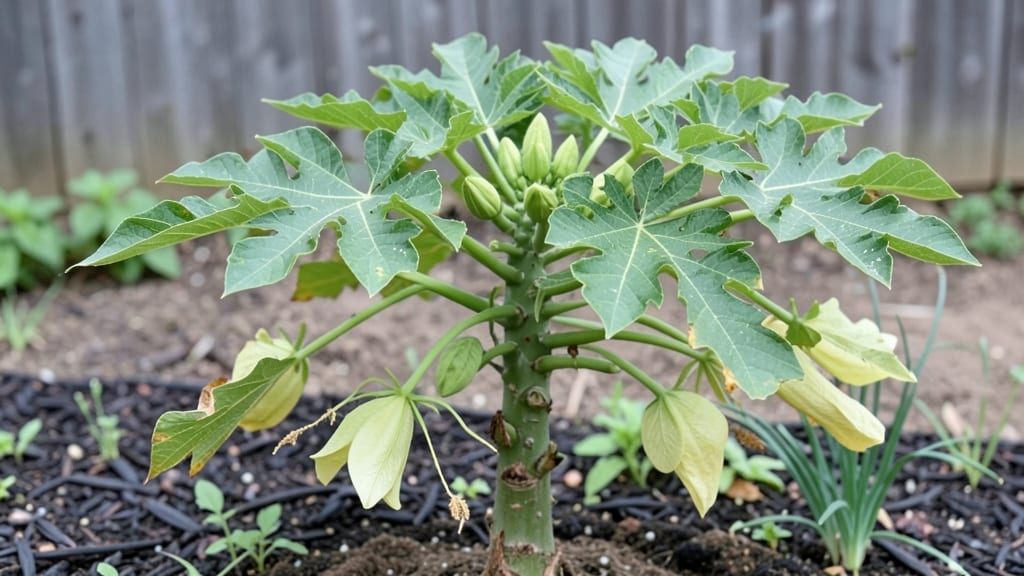
Papaya plant flowers appear as small, fragrant blooms in clusters, with male flowers having long stamens and female flowers showing a tiny fruit at the base. They bloom year-round in tropical climates, typically producing fruit 6-12 months after flowering, with female flowers yielding edible papayas.
Understanding these blooms is key to growing a productive papaya plant. 🌿 The male flowers, with their prominent stamens, serve as nature’s pollinators, while female flowers—easily spotted by their tiny developing fruit—hold the potential for your harvest.
Without proper pollination, even female flowers won’t develop into the sweet, orange papayas we love, making hand-pollination a game-changer for indoor growers or areas with limited natural pollinators.
Here’s what I’ve learned from experience: papaya plants thrive in warm, humid conditions, but even the hardiest varieties need consistent care. 🌟 Pruning excess male flowers can redirect the plant’s energy toward fruit development, while balanced fertilization (especially with potassium) encourages stronger blooms.
If your plant isn’t flowering, check for stress—overwatering, drafts, or nutrient deficiencies can stall the process entirely.
💡 In This Article
- Papaya Flower Types and Their Role in Fruit Production
- Tips for Encouraging Papaya Flowers and Fruit Growth
Papaya flower types and their role in fruit production
The papaya plant's reproductive system is fascinating because it relies on two distinct flower types that play specialized roles. Male flowers feature 5-7 long stamens (up to 1.5 inches) that produce pollen, while female flowers have a tiny papaya fruit forming at their base before blooming.
This dimorphic structure ensures efficient pollination—male flowers release pollen that must reach female flowers to fertilize the ovules inside their 3-5 carpels. 🌸 The female flower's ovary, where the fruit develops, remains hidden until the bloom opens, making it easy to identify potential fruit-bearing flowers.
Here's what's actually happening at the cellular level: once pollen lands on a female flower's stigma, it travels down the style to fertilize the ovules. This triggers the ovary to swell and develop into a papaya fruit over 6-12 months.
The plant's ability to self-pollinate makes it unique—unlike many tropical fruits, papayas can produce fruit from a single flower without cross-pollination. However, cross-pollination often yields larger, more uniform fruits due to genetic diversity.
The flowering cycle begins when the plant reaches 12-18 months of age and continues year-round in ideal tropical conditions (75-90°F with high humidity).
The science behind fruit development reveals why female flowers are so critical. Each female flower contains 100-300 ovules that develop into seeds when fertilized. The plant's energy investment in fruit production is massive—up to 40% of its photosynthetic output goes toward developing just one papaya.
This is why growers often remove excess male flowers (a practice called "de-masculinization") to redirect energy toward fruit-bearing flowers. The plant's hormonal balance shifts dramatically during flowering, with ethylene gas playing a key role in triggering both bloom development and fruit ripening. 🌿
Environmental triggers for flowering are precise: papaya plants need 12+ hours of daylight and consistent warmth to initiate blooming. Temperature drops below 60°F or prolonged dry spells can stall flower production entirely.
In controlled environments, growers use artificial light supplementation to extend daylight hours and misting systems to maintain humidity levels above 70%. The plant's native tropical origins explain why it struggles in cooler climates—its flowering mechanism is finely tuned to stable, warm conditions.
Interestingly, some varieties like 'Solo' are hermaphroditic, producing both male and female parts on the same flower, which eliminates the need for separate pollinators.
What most people don't realize is how the plant's reproductive strategy affects fruit quality. Male flowers often appear first in clusters of 3-5 blooms, followed by female flowers 1-2 weeks later. This timing ensures pollen availability when female flowers open.
The fruit's development begins immediately after pollination, but visible growth only appears after 4-6 weeks. During this early stage, the fruit is highly susceptible to environmental stress—temperature fluctuations or water stress can cause abortion. This is why professional growers maintain precise growing conditions during this critical window. 💡
Understanding these biological mechanisms helps explain why some papaya plants produce abundant flowers but few fruits. The plant may be flowering profusely but could be lacking proper pollination, experiencing hormonal imbalances, or suffering from nutrient deficiencies (particularly phosphorus and potassium).
For home growers, this knowledge translates directly to actionable care: regular inspection of flowers for pollen presence, maintaining consistent moisture levels, and providing balanced fertilization can dramatically improve fruit set rates. The papaya's reproductive cycle serves as a perfect example of how plant biology directly impacts agricultural productivity.