
Blooming
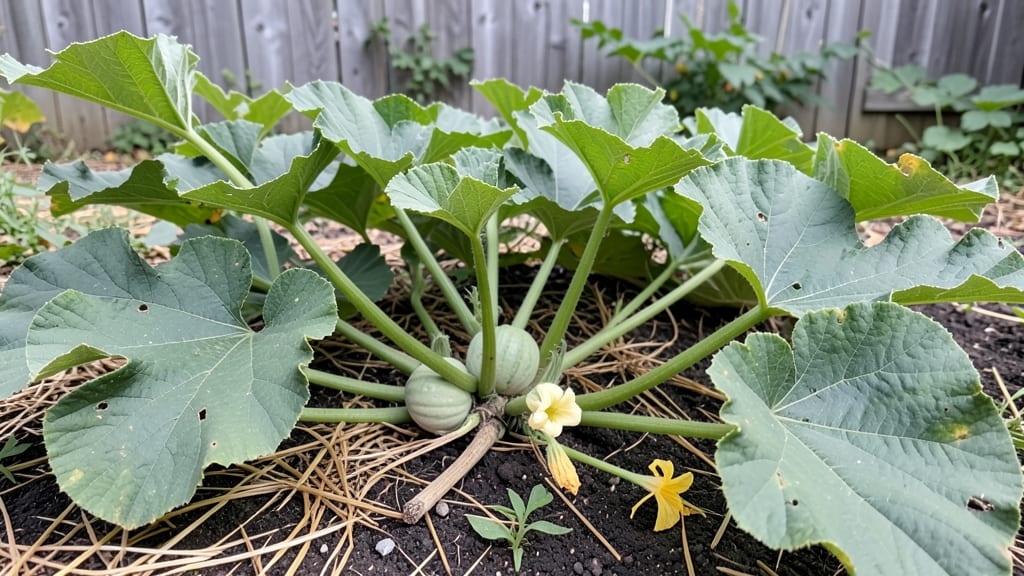
Identifying pumpkin flower gender helps maximize yields: male flowers have long stems and no swelling at the base, while female flowers feature a tiny pumpkin or swelling behind the blossom. Check early morning for accuracy, as flowers open best then.
Understanding flower gender is key because female pumpkin blooms are the ones that develop into fruit, while males focus solely on producing pollen. 🌱 The ratio of female to male flowers directly impacts your harvest—gardeners often aim for at least 3 female flowers per vine to ensure successful pollination and fruit set.
Environmental factors like warm days and cool nights can actually shift gender ratios, so monitoring these conditions helps you predict and optimize your plant's productivity.
Here's a pro tip: if your vines are producing mostly male flowers early in the season, try adding low-nitrogen, high-phosphorus fertilizer to encourage more female blooms later.
I've found that pruning aggressive male flowers can redirect the plant's energy toward fruit-bearing females, which is especially helpful in smaller garden spaces where space is limited.
💡 In This Article
- Biological Differences Between Male and Female Pumpkin Flowers
- Practical Tips for Boosting Female Pumpkin Flowers in Your Garden
Biological differences between male and female pumpkin flowers
Male pumpkin flowers develop from buds that contain only stamens—those long, slender structures covered in yellow pollen sacs. These stamens are the plant's reproductive organs responsible for producing pollen, which is why male flowers appear more delicate with their 6-inch stems and no swelling at the base.
The pollen sacs typically mature in 2-3 days after the flower opens, releasing clouds of pollen that must reach female flowers for fertilization to occur.
Female flowers, on the other hand, contain both stamens and a swollen ovary at their base—this ovary is where fruit development begins. What you might notice as a "tiny pumpkin" behind the blossom is actually the ovary, which can range from pea-sized to golf-ball-sized depending on the variety.
This ovary contains ovules that will develop into seeds if successfully pollinated. The key difference lies in their structure: female flowers have a thicker, sturdier stem (about 4-5 inches) to support the developing fruit's weight.
Environmental factors play a surprising role in gender expression. Research shows that pumpkin plants tend to produce more female flowers when daytime temperatures stay between 75-85°F while nights drop below 65°F. This temperature contrast triggers hormonal shifts that favor ovary development over pollen production.
Conversely, hotter conditions (>90°F) often result in more male flowers, which is why gardeners in southern climates sometimes struggle with poor fruit set. Sunlight also matters—vines receiving 6+ hours of direct sun daily produce stronger female blooms due to increased photosynthesis.
Here's what's actually happening at a cellular level: The plant's growth hormones (like gibberellins) and stress responses determine whether a bud becomes male or female.
Male flowers develop when the plant prioritizes pollen production for genetic diversity, while female flowers form when the plant shifts energy toward reproduction and fruit development.
This balance is why experienced growers monitor their plants closely—too many male flowers mean wasted energy, while too few can limit pollination opportunities for the females.
One fascinating detail is how the ovary's size correlates with fruit potential. Larger ovaries (like those in Cucurbita maxima varieties) indicate the plant is investing more resources into potential fruit, while smaller ovaries suggest limited energy.
This is why some gardeners intentionally remove excess male flowers early in the season—it forces the plant to redirect nutrients toward developing stronger female blooms with larger ovaries. 🌿
Understanding these biological differences helps explain why some pumpkin varieties produce more fruit than others. For example, Cucurbita pepo (like zucchini) tends to have a more balanced male-to-female ratio, while Cucurbita moschata (like butternut squash) often favors female flowers when given optimal growing conditions.
The key takeaway? Your growing environment doesn't just affect flower production—it fundamentally shapes the plant's reproductive strategy.